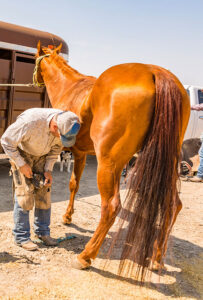
New Year’s Resolutions for Maximizing Horse Health in 2015
Here are five ways to help your horse stay healthy and happy through the new year.

Here are five ways to help your horse stay healthy and happy through the new year.

Learn about the cardiac abnormality one veterinarian identified during a prepurchase exam and if it was a deal breaker.

John and Leslie Malone committed $42.5 million to develop regenerative medical therapies for animals and people.

Despite all that is known, important questions still remain about wobbler syndrome.

Radiographs (X rays) and low-field MRI appear to be useful tools for diagnosing early-stage arthritis.

More than 56% of injuries occurred in the right forelimb, the opposite of what’s most commonly seen in Thoroughbreds.

Researchers examined, discussed, and debated the latest research on saddle-related welfare and performance issues.

Equine complementary therapies, such as chiropractic and acupuncture, are more popular than ever. Learn how they might help your horse’s health and performance.

From feeding and training to shoeing and warm-up protocols, learn how to keep your dressage horse fit to perform.
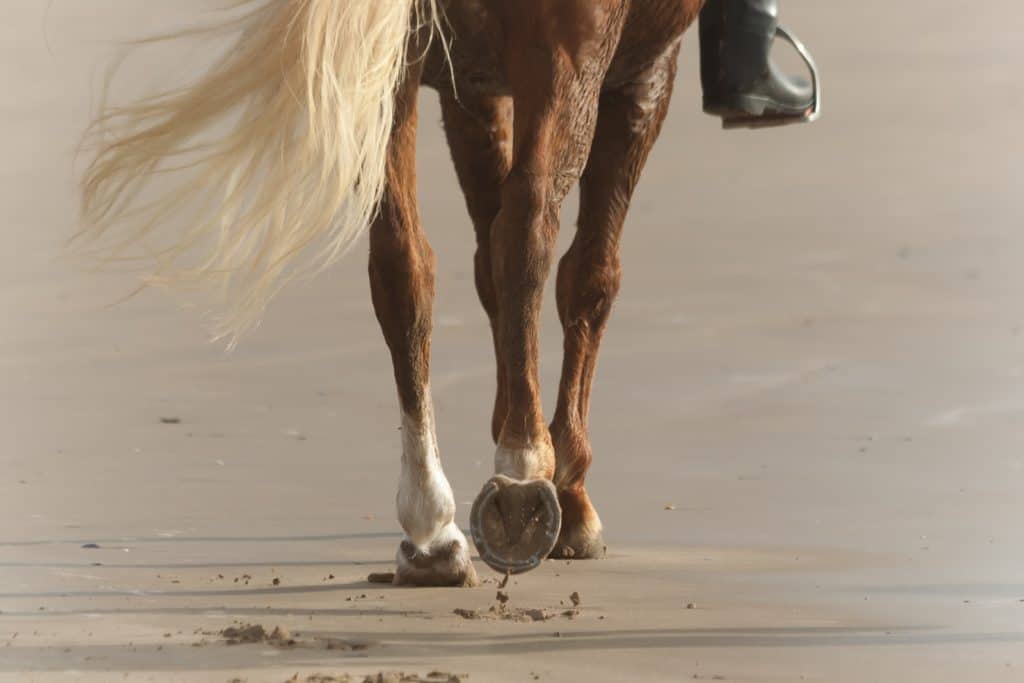
Good leg conformation in a horse is a must if that animal is to remain serviceably sound for performance.

Learn about how horse joints work and how you can keep your horse’s joints healthy with this step-by-step visual guide.

Have you ever wondered how a veterinarian would train and develop a horse? Find out from a veterinarian who’s also a Grand Prix dressage trainer and clinician.

Because each hock lameness case is unique, it isn’t always easy to pinpoint the cause of the unsoundness.

Injuries to the top of the rear cannon bone are some of the most difficult to diagnose.

Veterinarians have tools to help them make educated judgments about lamenesses, their causes, and prognoses.

A combination of mesenchymal stem cells and gene therapy reduced osteoarthritis progression in one model.