Endocrine Disease and Laminitis in Broodmares
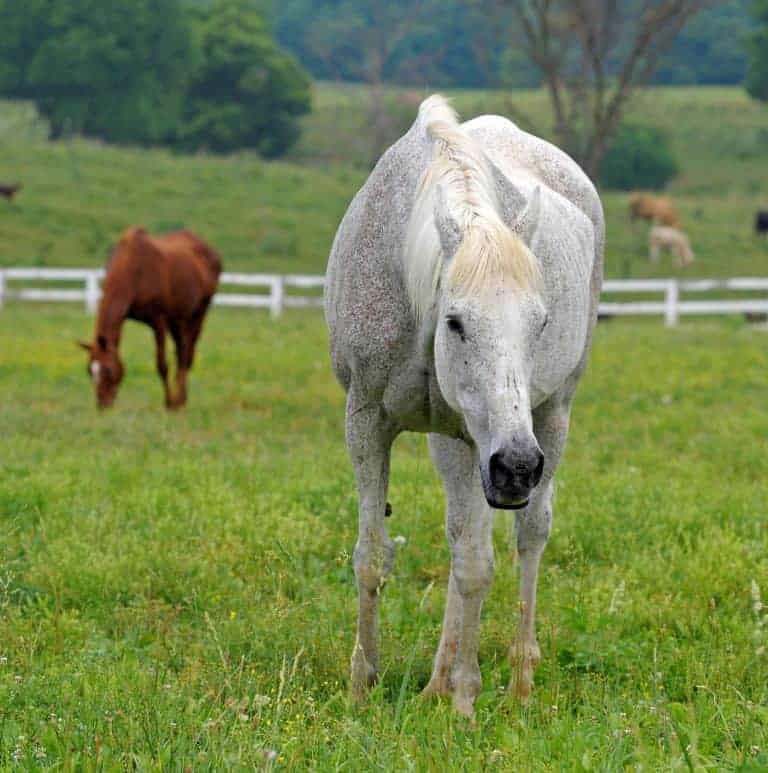
During pregnancy, a broodmare’s body and hormones go through many changes. And the endocrine changes associated with pregnancy might actually increase the mare’s risk of developing laminitis.

During pregnancy, a broodmare’s body and hormones go through many changes. And the endocrine changes associated with pregnancy might actually increase the mare’s risk of developing laminitis.

California is the 10th state to formally agree to adoption of the national controlled medication schedule and the first state outside of the Mid-Atlantic and Northeast regions.
Jennifer Barrett, DVM, PhD, Dipl. ACVS, ACVSMR, was recently named Theodora Ayer Randolph Professor of Equine Surgery by the Virginia Tech Board of Visitors.

Mastro’s research focused primarily on pituitary pars intermedia dysfunction (PPID), also known as equine Cushing’s disease.
A Utah Quarter Horse trainer and riding instructor has filed a federal lawsuit against the American Quarter Horse Association alleging the breed association violated federal anti-trust laws by preventing him from earning a living.

One researcher believes studying diseases, like laminitis, in a real-world setting has both strengths and limitations.
A Connecticut woman is facing charges for allegedly practicing veterinary medicine without a license.

The House Subcommittee on Commerce, Manufacturing, and Trade is considering legislation (HR 2012) that would give the USADA the responsibility of ensuring the integrity and safety of racing.

Most horse farms sport trees along paddock fencerows, near barns, and in pastures. While many trees are planted for shade or aesthetics, other woody (and often undesirable) plants frequently encroach from surrounding fields.

A group of agriculture and natural resources professionals traveled to Australia to observe the country’s agricultural practices, including several relevant to the horse industry.

Considering end-of-life decisions for your horse ahead of time will help minimize the unpleasantness inherent in these events and serve to provide optimal care for your horse.
The detailed report concluded that the cluster of sudden deaths from famed trainer Bob Baffert’s barn did not have any similarities to each other and had no single, identifiable cause.

Perilla mint is toxic to horses and the greatest risk of consumption is in late summer or early fall.
Almost every time we let our horses out of the stalls after feeding them, they roll. Why?
The University of Kentucky Ag Equine Programs, which includes the Gluck Equine Research Center and Veterinary Diagnostic Laboratory, will host two continuing education events in the next three months.

If you’ve ever considered your horse to be your “better half,” you’re not alone. Norwegian and American researchers recently found that riders and horses can enter into a unique state of interspecies “co-being” with one other.
Stay on top of the most recent Horse Health news with
"*" indicates required fields