Inside the Equine Gut Microbiome

How the equine gut microbiome influences digestion, immunity, and whole-horse heath

by Glenye Oakford

Sponsored by:

Photo: Shelley Paulson


Can the bacteria in a month-old foal’s gut help determine how susceptible he will be to respiratory diseases as a 3-year-old? It might sound far-fetched, but researchers focused on the equine gut microbiome have suggested some surprising possibilities about how the trillions of microorganisms colonizing the equine gut might influence immune development and health in other body systems.

Researchers have already explored the human microbiome in great detail. Now, thanks partly to advances in genetic sequencing technology, equine researchers can learn more about the equine gut microbiome—the diverse community of bacteria, bacteriophages, and other microbes in the digestive tract—and how its interactions with other equine body systems can affect a horse’s health and performance.

What they’ve discovered so far has implications for the day-to-day management of both equine athletes and backyard pleasure horses.

Defining the Equine Gut Microbiome

Generally speaking, the horse’s gut consists of the entire gastrointestinal tract. “The scientific definition of the equine gut microbiome is the microbial community and the products of that community—so all the bacteria and viruses and fungi and yeast that live within the gut and all the metabolites that they produce,” says Dr. Chris Proudman, a professor of veterinary clinical science and principal investigator at the University of Surrey’s Horse Microbiome Research Group, in Great Britain. “This whole microbial ecosystem lives within the horse’s intestine. And I think the big realization of recent years is that in humans, in horses, in all animals, that microbiome is an integral part of our biology. The way we interact with the microbiome, and the way it interacts with us, is really influential in terms of our health.”
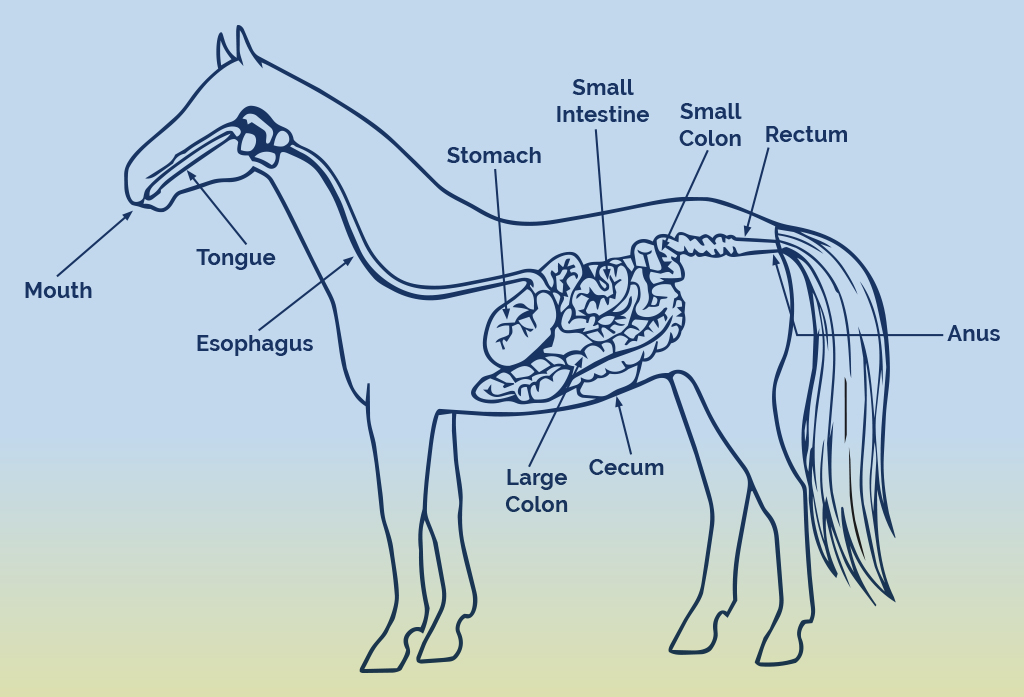

Photo: Equine Network LLC

Chris Proudman, MA, VetMB, PhD, CertEO, FRCVS,

graduated from Cambridge University Veterinary School in 1988 and was awarded a PhD in equine epidemiology from the University of Liverpool in 1996. His academic career has involved teaching equine medicine and surgery, equine intestinal disease research, and various leadership roles at the University of Liverpool. He has a long-standing involvement in the horse racing industry, including veterinary work on racecourses in Northwest England and membership on the Horserace Betting Levy Board’s veterinary advisory committee. He was appointed head of the University of Surrey School of Veterinary Medicine in 2013. His current research focuses on the role of the horse’s gut bacteria in intestinal health and disease.

Microbiota in the equine gut also can be affected by a range of outside factors, from genetics and the horse’s physical environment to the forage and feed he consumes. That’s where the growing bank of knowledge about the equine microbiome could be most helpful to equine practitioners, owners, and managers. If we can maximize that ecosystem for optimal health, Proudman says, we might be able to do more to keep horses healthy and active.

“We’re just starting, first of all, to understand the identity of what is there,” he says. “With time, we will have a better understanding of exactly how each element of the microbiome works together and how we might be able to influence them to improve health and, possibly, productivity or performance.”

Photo: Adobe Stock

Why a Healthy Gut Microbiome Matters in Horses

Microbes in the hindgut (cecum, large colon, small colon, and rectum) ferment the plants and grains horses eat into short-chain fatty acids such as butyrate, acetate, and propionate, which provide energy to the horse, says Dr. Frank Andrews, director of equine health and sport performance at Louisiana State University’s School of Veterinary Medicine, in Baton Rouge. 

Disruptions to the microbiome can have sometimes dramatic effects, as in the classic case of a horse breaking into a feed room and overindulging in concentrates. The horse’s hindgut microbiota health and balance depend on the diet. A sudden, massive influx of dietary starch (via concentrates) that resident microbes rapidly convert to sugars results in a physical—and potentially fatal—catastrophe: colic or laminitis, says Andrews.

But researchers are discovering that the hindgut microbiome’s influence can also appear in more subtle and surprising ways—in respiratory health, for example. The link between gut activity and seemingly remote body functions, including breathing and brain activity, has been made in human medicine. Proudman points to endurance runners as a case in point.

“They now pay a lot of attention to gut health because they realize how important it is in terms of making sure that respiratory health is optimal (playing a role in resistance to bacterial infections) for optimal performance,” he says.

Scientists on recent human and animal studies, including the Horse Microbiome Research Group, also have suggested that a healthy, diverse gut microbiome in early life can prime the immune system for better respiratory health later. “Our work has demonstrated that particularly the diversity of the bacterial community—that is, the number of different types of bacteria present in that community very early in life—is a very important factor,” Proudman explains. “We’re also starting to narrow down what in human and animal science has been called a critical window. We talk about early life, but when exactly is it, during the first few weeks or months of life, that this effect is important?

“In our study, we found that there were two or three windows, but certainly there’s a period around 28 days old,” he continues. “The gut bacterial community at that point in time is very strongly associated with future respiratory health in particular. We were not able to demonstrate a causal relationship in our study, but extrapolating from our findings, we speculate that enhancement of respiratory health will arise from making sure that a foal’s gut microbiome is in good shape (based on the gut bacterial community) at 28 days old.”

That has potential implications for common problems in racing and sport-horse stables, such as infectious equine respiratory disease and asthma.

Not surprisingly, the equine gut microbiome has impacts closer to home in the intestines themselves, where healthy microbiota help protect gut integrity, says Andrews.

Frank M. Andrews, DVM, MS, Dipl. ACVIM,

is a graduate of Washington State University College of Veterinary Medicine, in Pullman, where he received a DVM and MS. After a year in private veterinary practice, he completed an equine medicine and surgery residency at The Ohio State University. After 20 years on the faculty at the University of Tennessee College of Veterinary Medicine, he is the director of the Equine Health and Sports Performance Program at Louisiana State University’s School of Veterinary Medicine, in Baton Rouge. Andrews is Diplomate of the American College of Veterinary Internal Medicine, Large Animal Internal Medicine. He has clinical and research interests in gastric ulcers, gastrointestinal disease, and endocrine diseases. He is involved in clinical equine practice and has been doing scientific investigation for more than 35 years.

Glossary

  • Colic—broad term for abdominal pain primarily caused by impaction, gas accumulation, or bowel displacement
  • Endotoxin—toxic heat-stable lipopolysaccharide substance present in the outer membrane of gram-negative bacteria that is released from the cell upon lysis (cell membrane breakdown)
  • Laminitis—condition in the horse’s hoof where the laminae that suspend the coffin bone within the hoof capsule become damaged and inflamed
  • Leaky gut syndrome—a damaged gut lining allows toxins and bacteria to enter the bloodstream, causing chronic inflammation, weight loss, and poor performance

“The microbiome is very important because its interaction with the gut wall prevents other bacteria from growing and producing a lot of endotoxins,” Andrews says. “It produces butyric acid. There’s been a lot of work in people showing that if you produce a lot of butyric acid, leaky gut syndrome is prevented. It actually stimulates the gut to close the pores so you don’t get absorption of endotoxins.”

“The microbiome is very important because its interaction with the gut wall prevents other bacteria from growing and producing a lot of endotoxins.”

–Dr. Frank Andrews


Researchers continue to study other ways the gut microbiome—healthy or unhealthy—can affect equine health and how targeted interventions might promote good microbes, not only to maintain health but also actively promote it or intervene when problems such as laminitis arise.

STORY CONTINUES BELOW

A Dynamic and Varied System

Scientists studying equine gut microbiota in healthy horses have found a richly varied ecosystem of Actinobacteria, Bacteroidetes, Firmicutes, and more, whose interactions they are only beginning to describe and understand. What they’ve learned so far suggests meaningful variation between horses, with location likely shaping that composition.

“Looking at (research) papers from different parts of the world, it does seem likely that there are big regional, geographical differences,” Proudman says. “That’s probably not surprising because at quite a macro level, there are differences in the type of fiber that are fed.”

So the U.K.’s pastures might favor a particular type of bacteria, while timothy hay in the U.S. might support a higher population of different phyla. Even among horses that might be expected to have similar gut microbiota, Proudman notes, individuals can still show remarkable variation.

“They give racehorses, in particular, the same diet, the same sort of exercise patterns,” he says. “They’re even genetically pretty similar, if they’re a relatively inbred Thoroughbred population. Yet when you look at the gut microbiome, there can be big individual variation between those horses.

“I also think the relative geographical isolation of different horse populations might affect this as well,” he adds. “There is increasing evidence, and it’s very likely, that a foal receives its gut microbiome largely from its mother—there is vertical transmission of the gut microbiome from mother to foal (during and immediately after birth and with early life interactions). But if those populations don’t then mix with other populations, it doesn’t spread any further. So, I think that’s a way these gut bacterial populations can remain geographically quite distinct.”

What’s the Connection Between the Gut Microbiome and Gastric Ulcers?

Scientists continue to explore whether the equine gut microbiome plays a role in gastric ulcer development. They say horses with gastric ulcers can have different microbial populations than healthy horses but do not know if those changes cause the ulcers or are a result of disease.

The horse’s stomach contains squamous (upper) and glandular (lower) regions, and researchers note that each appears to have its own microbial community. They have found that beneficial fiber-digesting and lactate-producing bacteria tend to be more abundant in healthy horses, while horses with equine gastric ulcer syndrome (EGUS) show subtle changes in stomach microbiota.

Scientists emphasize that more research is necessary and are currently focused on identifying the microbes and determining their function. They also continue to learn how factors such as diet, stress, exercise, and management influence microbial balance and stomach health.

Photo: Adobe Stock

What Constitutes a Healthy Gut Microbiome?

So what makes up a healthy equine gut microbiome, and how can you tell if a horse has one?

“We’re starting to learn that there isn’t one microbiome in the horse that is ideal,” Andrews says. “We have different regions of the country and different regional effects on the microbiome. We don’t know what the ideal microbiome is that we can just transplant into every horse because the diets are different from region to region. I would say that if your horse is doing well, then that microbiome is serving the horse very well.”

“The one thing I am reasonably confident about now is that a healthy microbiome in the horse, as in other species, is a diverse microbiome,” Proudman adds. “There are lots of different bacteria present there. But I don’t think it’s possible to define exactly what relative proportions of bacteria represent the healthiest microbiome. We do recognize some families of bacteria and some bacterial species that are unhealthy and others that are associated with good health in horses, but they are a really small proportion of the total microbial content of the gut.”

Gut Microbiome Disruption and Dysbiosis

Researchers say no single set of definitive clinical signs of gut microbiome dysbiosis (imbalance) exists. Gastrointestinal disease (a tendency to colic or develop diarrhea) or even frequent respiratory disease in adult horses might indicate a problem tracing back to the gut microbiota, says Proudman. Given the microorganisms’ influence on the brain, and extrapolating from human and experimental animal research, anxious behaviors might, too.

They are beginning to clarify what drives changes in the equine microbiome, for better or for worse, and more recently the shift from rural to more urban horsekeeping might have reduced microbiome diversity and increased vulnerability to problems such as metabolic disease. In addition to diet, scientists have clearly associated antibiotic use with changes in the gut microbiome.

STORY CONTINUES BELOW

Photo: Adobe Stock

Diet: Focus on Forage

Andrews returns to the familiar and feared feed-room-raid scenario: A large quantity of undigested starch from concentrate reaches the hindgut and feeds bacteria, which rapidly ferment the sugar in the grain, triggering their production of lactic acid. That results in a damaging decline in pH (acid) and a potentially catastrophic microbial die-off. But, he points out, more subtle dietary changes can also cause problems, and many owners don’t recognize the risk.

For example, a trainer giving a horse “a little extra” concentrate feed before a competition can cause problems that might affect performance or well-being.

“If you’re feeding a small amount of grain normally and you increase the amount of grain the horse is getting, you’re actually stressing that hindgut, even though maybe you’re not seeing dramatic changes in the horse,” Andrews says. “It’s not foundering or bloating and things like that, but little changes could (add up and) alter that microbiome to produce more lactic acid and gas, which might make the horse more flatulent. If the diet is different and you’re producing more fermentation in the gut—maybe producing a lower pH or more acid fermentation—one of the products of fermentation is gas. So, the horse gets bloated and might get a little colicky.”

Hay, Andrews adds, also can be an often-overlooked potential source of microbiome disruption. “People don’t always realize that there’s a risk of colic with a change of hay, going from one batch to another,” he notes.

With hay, grain, and pasture alike, making a gradual week or two-week transition to anything new in the diet is key. Prioritizing a diverse, forage-first diet also benefits the horse.

“A horse’s whole intestinal physiology, and particularly its gut microbiome, is designed to run on fiber, not on starch that comes from feeding oats, or barley, or even the processed starch you get in pelleted feeds,” Proudman explains. “I understand there’s a need for performance horses to receive some concentrated energy, but balancing that with plenty of fiber is important.

“We also know that diverse diets in humans promote a much more diverse bacterial community,” he adds. “People are increasingly recognizing that the pasture we provide for horses—and some of the preserved forage that ultimately comes from that pasture—is not very diverse. Horses in nature would have had a much more diverse diet, browsing and grazing on all sorts of herbs and plants, rather than a monoculture of ryegrass. So, (as far as) encouraging a more diverse grazing pattern, my suspicion is that it could be healthy for horses.”


Video: Stephanie L. Church

“A horse’s whole intestinal physiology, and particularly its gut microbiome, is designed to run on fiber, not on starch that comes from feeding oats, or barley, or even the processed starch you get in pelleted feeds,” Proudman explains. “I understand there’s a need for performance horses to receive some concentrated energy, but balancing that with plenty of fiber is important.

“We also know that diverse diets in humans promote a much more diverse bacterial community,” he adds. “People are increasingly recognizing that the pasture we provide for horses—and some of the preserved forage that ultimately comes from that pasture—is not very diverse. Horses in nature would have had a much more diverse diet, browsing and grazing on all sorts of herbs and plants, rather than a monoculture of ryegrass. So, (as far as) encouraging a more diverse grazing pattern, my suspicion is that it could be healthy for horses.”
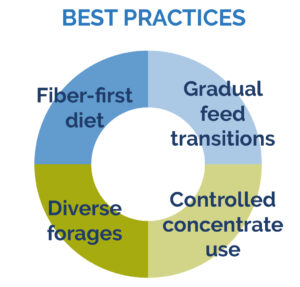
Photo: Getty Images

Antibiotics: Only Under Veterinary Guidance

Horse owners should only give horses antibiotics under veterinarians’ guidance and in line with their advice for treating specific diagnosed problems.

“We know that antibiotics are great drugs,” says Proudman. “They’re really important for combating bacterial infections. But we also recognize that they can be overused. Their use is not without consequences elsewhere in the animal, and inappropriate use of antibiotics can impact the gut microbiota. Being evidence-based in your use of antibiotics—only using them when there is good reason to suspect a bacterial infection—is an important step that owners and their veterinary advisers can take.”

Management Strategies

Researchers still have much to learn about the equine gut microbiome, its mechanisms, its effects on overall equine health, and potential dysbiosis treatments such as probiotics and fecal microbiota transplants. These have gained some currency in human medicine but, as our experts note, they currently lack strong evidence in horses. The Horse Microbiome Research Group is investigating about 20 bacterial strains to determine which might be beneficial to the equine microbiome, particularly in foals.


But experts have already provided straightforward guidance for horse owners and managers committed to keeping this adaptive ecosystem in healthy balance:

  • Feed for fiber first, and use concentrates judiciously
  • Feed a diverse diet that includes a variety of forages
  • Make any changes to feeding routines—hay and concentrates—gradually over at least a week
  • Use antibiotics only under a veterinarian’s guidance after a specific diagnosis


Researchers continue developing more precise tools, identifying microbial markers such as genes that reflect a horse’s diet and gut health. These markers could help veterinarians detect problems earlier and tailor feeding strategies to support a healthier microbiome.



Take-Home Message

The equine gut microbiome varies from horse to horse and influences digestion, immune system development, and overall health, with effects that can extend well beyond the gastrointestinal tract. Researchers are still working to define what an optimal microbiome looks like, but evidence supports practical management steps such as prioritizing fiber, making dietary changes gradually, and using antibiotics judiciously. Supporting the gut microbiome won’t guarantee better health or performance, but it remains a core part of horse care at every stage of life.

Sponsor Message

Bimeda®, a global leader in animal health solutions, has announced the U.S. launch of Gastrobim™ (omeprazole), the first and only FDA-approved bioequivalent to GASTROGARD® (omeprazole) for the treatment and prevention of recurrence of gastric ulcers in horses and foals 4 weeks of age and older. This apple-flavored formulation offers veterinarians, trainers, and horse owners a clinically equivalent, high-quality alternative for the effective management of equine gastric ulcer syndrome (EGUS), addressing a critical need in equine health. 

Since its initial launch in 2024, Gastrobim™ has rapidly emerged as the fastest-growing omeprazole product in Canada and Europe. Its strong adoption and positive reception among veterinarians and horse owners underscore its proven efficacy in treating and healing gastric ulcers, reinforcing its position as a trusted therapeutic option worldwide. The introduction of Gastrobim™ in the U.S. further expands Bimeda®’s established equine portfolio, which includes leading brands such as Equimax®, Polyglycan™, Detomiquin®, and Bimectin®, and reflects the company’s ongoing commitment to delivering innovative, reliable solutions to the equine industry. 

Equine gastric ulcer syndrome affects a significant percentage of performance horses, often leading to reduced appetite, behavioral changes, discomfort, and decreased athletic performance. By introducing a bioequivalent, apple-flavored alternative, Bimeda® aims to broaden access to effective treatment options and support improved health and performance outcomes across the equine industry.

Learn more at gastrobim.com.

Credits

Glenye Cain Oakford is an award-winning multimedia journalist, audio/video producer, and content strategy consultant who divides her time between Lexington, Kentucky, and Wiltshire, England. She specializes in veterinary science, equine, conservation, and public health topics.

Editorial Director: Stephanie L. Church

Managing Editor: Stephanie J. Ruff

Digital Editor: Haylie Kerstetter

Art Director: Claudia Summers

Web Producer: Jennifer Whittle

Facebook
X
Email
The Horse
Privacy Overview

This website uses cookies so that we can provide you with the best user experience possible. Cookie information is stored in your browser and performs functions such as recognising you when you return to our website and helping our team to understand which sections of the website you find most interesting and useful.