Types of Gastric Ulcers in Horses
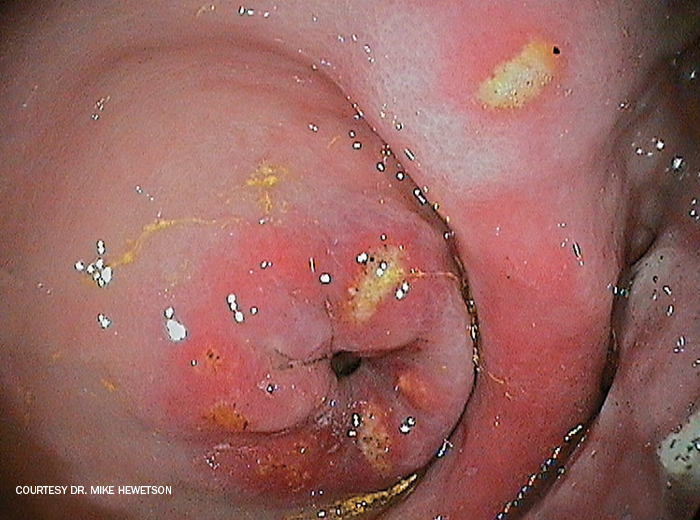
Equine gastric ulcer syndrome (EGUS) commonly affects horses, but clinical signs alone cannot confirm a diagnosis. Gastroscopy is the gold standard to identify the type of ulcers, based on their location, and assess their severity. Here we’ll learn how and why veterinarians grade gastric ulcers.
Not all ulcers are the same.
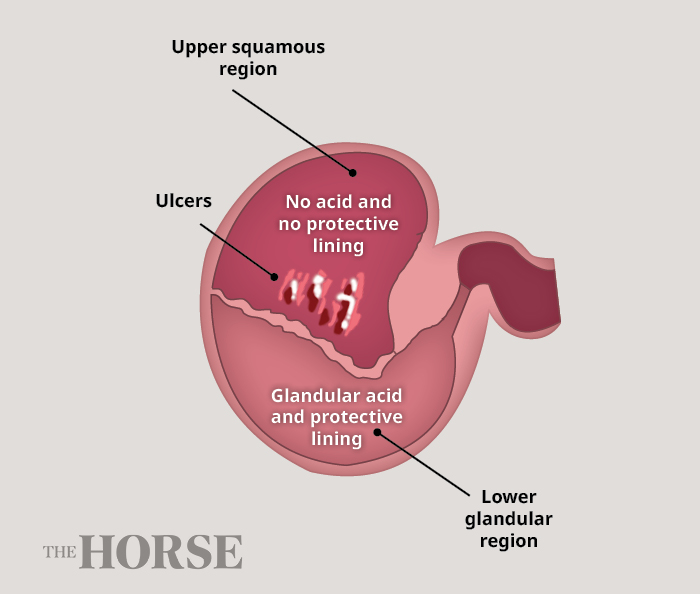
- ESGD (equine squamous gastric disease)—ulcers in the upper, squamous portion of the stomach
- EGGD (equine glandular gastric disease)—ulcers in the lower, glandular portion of the stomach
- A horse can have one type, both, or neither. The presence of one does not predict the presence of the other.
Clinical Signs of Gastric Ulcers
Theses signs raise suspicion but don’t confirm the presence of ulcers.
- Poor performance
- Attitude changes
- Girthiness
- Weight loss
- Reduced appetite
- Recurrent mild colic
Clinical signs are often vague and can vary. Some horses with significant ulcers show few or no obvious signs. The only way to confirm ulcers is by using gastroscopy (scoping the stomach). Equine veterinarians pass a long endoscope into the stomach, which allows direct visualization of the stomach lining to confirm whether ulcers are present. They can also identify whether lesions are squamous or glandular, which helps guide treatment and monitor healing.
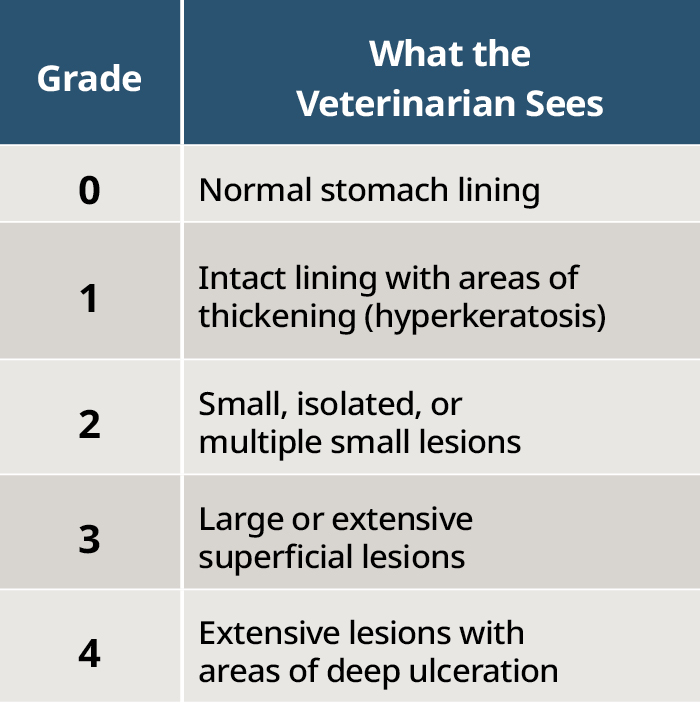
Squamous Ulcer (ESGD) Grading
The Equine Gastric Ulcer Council grading system is the commonly accepted 0–4 grading system veterinarians recommend for squamous ulcers.
Why Grading Ulcers Matters
Grading helps veterinarians:
- Assess severity
- Select appropriate treatment
- Track healing after therapy
- Compare examination findings
However, ulcer grade does not always perfectly predict how a horse feels or performs.
What About Glandular Ulcers?
A simple numerical score has not been shown to be reliable for glandular lesions, so veterinarians usually describe them in the following ways:
- Location
- Number/distribution
- Appearance
- Severity of lesions
Take-Home Message
If you suspect your horse has ulcers, talk to your veterinarian about a gastroscopic examination. If the exam confirms ulcers, your veterinarian can determine whether they are squamous, glandular, or both, assess their severity, prescribe treatment, and track healing progress.

Related Articles
Stay on top of the most recent Horse Health news with