Latest News – The Horse
EPM: Not So Common?
“Equine protozoal myeloencephalitis (EPM) is a common cause of neurological disease of horses in North and South America, and results from a protozoal infection with Sarcocystis neurona or Neospora hughesi (less commonly),” said
Strangles Strikes
Several strangles outbreaks across the country have complicated the spring showing, training, and racing plans for some horse owners. Several racetracks in Florida, Kentucky, and New York have established restrictions on animals from affected
Maryland Horses Succumb to Neurologic EHV-1
Three horses were euthanatized due to severe neurologic signs caused by equine herpesvirus type-1 at the Columbia Horse Center in Columbia, Md., the week of March 21, according to the animals’ attending vet. Two more horses at the facility
Conformation of Racehorses
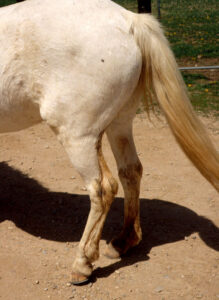
In her study, nearly all racing-bred Thoroughbred foals were carpus valgus (knock-kneed) at birth, many toed out, and a few had offset knees. But at about 18 months of age, nearly two-thirds had offset knees and the incidence of knock knees
Ophthalmology for Ambulatory Practitioners
“I have a special interest in eyes, but they’re only about 5% of my work,” began Ann Dwyer, DVM, of Genesee Valley Equine Clinic in Scottsville, N.Y., at the Western Veterinary Conference Feb. 20-24 in Las Vegas, Nev. “Some problems will always
Vaccine Care and Handling
“A lot of very smart people are not aware of how to properly handle vaccines,” said Rocky Bigbie, DVM, MS, director of field veterinary services with Fort Dodge Animal Health, at the 2005 Western Veterinary Conference held Feb. 20-24 in Las
Farnam/Purina Partner on New Feeding Program
On March 7, Farnam and Purina announced they were partners in the manufacturing and promotion of a new line of feeds and supplements. The line was created to avoid over-supplementation while delivering state-of-the-art nutrition to horses of all
“Seabiscuit” Star Euthanatized
Thoroughbred “I Two Step Too,” known for his role in “Seabiscuit,” was euthanatized on March 7 at the Kentucky Horse Park near Lexington after battling a rare type of tumor called a neuroblastoma in his nasal cavity. I Two Step Too was cast as
Update Influenza Vaccines
Veterinarians and horse owners, as caretakers of the health and wellbeing of our animals, tend to be vigilant about ensuring the safety and efficacy of vaccines. But do we ever step back to examine if these vaccines, which include multiple antigens
Vet Student/Farrier Courses
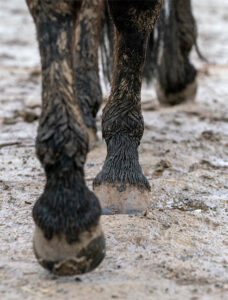
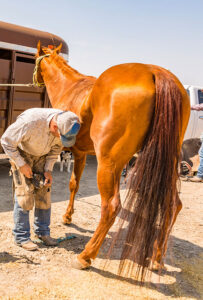
The importance of podiatry in equine practice and to the overall well-being (especially soundness) of the horse is well known. Treatment and prevention of lameness involving the distal limb centers around a thorough knowledge of hoof care. Due to
Athletic Taping of the Lower Limb
Athletic taping is commonly used in human sports medicine to begin a physical therapy program; it stabilizes injured soft tissues and helps prevent further injury. Years of experience in the use of athletic taping as well as scientific research
Dental Floating Value
Maintaining dental health is believed to be critical to optimum feed intake, digestive tract health, and body condition. In Western Canada, there are about 70,000 PMU mares that usually don’t get routine dental care. Researchers from the Western
What is Ringbone?
My 17-year-old Arab gelding has been diagnosed with ringbone. His granddam and another of her offspring also had this disease. What exactly is ringbone? Is it hereditary? What is its cause?
Rhodococcus Equi Pneumonia Linked to Large Farms, Lots of Horses
Farms with large acreage and many mares and foals are more likely to have cases of Rhodococcus equi foal pneumonia than smaller farms with fewer horses, according to a recently published Texas A&M University (TAMU) study. Additionally, farms that are intensively managed and use what are considered desirable practices to prevent disease are more likely to have R. equi cases.
Recurrent Mastitis
We have a 25-year-old mare that gets a case of mastitis almost like clockwork every 35 days.
Is My Horse Psychotic?
I bought my gelding as a stallion from a local sulky racetrack a year ago (where he never got out of his stall except for training). He had just turned three and was very excitable, so we had him gelded. After several months, he seemed to calm