Latest News – The Horse
Linking Chronic Laminitis to Immunologic Hyperreactivity
The pathogenesis of chronic laminitis remains unclear. There is growing evidence, however, of a link between this condition and the development of certain systemic diseases, such as kidney disease, that involve small blood vessel damage. There might also be a link between routine vaccination and acute episodes of chronic laminitis. This has led to the theory that chronic laminitis produces
Hyperbaric Oxygen Therapy: Healing Under Pressure
HBOT is one of the most powerful tools available as an adjunctive form of therapy, and in some cases it works well as the primary therapy in horses, says Casner. Colic and laminitis are the number one and two killers, respectively, of horses, and oxygen therapy (in conjunction with other therapies) can be very useful in treating both.
Glass Half Full?
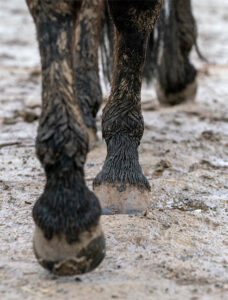
Mud. Yuck! Is there any worse problem that we face in our equine environment than simple dirt and water mixed into a gooey sludge? The English have a great word for going out into the mud–they “slog” through it. Certainly sounds like what happens when our boots sink and slide. Mud not only turns all our horses into 10-year-old boys, but it sucks off shoes (theirs and ours) and gets tracked
New WNV Equine Recombinant DNA Vaccine Approved
Editor’s note: A letter to the editor from Fort Dodge Animal Health cited inaccuracies in this article and has been included below.
A new West Nile virus (WNV) equine recombinant canarypox vaccine received USDA registration approval on Dec. 23, 2003, and could pave the way for a new generation of equine
Purdue Team Solves WNV Structure
Purdue University biologists recently determined the viral structure of the West Nile virus (WNV), a development that could greatly augment our understanding of the virus’ life cycle.
Using cryoelectron microscopy and advanced imaging techniques, the Purdue team has determined the orientation of the major surface proteins in a West Nile viral particle. Because these proteins are
New Electronic Certificates of Veterinary Inspection
The USDA’s Centers for Epidemiology and Animal Health announced to industry stakeholders Oct. 22, 2003, that Veterinary Services (VS) is working with six states on an electronic Interstate Certificate of Veterinary Inspection (ICVI) project. This would allow state and federal animal health officials to have real-time access to information regarding livestock movements in and out of their
Mare/Foal Interaction
Abby L. Fowden, of the University of Cambridge in the United Kingdom, discussed nutritive and endocrine functions of the placenta at the first Equine Placenta Workshop held at the University of Kentucky Gluck Equine Research Center on Dec. 5-6, 2003. She said the functions of the placenta are as a barrier, for transport of nutrients and waste, nutrient production, and hormone production.
Cribbing and Colic
Cribbing, the oral stereotypic behavior in which the horse grabs an object with his teeth while flexing his neck and sometimes swallowing air, has long been suspected as a cause of colic. A study from the Universities of Illinois and Liverpool suggests that cribbing increases the risk for entrapment of the small intestine in the epiploic foramen (the passage between the liver and the
Multiple Ovulations
Colorado State University’s Ed Squires, PhD, an honorary Diplomate in the American College of Theriogenology (reproduction), presented several lectures at the 2003 American Association of Equine Practitioners convention. One presentation was on using a new commercially available product called equine follicle-stimulating hormone (eFSH, from Bioniche Animal Health) to have mares superovulate
American Quarter Horse Assn. Position on Slaughter
The American Quarter Horse Association (AQHA) reiterated its position on euthanasia and horse slaughter in the wake of an accusatory Blue Horse Charities letter that was disseminated to the racing industry in early November (see article #4801 online). In part, the AQHA position statement read:
“AQHA does not support (national
Equine Conference on Laminitis and Diseases of the Foot
Laminitis was the primary focus of the Second International Equine Conference on Laminitis and Diseases of the Foot, held Nov. 10-11 in West Palm Beach, Fla. This conference is held every other year and sponsored in large part by John K. and Marianne Castle, whose Appaloosa Spot had chronic laminitis secondary to Cushing’s disease and died from colic years ago. There are several other private
Evaluating and Measuring Hoof Shape
Researchers at the University of California, Davis, recently developed a new three-dimensional system for measuring various aspects of the horse’s sole. One day their work might help ascertain if hoof shape abnormalities can be predictors of impending injury. Additionally, the system might help researchers design new footwear and/or evaluate the foot during movement.
Susan Stover, DVM,
Preparation of the Mare for Normal Foaling
Riddle said that most mares are outside all of the time or are only brought up for feeding until they reach one month before their expected foaling date. Whatever is preferred, broodmares thrive on routine.
Dystocia Management
Incidence of dystocia is around 4%, although this varies by breed, Embertson said. While many dystocias are resolved on the farm, some cases need to be referred to a hospital. This decision should be made based on the position of the foal, duration of the dystocia, distance to and preparedness of the referral hospital, and the experience of the farm’s foaling personnel and veterinarian.
Jump-Starting the Dummy Foal
The term “dummy foal” is being used less and less. A more accurate term for the foal exhibiting behavioral or neurologic abnormalities that are not related to infectious or toxic conditions, congenital or developmental abnormalities, or metabolic disorders is hypoxic ischemic encephalopathy (HIE). Sometimes the term “neonatal maladjustment syndrome” is used.
Foal Care From Birth to 30 Days (AAEP 2003)
Foal care from the first few hours of life to one month can be critical in the overall health and welfare of the newborn foal.