Nutramax Laboratories Joins AAEP Educational Partner Program
The AAEP has added Nutramax Laboratories Inc., to its Educational Partner Program.

The AAEP has added Nutramax Laboratories Inc., to its Educational Partner Program.
UC Davis has scheduled the Third Annual Practitioners Seminar for October 2 beginning at 8:30 a.m.

Researchers examine what stem cells do once inside the horse’s body and whether they stay where they’re put.
Researchers from Inner Mongolia Agricultural University and BGI have sequenced the Mongolian horse genome.
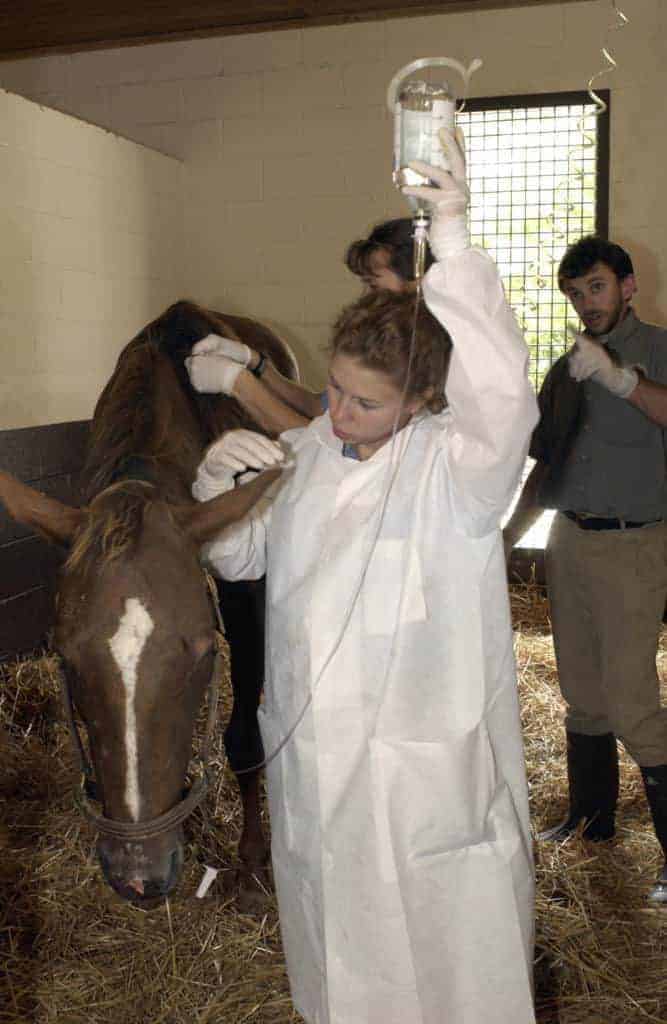
Equine veterinarians are 23 times more likely to contract antibiotic-resistant bacteria than horse owners.
On a plane returning from this year’s North American Veterinary Regenerative Medicine Conference, held June 2-4 in Lexington, Ky., I can barely bridle my excitement. I feel as if I have just been part of the future of medicine and science.

Researchers believe hyperbaric oxygen can be a beneficial adjunctive therapy to regenerative medicine.
The FEI is running a special session during the 2011 WEVA Congress in India to mark World Veterinary Year.
Veterinarians returned to the Meadowlands Racetrack for the 2011 Hambletonian Continuing Education Seminar.

Researchers are determining the most efficient way to provide enough stem cells for an effective treatment.
Foals are small enough to fit in the gantry of a CT machine, which is helpful in assessing lung disease.
The AAEP commends Kevin Nelson, DVM, for showing kindness through his service to a therapeutic riding program.

The neurologic form of EHV-1 is highly contagious in horses and multiplies within its host very rapidly.
The Humane Society Veterinary Medical Association is seeking entries for its Equitarian Workshop Trip Awards.
Supplements, polysulfated glycosaminoglycans, and regenerative medicines are some approaches for treating OA.
Develop your senior horse’s diet with geriatric conditions and challenges in mind.