LSU Veterinary School Offers MRI for Horses
The LSU School of Veterinary Medicine recently acquired a Hitachi Echelon 1.5 Tesla MRI unit. This is the first and only high field MRI unit in the state of Louisiana for veterinary use.
News and issues for equine health professionals
The LSU School of Veterinary Medicine recently acquired a Hitachi Echelon 1.5 Tesla MRI unit. This is the first and only high field MRI unit in the state of Louisiana for veterinary use.
Belknap remarked on the latest research showing that laminitis is an intense inflammatory injury of the foot and is no longer believed to be solely a blood flow problem.
Horse owners commonly add nutraceuticals to their horses’ diets to treat or prevent joint disease, but most products have no research data supporting their effectiveness.
In general, controlled studies do not exist regarding the efficacy of various treatments for laminitis, and some therapies have additional risks beyond their failure to improve the situation.

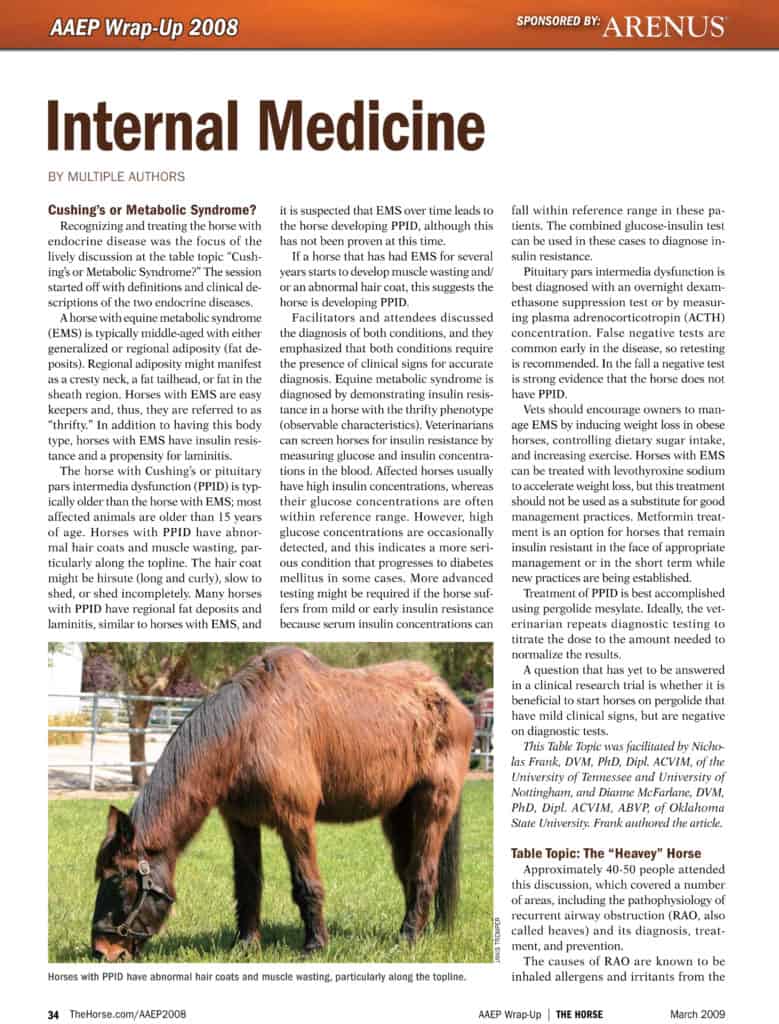
Table topics at the 2008 American Association of Equine Practitioners Convention included endocrine disease, the pathophysiology of recurrent airway obstruction (RAO, also called heaves), and compounding. Attendees discussed the differences between Cushing’s disease and equine metabolic syndrome (EMS), the diagnosis, treatment, and prevention of RAO, and current compounding guidelines.

During the 2008 American Association of Equine Practitioners Convention, experts discussed multiple topics relating to equine reproduction, including stallion fertility estimation, artificial insemination, techniques for increasing pregnancy rates and reducing castration herniation, partial phallectomy, hormone therapy, uterine inflammation, and more.


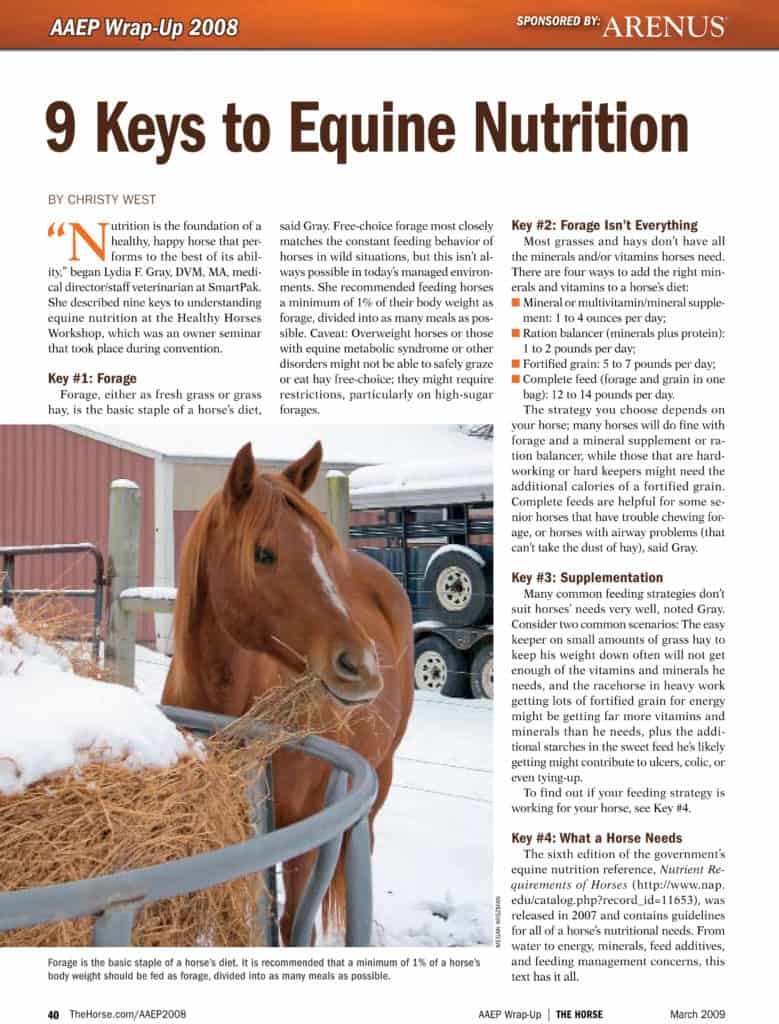
Lydia F. Gray, DVM, MA, medical director/staff veterinarian at SmartPak described nine keys to understanding equine nutrition at the Healthy Horses
Workshop during the 2008 American Association of Equine Practitioners Convention. Topics included forage, supplementation, nutrient requirements, the digestive tract, nutrient classes, and body condition scoring.

Lameness was an important topic at the 2008 American Association of Equine Practitioners Convention. Topics included arthritis treatments, extension tests, racetrack surfaces, navicular bursa injections, bone fragility syndrome, oral joint health supplements, nutraceuticals, sport horses, gaited horses and more.

Experts discussed the causes, treatments, detection, and prevention of laminitis at the 2008 American Association of Equine Practitioners Convention. Topics included the efficiency of drug treatment, managing acute/chronic laminitis, foot and open-sole casts, and supporting limb laminitis.

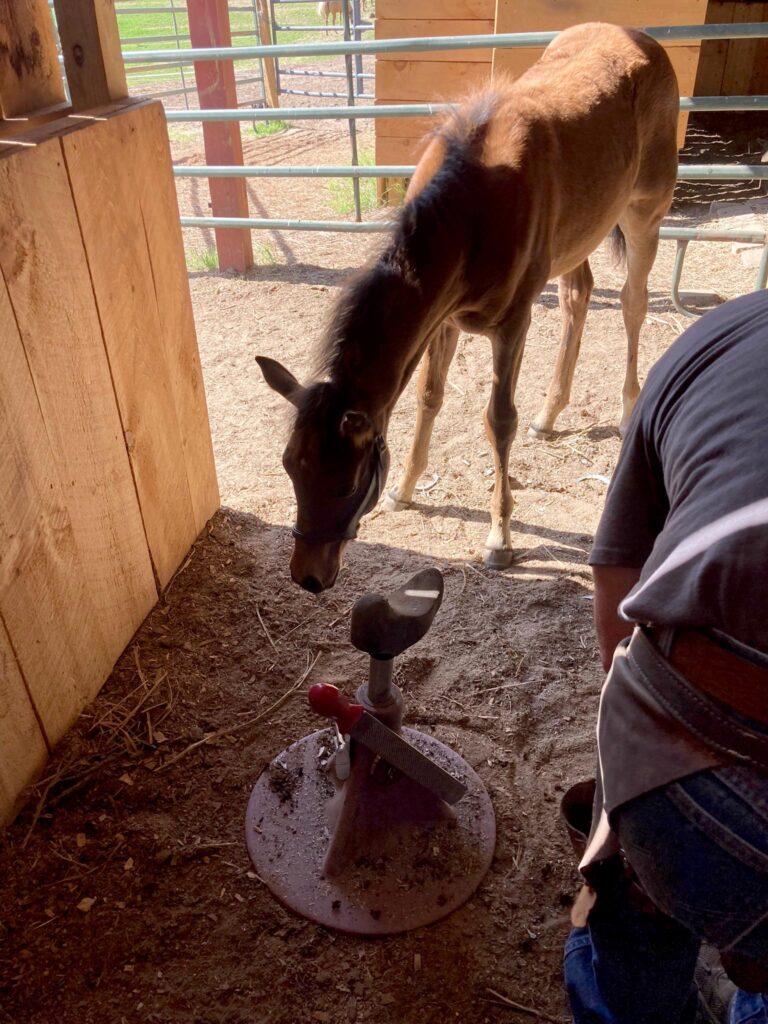
Equine authorities began the Putting Science into Farriery session at the 2008 AAEP Convention with a discussion of the farrier/veterinarian relationship. Also addressed were the history of farriery for horses as well as topics such as foot form and function, wall separations and quarter cracks in the hoof, trimming and shoeing, hoof repair composites and adhesives, and breakover techniques.
The chief executive of the nation’s largest veterinary association recently appeared before a Senate subcommittee to address a new report from the Government Accountability Office (GAO) that details a shortage of veterinarians available to fill
Scoliosis, a curvature of the spine, is most often attributed to congenital vertebral malformations, possibly associated with malposition of the fetus in the uterus. However, researchers have linked cases of acquired scoliosis presented at Cornell

The 2008 American Association of Equine Practitioners(AAEP)Convention in San Diego, Calif. drew a near-record crowd. Attendees discussed equine welfare, including the Unwanted Horse Veterinary Relief Campaign (UHVRC), which will provide free equine vaccines to rescue and retirement facilities. Awards were issued for educational and philanthropic efforts. New officers and board members took office.

Stephen Reed, DVM, Dipl. ACVIM, of Rood & Riddle Equine Hospital in Lexington, Ky., described selected equine neurologic diseases during the prestigious Milne Lecture during the 2008 AAEP Convention. Reed discussed cervical vertebral stenotic myopathy (CVM), also known as Wobbler Syndrome, equine protozoal myeloencephalitis (EPM), and Equine herpesvirus-1 (EHV-1).

Equine authorities at the 2008 American Association of Equine Practitioners Convention discussed preparation for and management of barn fires, eventing emergencies, endurance event injuries, racetrack emergencies, emergency care at rodeos, emergency services at steeple-chase and cross-country hunter events, and emergency veterinary care at horse shows.
Stay on top of the most recent Horse Health news with
"*" indicates required fields