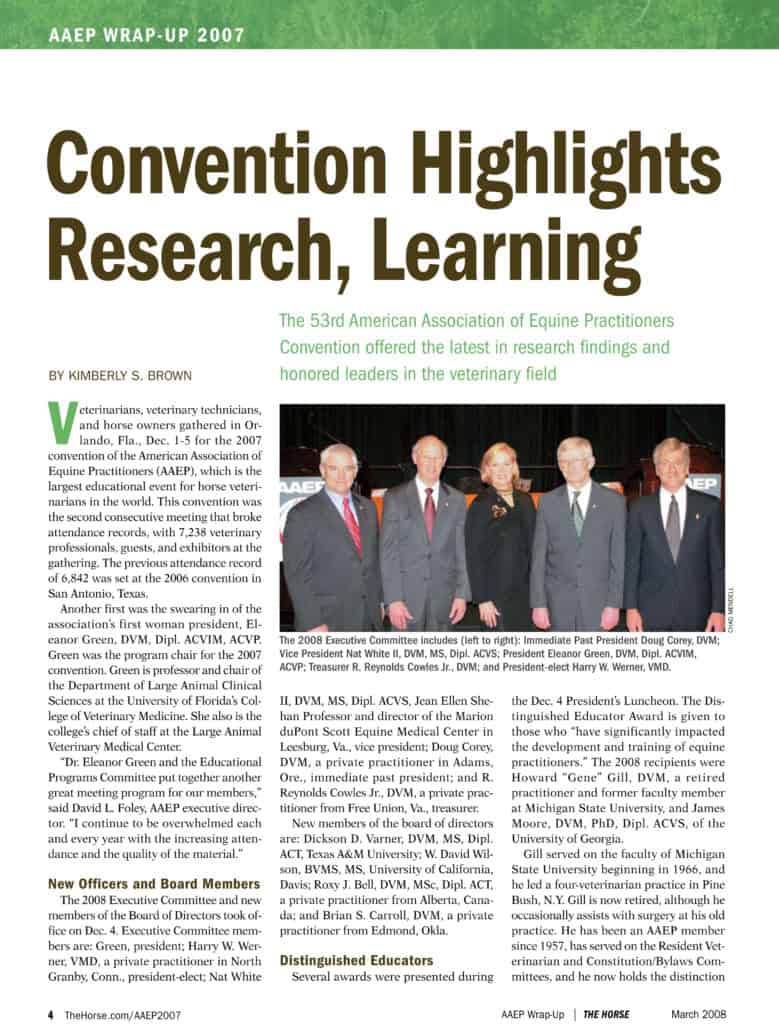
Convention Highlights, Research, Learning
The 53rd American Association of Equine Practitioners Convention, held in Orlando, Fla., Dec. 1-5 of 2007, offered the latest in research findings and honored leaders in the veterinary field.

The 53rd American Association of Equine Practitioners Convention, held in Orlando, Fla., Dec. 1-5 of 2007, offered the latest in research findings and honored leaders in the veterinary field.
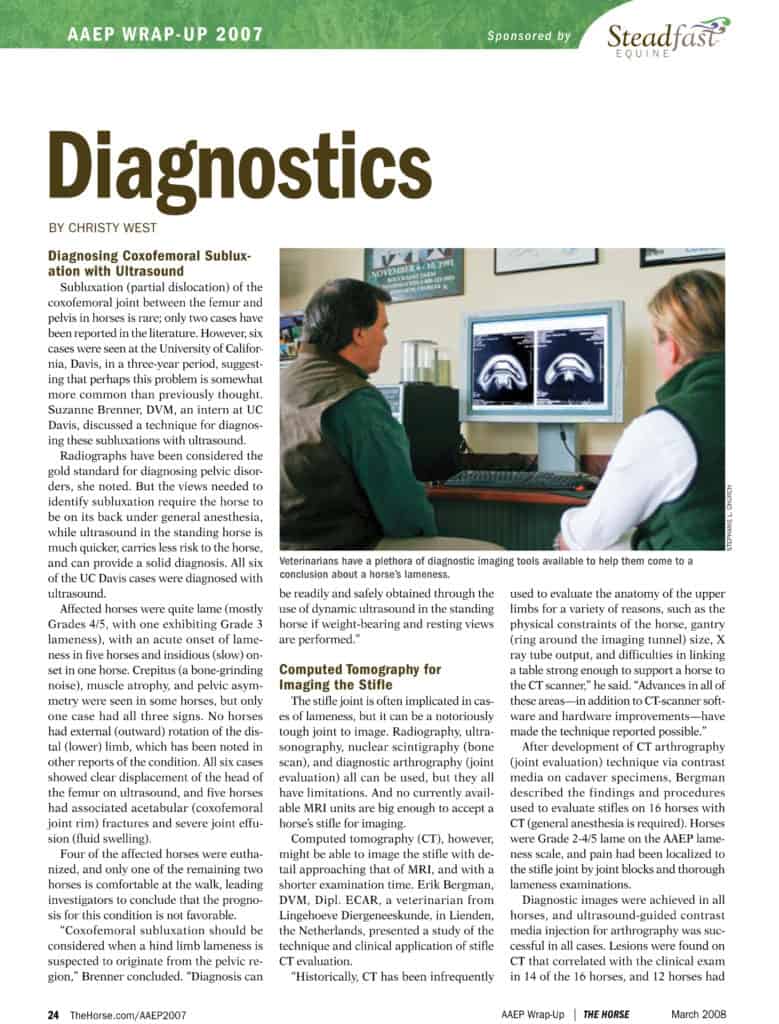
Equine experts at the 2007 AAEP Convention discussed numerous diagnostic topics, including ultrasound, computed tomography for imaging the stifle, digital flexor tendon sheath nerve blocks, upper cannon area injuries, MRI for diagnosing sesamoidean ligament desmitis, radiograph repositories and quality, and airway exam results among other topics.
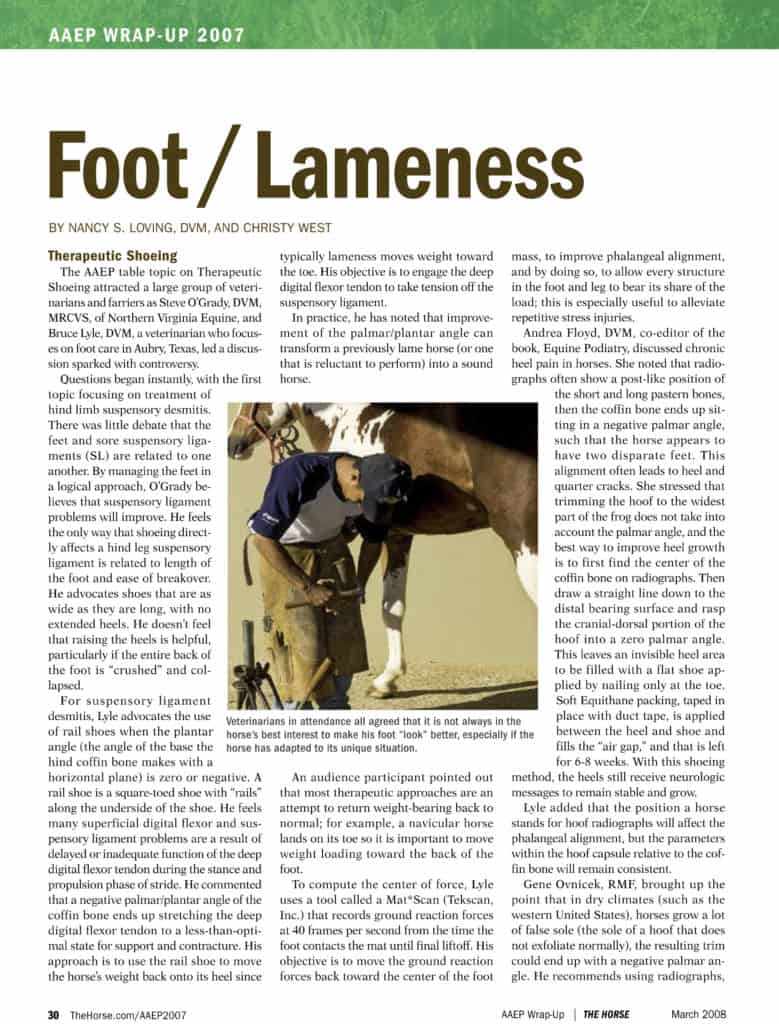
Equine authorities at the 2007 AAEP Convention discussed multiple topics relating to lameness in horses, including therapeutic shoeing, managing acute/chronic laminitis, wooden shoes, and stem cell therapy, as well as specific topics such as palmar process fractures of the coffin bone, nuclear scintigraphy, cannon bone stress fractures, and enostosis-like lesions.
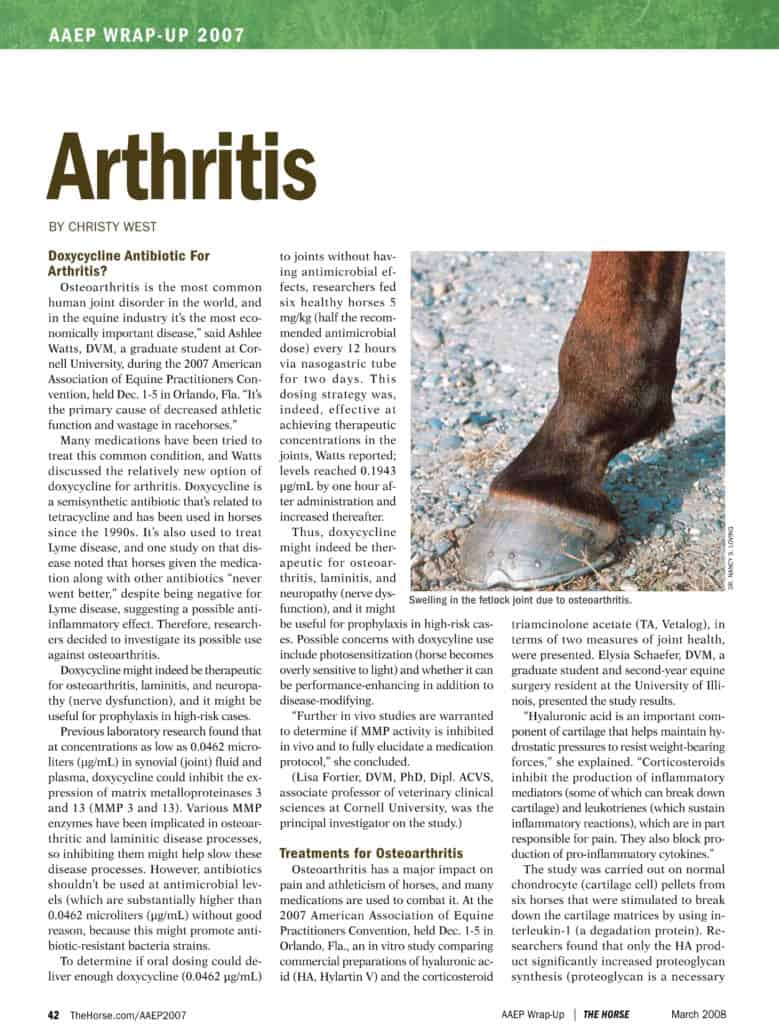
Treatments for osteoarthritis in horses, including the doxycycline antibiotic and the nutraceutical Myristol, were discussed at the 2007 AAEP Convention. Also discussed were the clinical efficacy and joint health parameters of Surpass (topical liposomal diclofenac cream) compared to those of the commonly used oral non-steroidal anti-inflammatory medication phenylbutazone (Bute).

Experts at the 2007 American Association of Equine Practitioners Convention discussed multiple topics related to equine digestive health, including sand colic, post-surgery stapling, hindgut acidosis, risk factors for gastric ulcers in Thoroughbreds, and alfalfa’s effects on ulcer severity.
Strategies for safely airlifting horses were among several general management topics discussed at the 2007 American Association of Equine Practitioners Convention. Other topics included back sensitivity, poisoning, dentistry, acupuncture, and chiropractic care.
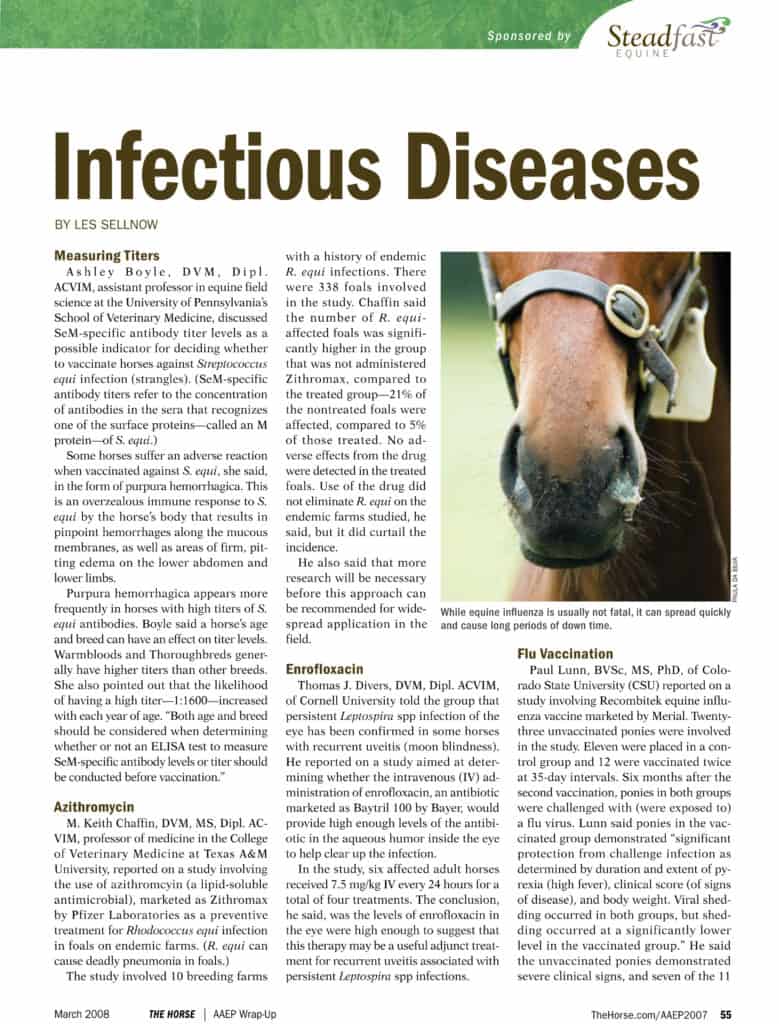
Equine authorities discussed numerous infectious disease topics and studies during the 2007 AAEP Convention, including antibody titer levels, azithromycin to help prevent Rhodococcus equi infection, enrofloxacin to treat Leptospira infection of the eye, influenza/West Nile virus vaccines, dentistry, and Lawsonia.
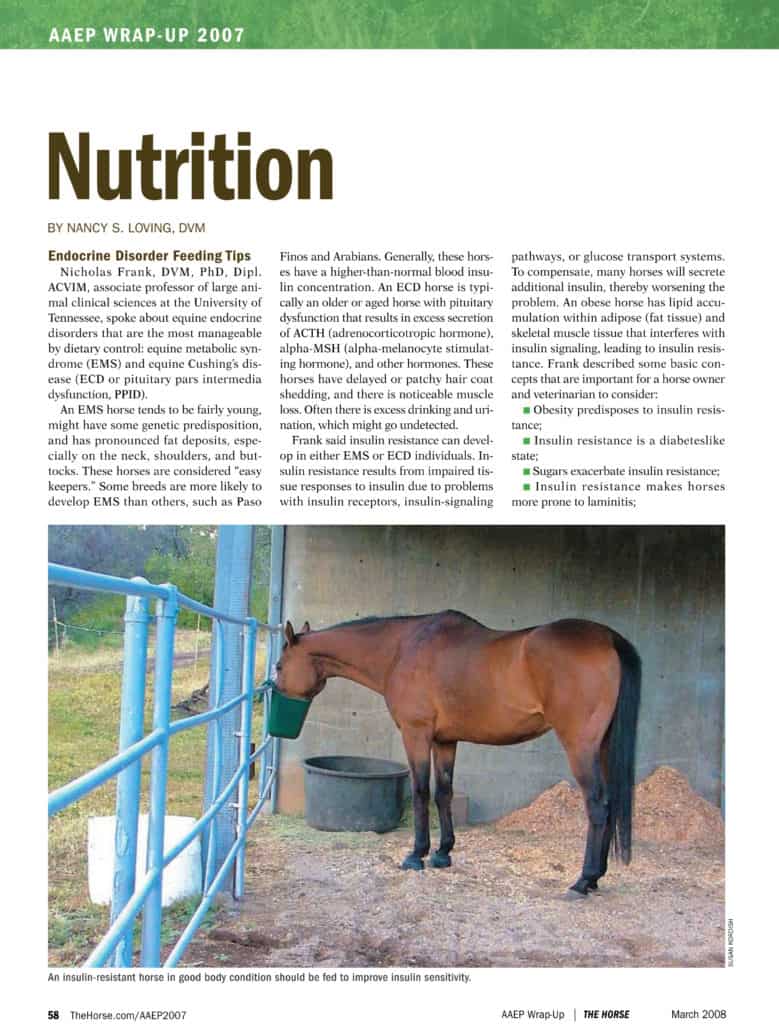
Nutrition topics from the 2007 American Association of Equine Practitioners Convention included endocrine disorders, feeding tips, feeding after colic, geriatric horse nutrition, and managing carbohydrates.
The University of Tennessee (UT) Institute of Agriculture has named James P. Thompson, DVM, PhD, Dipl. ACVIM, ACVM, as Dean of the UT College of Veterinary Medicine. Thompson’s appointment is effective Oct.1, 2008.
The American Association of Equine Practitioners’ (AAEP) Tennessee Walking Horse Task (TWH) Force recommendations to eradicate the practice of soring drew strong reaction from Walking Horse industry members who label the directives costly and
The Humane Society of the United States (HSUS) today applauded recommendations set out in the American Association of Equine Practitioners’ newly released white paper, “Putting the Horse First: Veterinary Recommendations for Ending the Soring of
The American Association of Equine Practitioners’ (AAEP) Tennessee Walking Horse Task Force has issued a white paper on ending soring of the breed?s show horses. The practice of inflicting pain on a horse?s forelegs to induce a
German researcher Patricia Anielski is raising the bar when it comes to drug testing in horses. Anabolic steroids such as testosterone propionate can be detected in hair samples to identify current and even previous abuse of the substance.
It’s not a new fad and probably isn’t what you’re thinking. Horses sometimes accidentally become wounded by pieces of metal or wire, splinters of wood, or even grass awns that become lodged in their tongue, mouth, or throat as they eat.
Stem cell research has shown that adult stem cells can be safely and easily harvested from fat deposits in a horse and used to treat a variety of musculoskeletal diseases. These cells are capable of becoming bone, muscle, cartilage, or tendon cells.
Generally, the population of horses that develop severe colic includes the ones that don’t respond to the veterinarian’s initial treatment. Almost all severe colics start as mild colics that are simply left too long.