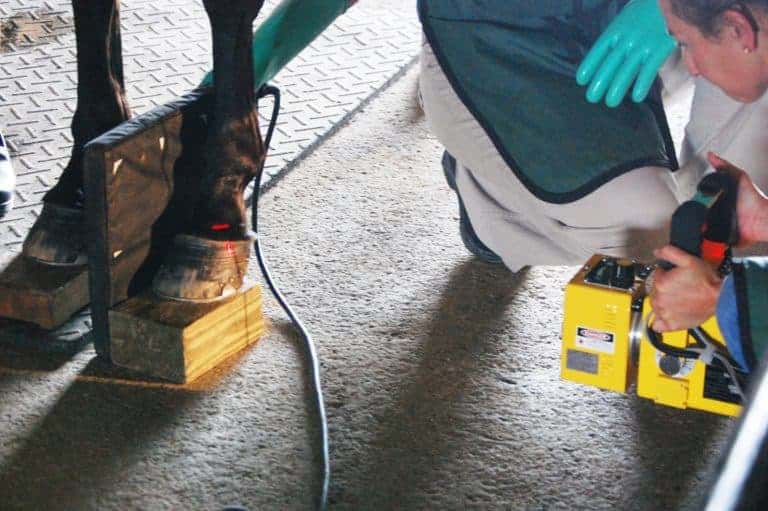
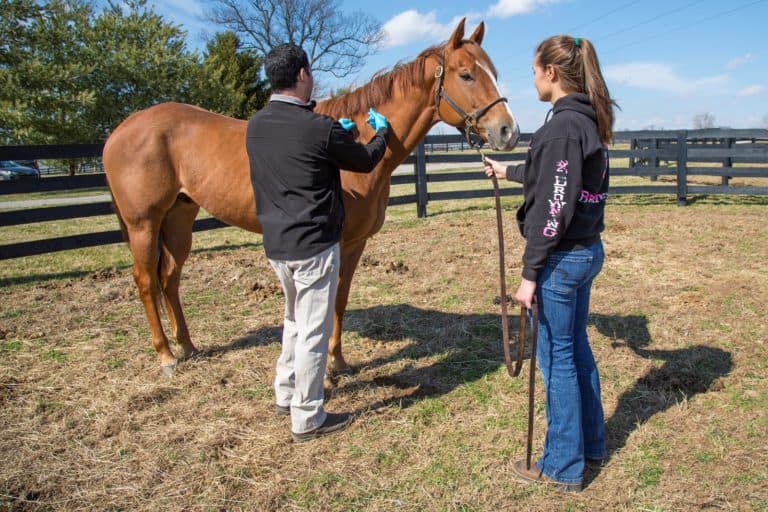
Prepurchase Exams: Not a Yes or No Answer
Learn what a buyer and veterinarian need to be aware of when conducting an equine prepurchase examination.


Learn what a buyer and veterinarian need to be aware of when conducting an equine prepurchase examination.

A horse in Weld County is the first confirmed case of WNV in a Colorado horse in 2016.

The meeting will take place Sept. 8-9 in Elko, Nevada, and will be live-streamed online.
The full-service hospital is located about a mile from Saratoga Race Course.
Topics will include neurologic exams, lameness diagnosis, regenerative medicine, laminitis, dynamic endoscopy, and more.

The affected horse from Madison County did not survive.
The unvaccinated 1.5-year-old Friesian stallion has been unable to stand for a week and is receiving supportive care.
Dr. Sue Stover’s research focuses on diagnosing, treating, and preventing musculoskeletal injuries in equine athletes.
Merial says the prescription tablets will be available on the market in early fall.

The forum is designed to unite the operations around the world that facilitate and promote the retraining of racehorses.

The BLM is offering a $2,500 reward for information leading to the arrest and conviction of those responsible.
Researchers are studying immunotherapy using an antibody called anti-CD47 for reducing equine skin tumors.

Horse owners are urged to assist with the research by completing an online survey.

The JOC provides a communication link between horse owners and the FEI.
Potomac horse fever was confirmed in two Frederick County horses, one of which died from the disease.

Find out how the equine competitors from around the world got to Brazil.