Game On Dude to Old Friends
The 7-year-old gelded son of Awesome Again won 16 of 34 races and earned just under $6.5 million.


The 7-year-old gelded son of Awesome Again won 16 of 34 races and earned just under $6.5 million.
Delegates discussed international competition horse movement at a three-day conference that concluded yesterday in Dubai.
Participating hosts reached more than 25,000 horse industry newcomers throughout the challenge.
The top three winning hosts were selected based on written entries describing their outreach to newcomers this summer.
The Summer Riding Arena’s mobile roof construction enables riders to train their stallions in the fresh air year-round.

An unvaccinated 8-year-old Paint gelding from Augusta County tested positive for West Nile virus (WNV).
Equine Guelph and the University of Guelph are conducting a study on the awareness of current research among members of the horse industry in Ontario, Canada.
The Australian Veterinary Association debunks some misconceptions about the safety of the hendra virus vaccine.

One university integrated equitation science into their program to teach behavior and learning theory.

Drivers must now use two hands on the reins at all times, which restricts motion of the whip to a flick of the wrist and forearm.
A 4-year-old Gloucester County mare, a 2-year-old Ocean County mare, and a 6-year-old Burlington County gelding succumbed to the disease.
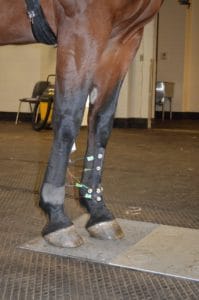
Electroarthrography (EAG) could be used to detect damaged or osteoarthritic cartilage in a noninvasive manner.
The company’s Industry Support Program has donated more than $7.3 million since 2008.

Michigan animal health officials have confirmed three equine cases of Eastern equine encephalitis (EEE): one in a horse from Oakland County and two in horses from Lenawee County.

Utah animal health officials have announced that tests have confirmed three cases of West Nile virus (WNV) in horses in Box Elder, Uintah, and Iron counties.
Raymond Geor, BVSc, PhD, Dipl. ACVIM, will take his new post at Massey University in March 2015.