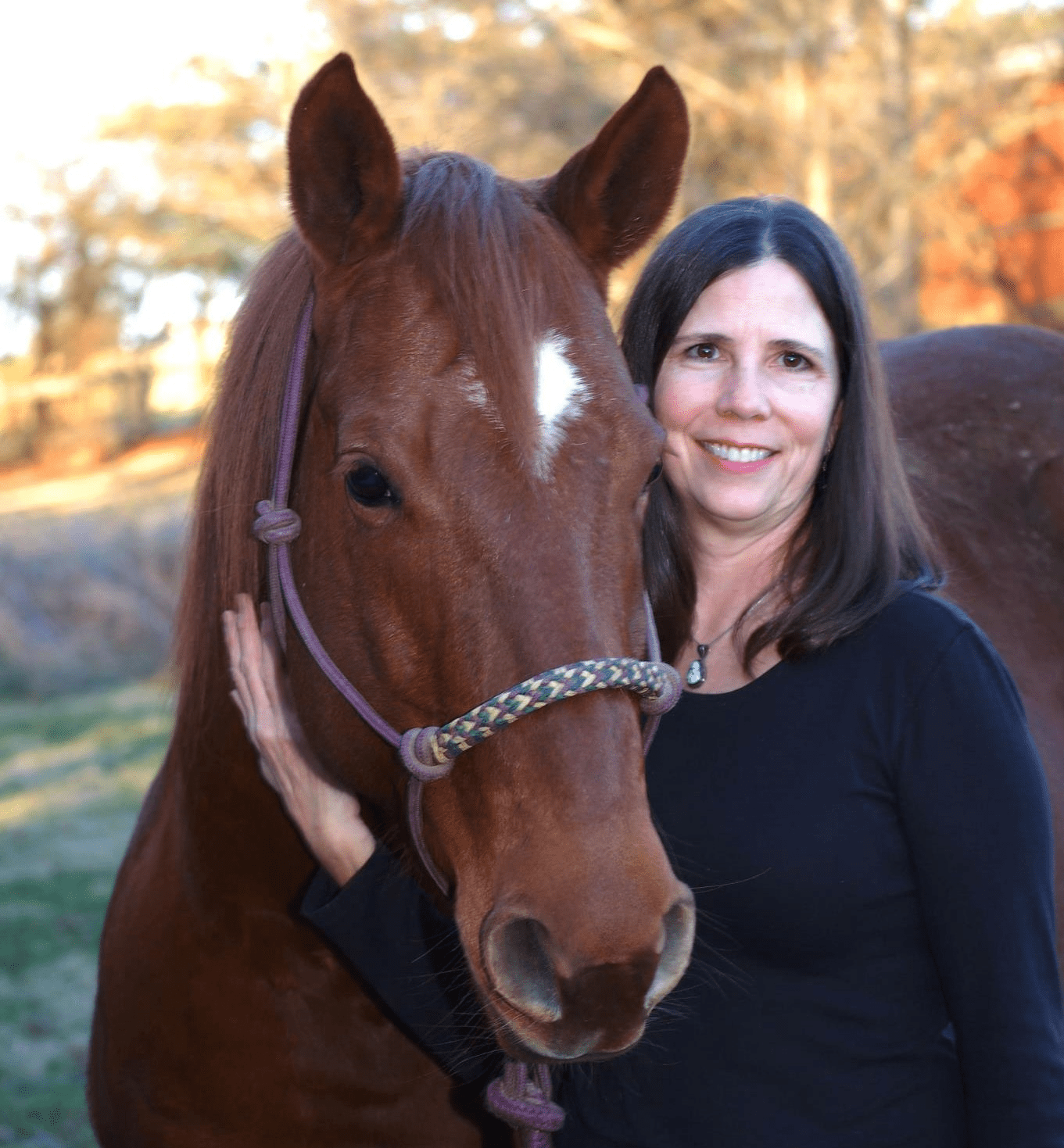
Kimberly S. Brown

Kimberly S. Brown has served as editor and continues to contribute to My Senior Horse, which she founded for Equine Network and Linda Mars. She previously spent 10 years at Equine Network and three years working in equine nutrition. Before that, she worked nearly 30 years at The Blood-Horse, spending her final 15 years on The Horse and TheHorse.com.

Articles by: Kimberly S. Brown

AAEP 2003: Multiple Ovulations

There are three major reasons to attempt to have a mare “superovulate” or ovulate more than one follicle at a time. First, in embryo transfer programs there is a greater chance of recovering an embryo with superovulation, thus reducing the expense of getting a viable embryo for transplanting. Second, it has been found that superovulation of a mare in transition (early in the year before she i
Read More

Feeding to Improve Fertility of Stallions (AAEP 2003)

Research has shown that boars can be fed a specific diet to increase fertility, and the same might be true of stallions. Steven Brinsko, DVM, PhD, Dipl. ACT, from Texas A&M University, discussed the potential of feeding a nutraceutical to stallions to enhance their fertility during his presentation at the American Association of Equine Practitioners convention.

He said the

Read More

2003 AAEP Convention a Success

A record crowd of nearly 6,200 attended the 49th annual convention of the American Association of Equine Practitioners (AAEP) in New Orleans, La. Adding to that total was twice the number of veterinary students who attended the 2002 convention. The convention offered nearly 100 scientific presentations, a hands-on wet lab, and an equine health seminar for horse owners.

The 50th Annua

Read More

Increase In Leptospirosis Reported In Kentucky

Leptospirosis, often called just “lepto,” can cause flu-like illness in horses that sometimes results in abortion or uveitis (moon blindness). In Kentucky, there seems to be a cyclic pattern to abortions caused by leptospirosis. In 2001, there were about 40 cases, but over the past two years there were less than 10 each year. Through Jan. 12 of 2004, there have been already 27 cases, accordin

Read More

Funding Sought for Reproductive Research

When mare reproductive loss syndrome (MRLS) struck in 2001, the industry was scared and demanding answers. Nearly 3,000 of that year’s pregnancies were lost, some horses were diagnosed with heart and eye problems, and no one could figure out what was going on. And there were no funds set aside to handle a battle against an unknown equine disease.

Researchers at the University of

Read More

MRLS Experiment Rundown

A meeting at Keeneland racetrack for a select group from local Thoroughbred breeding farms on Jan. 6 offered a wrap-up of the six experiments done by researchers at the University of Kentucky pertaining to mare reproductive loss syndrome (MRLS). The synopses of those experiments, as presented by Karen McDowell, PhD (equine reproduction), are as follows:

Experiments 1 and 2,

Read More

Police Horse Diary

Click here for Kim’s reports

This diary will be a new undertaking for TheHorse.com, and we hope you’ll share your comments and questions as we guide the educational process of these weanlings. The goal is to work with a curriculum developed by Certified Applied Animal Behaviorist Sue McDonnell, PhD, of the University

Read More

MRLS: We Need To Know More

“In the final analysis, we do not understand this disease,” said Bruce Webb, PhD, an entomologist at the University of Kentucky who has been a leading researcher into the problem of mare reproductive loss syndrome (MRLS).

Webb and Karen McDowell, PhD, a reproduction specialist from the Gluck Equine Research Center at the university, presented a synopsis of the MRLS research

Read More

Equine Vacation: Monumental Escape

It can be as simple as that first outing in the fall, with leaves crunching underfoot and cool breezes blowing life into us and our horses. It can be as exciting as a once-in-a-lifetime trip to herd cattle in Wyoming, a vacation in Germany to learn dressage under the tutelage of a master, or riding on the beach with waves crashing and the smell of freedom blown in the salty air.

Read More

Coming of Age

We’re all getting a little bit older, but as with fine wine and good horses, that often means things are getting better. The Horse magazine is celebrating its 21st year in 2004 since its inception as Modern Horse Breeding. And you’ll notice a few things different this year. For one, we are sharing our love of our horses in a new column called Horse Fever. We also are

Read More

Police Horse Diary 12/31/03

First Three Months
It’s amazing that time flies so fast. This morning there was a heavy frost and the babies–thinking they are going to be in Canada for the winter–have heavy coats that are frost-tipped. They like this cold weather much better than the warm spells where they end up sweating through all that hair.

Conan is healing well. Dr. Carol MacLeod was by th

Read More

Equine Placenta Workshop: Placentitis

Mats Troedsson, DVM, Dipl. ACT, University of Florida (with co-author Walter Zent, DVM, of Lexington, Ky.), discussed clinical ultrasound in evaluation of the equine placenta to identify and treat mares with placentitis. He said placentitis is a common cause of abortion in the United States. Most cases are believed to be the result of an ascending infection (starting at the cervix) during lat

Read More

Police Horse Diary 12/9/03: Treating Conan’s Abscess

First, thanks for all the e-mails of support for this Diary and for the boys. Second, I love my vet! She’s not just a professional, but she cares about the today, and the tomorrow. If I were eligible, I’d nominate her for the AAEP’s My Vet Matters contest that starts in January. Beginning Jan. 1, 2004, horse owners may submit an entry that explains why their veterinarian is exceptional in his

Read More

The Equine Placenta: Mare and Foal Interactions

Abby L. Fowden, University of Cambridge, UK, discussed nutritive and endocrine functions of the equine placenta at the first Equine Placenta Workshop held at the Gluck Equine Research Center at the University of Kentucky on Dec. 5-6. She said the functions of the placenta are as a barrier, for transport of nutrients and waste, nutrient production, and hormone production.

Placental

Read More

Equine Placenta and Possible Problems

A two-day exclusive gathering of leading reproductive researchers and practitioners from around the world convened at the Maxwell H. Gluck Equine Research Center in Lexington, Ky., Dec. 5-6, to discuss the equine placenta. From the evolutionary development of the placental layers to mare reproductive loss syndrome, no topic was left untouched if it dealt with the fine, and sometimes little

Read More

More From The Horse

FEMA_-_34534_-_Horses_in_a_flooded_Missouri_pasture
reddish brown standing horse with vibrant colors in a metal grid box, the facial expression looks sad, by day, without persons
Pferd im herbstlichen Wald
Insektenplage. Schönes Pferd frei zwischen gelben Blumen auf einer Wiese wird von Insekten attackiert

Stay on top of the most recent Horse Health news with

FREE weekly newsletters from TheHorse.com

Sponsored Content

Weekly Poll

sponsored by:

Readers’ Most Popular

The Horse
Privacy Overview

This website uses cookies so that we can provide you with the best user experience possible. Cookie information is stored in your browser and performs functions such as recognising you when you return to our website and helping our team to understand which sections of the website you find most interesting and useful.