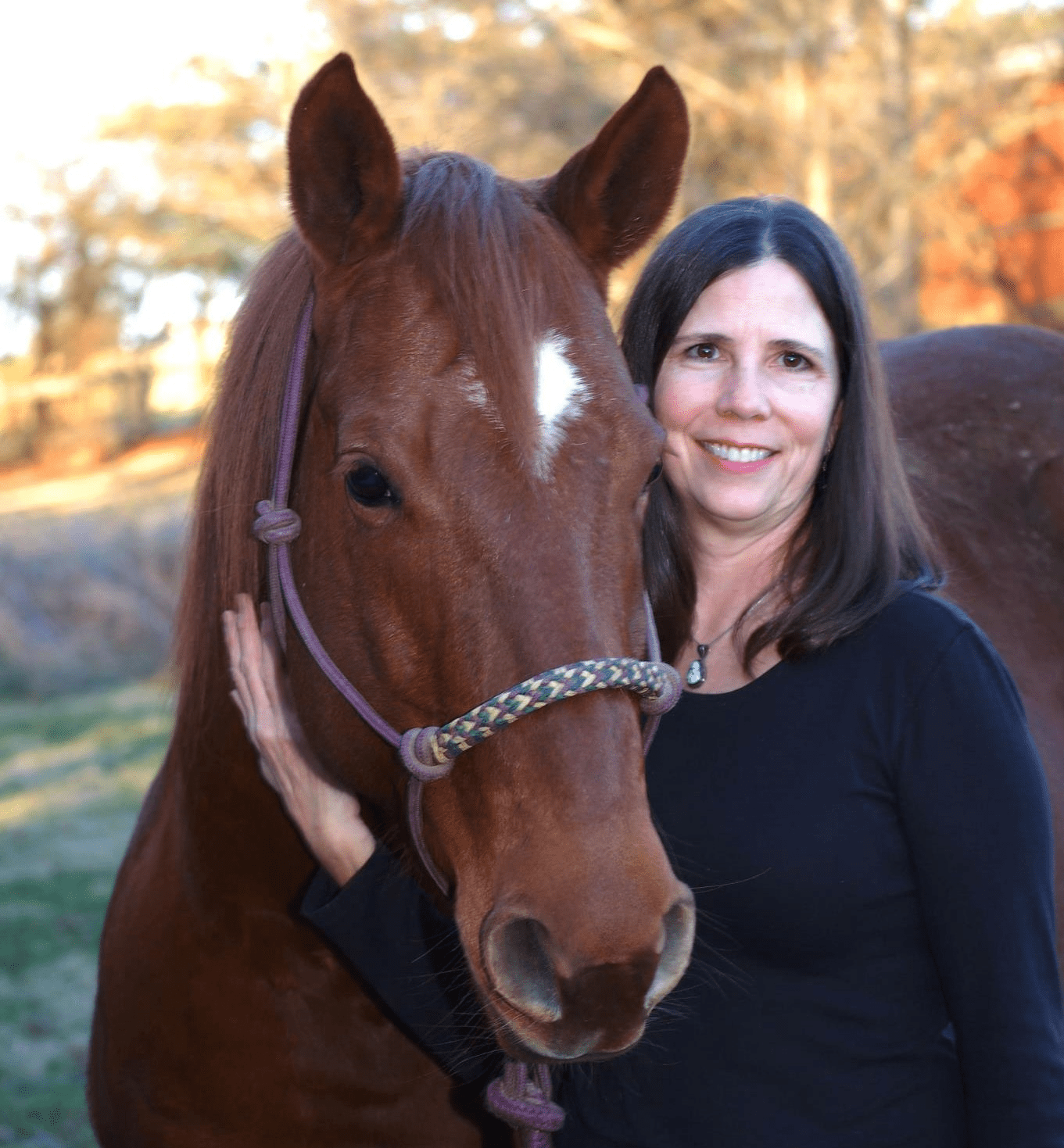
Kimberly S. Brown

Kimberly S. Brown has served as editor and continues to contribute to My Senior Horse, which she founded for Equine Network and Linda Mars. She previously spent 10 years at Equine Network and three years working in equine nutrition. Before that, she worked nearly 30 years at The Blood-Horse, spending her final 15 years on The Horse and TheHorse.com.

Articles by: Kimberly S. Brown

More Pigeon Fever in Kentucky

The bacterial disease “pigeon fever,” also known as dryland distemper, usually is seen west of the Mississippi–especially in California and southwestern states–but it has been recognized in Kentucky and Florida in increasing numbers in recent years. There was a small outbreak in Kentucky in November 2002 (see article #4040 at www.TheHorse.com). Some
Read More

Gambling On Health Care

While only a small percentage of you are involved in the industries that have legalized gambling, many of you live in states with legalized racing, and all of you benefit from those industries. A tremendous number of the research projects from around the world that have shed new light on diseases and injuries have been funded by horse racing dollars from tracks and simulcast facilities.

Read More

AAEP Convention: Fractures of the Distal Phalanx

Fractures of the distal phalanx (also known as P3 or the coffin bone) are common, especially in racehorses, noted Tara S. Rabuffo, DVM, of the University of Pennsylvania’s New Bolton Center. She and her colleagues reviewed case records and all related diagnostic materials on 73 racehorses (26 Thoroughbred and 47 Standardbred during an 11-year period) admitted to the George D. Widener Hospital

Read More

AAEP 2002: Infectious Diseases Subdued, Not Eradicated

In discussing anthrax, screwworms, and piroplasmosis, Irby said that the three disease are related in that each “can affect equids, has the potential to devastate domestic livestock, is present in many foreign countries, and may first be detected by veterinarians in private practice.”

Irby re-iterated that it is imperative that private practice veterinarians realize tha

Read More

AAEP 2002: A Review of Equine Zoonotic Diseases: Risks in Veterinary Medicine

Zoonotic diseases are those that can be passed from animals to humans, and, noted Scott Weese, DVM, DVSc, Dipl. ACVIM, of the Department of Clinical Studies at the University of Guelph, they are an ever-present threat to veterinarians. “A number of zoonotic agents may be encountered in veterinary practice and the severity of human disease can range from mild to fatal,” he said. “Prompt

Read More

Ice, Snow, Cold Hit Horse Country Hard

From Kentucky up through New York, the recent winter storm’s ice and snow has caused major problems for horse owners and those in the horse business. In Kentucky, an inch or more of ice coated every surface starting Feb. 16, causing power lines to sag onto roads and fields, trees to split and drop limbs, and streets to become impassible. There was flooding in other parts of the state.

Read More

Sallee On the Road, Barely

Robert Maxwell, owner of Sallee Van company in Lexington, said generators are keeping the phones, lights, and a little heat on in the office, but downed trees are keeping larger trucks in the parking lot.

“We can’t get the big trucks off the lot because of trees down everywhere around the office, said Maxwell, but we have some of the smaller vans out. We’re parking them at the Ryder

Read More

Ice Storm Disrupts Veterinary Services in Kentucky

Despite the disaster of ice, snow, and cold weather, all three of the major veterinary clinics in Central Kentucky are up and running, although Hagyard-Davidson-McGee is on emergency power. Dr. Doug Byars, head of the medicine clinic at Hagyard-Davidson-McGee in Lexington, said generators are keeping services going for the horses, but surgery is on an emergency basis for the moment.

Read More

AAEP 2002: OIE Flu Surveillance

“Diseases like flu and herpesvirus are always going to be problems for horse owners, and they are not going away,” said Tom Chambers, PhD, of the University of Kentucky’s Gluck Equine Research Center. “The secret to effective vaccines for flu is effective surveillance.” This surveillance allows researchers and vaccine manufacturers to stay abreast of which strains are causing

Read More

AAEP 2002: Foreign Animal Diseases With Equine Potential

“When you hear hoofbeats on the covered bridge, please think about the zebra!” said Corrie Brown, DVM, PhD, Dipl. American College of Veterinary Pathology, vice chair of the Cornell Committee for Animal Diseases. Her point was that when veterinarians are making diagnoses, they need to consider foreign animal diseases. “The amount of damage that a foreign animal disease will cause is directly

Read More

AAEP 2002: Foreign Animal Disease Investigations

Veterinarians are the first line of defense against infectious and contagious animal diseases, noted Brian J. McCluskey, DVM, MS, of the USDA:Animal and Plant Health Inspection Service Centers for Epidemiology and Animal Health in Fort Collins, Colo. “The rapid diagnosis and ultimate control of foreign animal and emerging diseases is dependent on the diagnostic abilities, experiences, an

Read More

2002 Fall Fetal Loss Syndrome

The results of a survey conducted by the University of Kentucky’s Gluck Equine Research Center and College of Agriculture showed that a small number of Thoroughbred and other farms experienced an unusual increase in what is being termed fall fetal loss syndrome (FFLS). While there are “suspects,” there is no definitive cause known at this time.

The detailed information on the

Read More

WNV and Kentucky Abortions?

A question has been raised whether the increased number of West Nile virus (WNV) cases in Kentucky in late summer and fall 2002 contributed to a rise in fall abortions. A retrospective study by the University of Kentucky’s Livestock Disease and Diagnostic Center (LDDC), starting in July of 2002 and going through early 2003, looked at 400 equine abortions for evidence of WNV. Their findings

Read More

AI Made Easy

When frozen semen was first introduced, pregnancies were achieved by checking the mare frequently each day and breeding with a single dose of semen as close to ovulation as possible. Therefore, this was adopted as standard operating procedure, said Squires. Veterinarians checked a mare every six hours once she was in heat and had been given hCG (human chorionic gonadotropin) or Ovuplant (deslorel

Read More

Pigeon Fever Update

There are hundreds of cases of pigeon fever each year in California, said Nathan Slovis, DVM, Dipl. ACVIM, from his experience working at the University of California, Davis. Slovis, who currently is an internal medicine specialist at the Haygard-Davidson-McGee medicine clinic in Lexington, Ky., presented a lecture at the Gluck Equine Research Center on Jan. 27 that covered several topics,

Read More

More From The Horse

FEMA_-_34534_-_Horses_in_a_flooded_Missouri_pasture
reddish brown standing horse with vibrant colors in a metal grid box, the facial expression looks sad, by day, without persons
Pferd im herbstlichen Wald
Insektenplage. Schönes Pferd frei zwischen gelben Blumen auf einer Wiese wird von Insekten attackiert

Stay on top of the most recent Horse Health news with

FREE weekly newsletters from TheHorse.com

Sponsored Content

Weekly Poll

sponsored by:

Readers’ Most Popular

The Horse
Privacy Overview

This website uses cookies so that we can provide you with the best user experience possible. Cookie information is stored in your browser and performs functions such as recognising you when you return to our website and helping our team to understand which sections of the website you find most interesting and useful.