Stephanie L. Church, Editorial Director

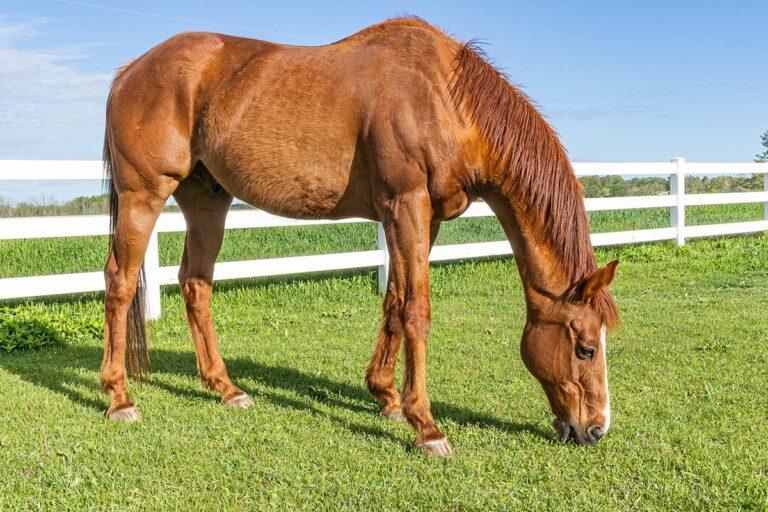
Stephanie L. Church, editorial director for The Horse and Stable Management, grew up riding and caring for her family’s horses in Central Virginia and received a B.A. in journalism and equestrian studies from Averett University. She joined The Horse in 1999 and has led the editorial team since 2010. A 4-H and Pony Club graduate, she enjoys dressage, eventing, and trail riding. Her heart horse, It Happened Again (“Happy,” pictured), a former graded-stakes-winning Thoroughbred gelding, was her longtime mount and remains a lasting inspiration. She now has an 8-year-old off-track Thoroughbred, Dune of Pilat (“Dune”), and is enjoying building a partnership with him. Stephanie is based in Lexington, Kentucky.

Articles by: Stephanie L. Church, Editorial Director

New Mexico VS Embargo Lifted

New Mexico has been removed from the Kentucky list of vesicular stomatitis (VS)-embargoed states. Robert Stout, DVM, Kentucky state veterinarian, wrote the following in a letter to New Mexico’s state veterinarian posted on the Kentucky Department of Agriculture’s (KDA) web site: “Our removal of New Mexico from the list of embargoed states is based on information received from your office and

Read More

Tsunami’s Effects on Horses Unclear; Work Animals Likely Affected

No one has ventured to guess the extent of devastation to horses in tsunami-ravaged areas in Asia. The initial disaster and the resulting shortages of food and clean water could affect many work animals in regions of southern India areas and in areas where horses are integral to daily life. Internationally, animal welfare groups are analyzing the immediate needs and have been sending supplies

Read More

Judge Orders Exhumation of Champion Saddlebred

The Associated Press reported this morning that a federal judge in Lexington, Ky., ordered that the body of American Saddlebred champion Wild Eyed and Wicked be exhumed for additional forensic testing.

Wicked was one of five top Saddlebreds that were injected with an unknown, necrotizing (tissue-killing) substance the weekend of June 28-29, 2003, at Double D Ranch in Versailles, Ky. I

Read More

Rabies Detected in an Illinois Horse

Illinois agriculture and health officials announced last week that a LaSalle County horse tested positive for rabies at the Illinois Department of Agriculture (IDA) laboratory in Galesburg on Dec. 10, 2004. Eleven people received preventive rabies treatment following exposure to the horse on the small family farm at which it was stabled.

According to state public health veterinarian

Read More

Shock Wave Therapy in the Western Sport Horse

The average equine extracorporeal shock wave therapy (ESWT) patient has been examined multiple veterinarians before arriving for ESWT treatment, said Alan Donnell, DVM, of Pilot Point, Texas at the third annual Shock Wave Therapy Symposium, held this year on Dec. 3 in Denver, Colo. Donnell treats Quarter Horses and Arabians and travels to 33 major performance shows throughout the

Read More

Additional WNV Treatment Receives Conditional License

In the treatment of horses suffering from the West Nile virus (WNV), vets have only a few choices besides supportive care. A novel WNV serum antibody product received conditional approval from the USDA in November 2004. Colorado Serum Company announced the product’s availability on Dec. 13, 2004.

Serum antibody products help animals that have been exposed to a disease by increasing th

Read More

DNA Vaccine Awaits Approval

A new vaccine to protect horses against West Nile Virus (WNV) has been developed and submitted for USDA review. If approved, it would be the first commercially available DNA vaccine for any mammalian or animal species.

Steve Chu, DVM, PhD, senior vice president, Global Research and Development, Fort Dodge Animal Health, explained the conceptual DNA vaccine to The Horse. The vaccin

Read More

A New Orleans Vet’s Perspective

“It’s just so amazing to me that in one day, it can all be lost and suddenly you live in a dangerous place,” said Allison Barca, DVM, who has served many of the horses in and around New Orleans for years. Most of Barca’s clients were affected by

Read More

Shock Wave One Year Later

Scott McClure, DVM, PhD, an assistant professor in the Department of Veterinary Clinical Sciences at Iowa State University, has been at the helm of much of the shock wave therapy research performed in horses over the past five years. At HMT’s

Read More

Leptospirosis in Central Kentucky

High incidences of leptospirosis-induced abortions in Central Kentucky horses could be caused by a tandem effect of temperature and precipitation in certain years, said Capt. David Hall of the U.S. Air Force, who defended his Masters thesis on the subject at the University of Kentucky’s Gluck Equine Research Center in Lexington on Dec. 15.

Leptospirosis is one of the most widespread

Read More

Ban Passed on U.K. Hunting with Hounds

According to www.equine-world.co.uk, the U.K. House of Commons on Nov. 18 used the Parliament Act to force through the a bill to ban hunting with hounds. “Following disagreement between the Commons and the Lords, the Parliament Act was invoked for only the fourth (time) since 1949 to force a Bill through,” said the article. The Britis

Read More

Ulcer Prevention Drug Approved By FDA

Horse owners will be able to prevent painful gastric ulcers in their horses with a new omeprazole product that has just been approved for equine use by the Food and Drug Administration (FDA). The product will be available through veterinarians without a prescription, and it has been shown to effectively prevent ulcers in horses when given for 28 days during the time of stressful

Read More

West Nile Virus DNA Vaccine Awaits Approval

A new vaccine to protect horses against West Nile virus (WNV) has been developed and submitted for USDA review. If approved, it would be the first commercially available DNA vaccine for any mammalian or animal species.

Steve Chu, DVM, PhD, senior vice president, Global Research and Development, Fort Dodge Animal Health, explained the conceptual DNA vaccine to The Horse. The vaccine ha

Read More

Managing Subfertile Stallions

The decision to manage a subfertile stallion non-conventionally is based on the condition of farm economics or despair, or more appropriately, the last hope before retiring the stallion, said Irwin K.M. Liu, DVM, PhD, a professor in the”P>The decision to manage a subfertile stallion non-conventionally is based on the condition of farm economics or despair, or more appropriately, the last hope before ret”>The decision to manage a subfertile stallion non-conventionally is based on the condition of farm “The decision to manage a subfer

Read More

Congenital Hypothyroidism Devastates Western Canada Breeders

Veterinarians in western Canada report that 2004 has been a disappointing year for many breeders because of an increase in cases of fatal congenital hypothyroidism in foals. Newborns with the disease can exhibit clinical signs such as contracted

Read More

More From The Horse

electrolytes for horses; Why Do Electrolytes Encourage Horses to Drink?
spring pasture, turnout tips, horse turn out, horse in pasture, grazing, spring, spring turnout
Horses in their stable
What's New With Weaning?

Stay on top of the most recent Horse Health news with

FREE weekly newsletters from TheHorse.com

Sponsored Content

Weekly Poll

sponsored by:

How often do you apply fly spray to your horse during peak fly season?
176 votes · 176 answers

Readers’ Most Popular

The Horse
Privacy Overview

This website uses cookies so that we can provide you with the best user experience possible. Cookie information is stored in your browser and performs functions such as recognising you when you return to our website and helping our team to understand which sections of the website you find most interesting and useful.