Stephanie Ruff

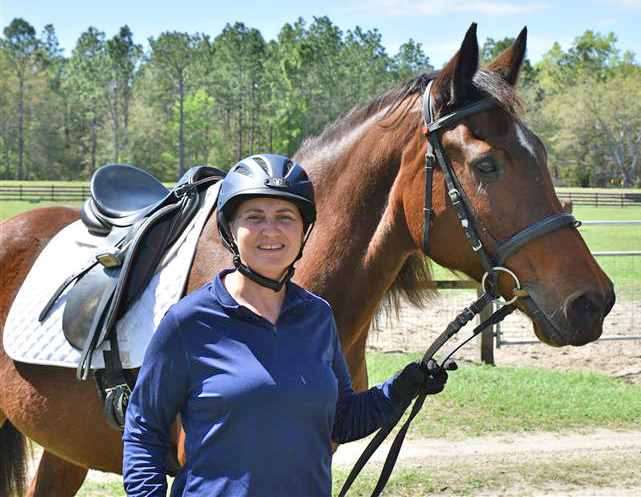
Stephanie Ruff has spent her entire career in various facets of the equine industry. She was a freelance writer for many years, was the owner/editor of Arabian Finish Line, managing editor of Arabian Horse Life and content manager of Practical Horseman and Dressage Today before moving to The Horse. She has ridden many different disciplines, but for the last 20 years has focused on dressage. Stephanie has both a B.S. and M.S. in Animal Science from the University of Kentucky and has always had a keen interest in equine health, science, and research. A native of Pennsylvania, Stephanie enjoys hanging out with her Arabian and Half-Arabian mares, two German Shorthair Pointers, traveling and embracing the Florida lifestyle where she currently lives.

Articles by: Stephanie Ruff

Take the NARHA Challenge

The deadline to participate in the North American Riding for the Handicapped Association’s (NARHA) Challenge Ride 2003 is quickly approaching. This year’s promotion will officially conclude on Oct. 31, 2003. The Challenge Ride is an easy way to

Read More

Salix-Only Policy on Race Day Advocated for Kentucky

The chairman of the Kentucky Racing Commission has advocated a Salix-only policy on race day in the state, and said he would schedule meetings around the state to get feedback. Currently, five medications are permitted on race day in Kentucky.

Frank Shoop, during the commission’s Oct. 2 meeting near Lexington, said he wants Kentucky to fall in line with recommendations by the national

Read More

2004 American Horse Publications Student Award Applications Available Online

College students who are pursuing a career in equine publishing are eligible to compete for American Horse Publications 2004 Student Award. If you will be a junior or senior at the start of the 2004-2005 undergraduate college year, with at least one semester before graduation, you have a chance to win a cash award of $500 plus an all-expense paid trip to AHP’s annual meeting and seminar. The

Read More

Recurring Splints

On the list of injuries a horse might acquire, “popping a splint” is considered, at most, an inconvenience that requires laying the affected horse off his normal routine. However, when it keeps happening, that little inconvenience can become a major nuisance and perhaps a surgical problem.

Read More

Too Much, Too Soon? Just Right?

I think we have seen over and over again that it is beneficial to stress the bones of a horse when they are most adaptive. This optimal adaptive period would seem to be when the horse is still in an active growth stage. We have all seen many cases where a certain type of injury (e.g., apical sesamoid fractures in foals, coffin bone fractures in foals, etc.) can be tolerated at an early

Read More

Can Laminitis be Inherited?

I just read your excellent article “The Latest on Laminitis by Karen Briggs. Is laminitis an inheritable disease? What about founder?

Read More

Ear Teeth?

My yearling Standardbred colt has been diagnosed with a dentigerous cyst by the veterinarian. Can you possibly give me some information on this type of cyst?

Read More

Understanding Male Aggression

I purchased my horse a year ago knowing he had some aggression problems. He is great around people, just not around other horses. Unfortunately, when he attacks, he goes for the throat just behind the jaw line.

Read More

Feeding Horses in Group Settings: Managing the Mob

When feeding horses at pasture or in large paddocks, it can often be a challenge to make sure each horse gets his share of the feed, while reducing waste and feed contamination. Management is the key to successfully feeding horses in a group setting, minimizing social stress and nutritional problems.

Read More

The Grass Can Be Greener

Now is the time to make improvements to your pastures in order to have the best and most nutritious grazing for your horses next spring. A well-maintained pasture also offers a practical and economic break for you, as well. Through pasturing, your feed and supplement costs are likely to be reduced, particularly if you have a mature, idle horse, or a mare in the early stages of gestation. Plus

Read More

Early Season Breeding: Let There Be Light!

Because of the demands of competition and sales, following the natural reproductive cycle dictated by Mother Nature often doesn’t fit into man’s breeding program. While Mother Nature’s time frame stipulates that the mare should be receptive to the stallion in late spring/early summer to produce a foal when the grass is green and the weather is warm, man, as steward of the horse, often has

Read More

Shoeing for Chronic Laminitis

There are limited options for effective treatment of horses with lameness due to chronic laminitis. A common practice involves therapeutic shoeing, which is intended to reduce pain, aid in healing, and help return the horse to activity. Recently, researchers from Texas A&M University examined four types of therapeutic shoes to determine their effectiveness at rapidly reducing pain and

Read More

Forages for Stabled Horses

Busy training schedules and fears about injury often limit pasture access for performance horses. Prolonged stall confinement, however, can be detrimental to a horse’s attitude. Boredom can lead to destructive behaviors, including weaving, pawing, and ingestion of bedding. Recently, researchers from Southampton and Leicestershire in the United Kingdom, collaborated on a study to examine the

Read More

Steroid Effects on the Knees

During intensive training, young racehorses experience a thickening in the layers of bone under the cartilage of joints. These layers, called subchondral (located nearer the surface) and cancellous, become harder and better able to handle the rigors of training. Unfortunately, the process is painful, especially in the carpus (knee). Therefore, it is fairly common to inject corticosteroids int

Read More

If Your Horse’s Feet Could Talk

EDITOR’S NOTE: This article gives horse owners a glimpse into the methods used by one experienced veterinarian to monitor the feet of his clients’ horses. Your veterinarian might have developed his/her own special way to follow the normal/abnormal foot, or you might be looking for a place to start a program to track your horse’s foot health.

It has been said that more than

Read More

More From The Horse

horse nose
horse in stable
Insektenplage. Schönes Pferd frei zwischen gelben Blumen auf einer Wiese wird von Insekten attackiert
Beautiful horses, animals, pasture, stables, horseback riding

Stay on top of the most recent Horse Health news with

FREE weekly newsletters from TheHorse.com

Sponsored Content

Weekly Poll

sponsored by:

How do you plan to keep your horse safe during fireworks and Fourth of July festivities? Please select all that apply.
127 votes · 159 answers

Readers’ Most Popular

The Horse
Privacy Overview

This website uses cookies so that we can provide you with the best user experience possible. Cookie information is stored in your browser and performs functions such as recognising you when you return to our website and helping our team to understand which sections of the website you find most interesting and useful.