Stephanie Ruff

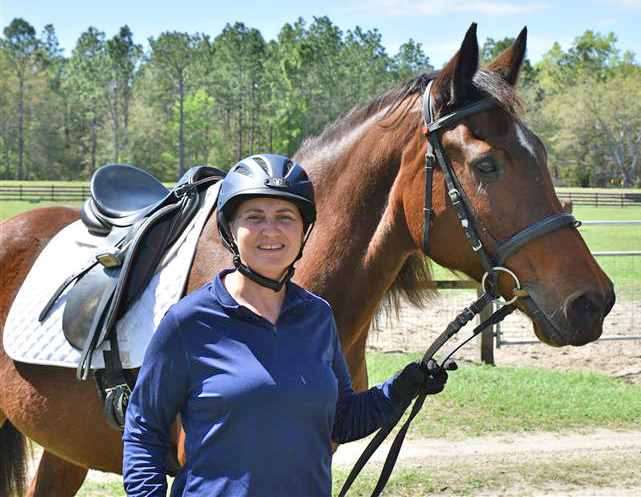
Stephanie Ruff has spent her entire career in various facets of the equine industry. She was a freelance writer for many years, was the owner/editor of Arabian Finish Line, managing editor of Arabian Horse Life and content manager of Practical Horseman and Dressage Today before moving to The Horse. She has ridden many different disciplines, but for the last 20 years has focused on dressage. Stephanie has both a B.S. and M.S. in Animal Science from the University of Kentucky and has always had a keen interest in equine health, science, and research. A native of Pennsylvania, Stephanie enjoys hanging out with her Arabian and Half-Arabian mares, two German Shorthair Pointers, traveling and embracing the Florida lifestyle where she currently lives.

Articles by: Stephanie Ruff

Horses Injured in Tornado Receive First Aid; Other Necessities Needed

In the wake of the May 4 tornado that destroyed homes, buildings and lives in the Marionville, Mo. area, many horses were left wounded and without the necessities for survival. Several horses were killed or had to be euthanized due to injuries sustained when one of the worst tornadoes in Missouri history ripped through the state. The horses that survived faced injuries and loss of shelter,

Read More

First 2003 Equine WNV Case In North Dakota

North Dakota’s state veterinarian Larry Schuler, DVM, reported the state’s first 2003 equine case of West Nile virus (WNV) on May 8.

According to Schuler, test results received from Texas A&M University indicated that a horse in the Fargo area (Cass County) had been infected with the virus.

“Since the majority of West Nile virus cases usually appear from July

Read More

AAEP Receives Prestigious ARCI Award

The Association of Racing Commissioners International (ARCI) presented its heralded May Award to the American Association of Equine Practitioners (AAEP) during the ARCI’s 69th Annual Convention in April. The award is traditionally given to an individual or organization in racing for the highest level of service and contribution to the betterment of the racing sport.

The AAEP was

Read More

First 2003 WNV Finding in Pennsylvania for 2003

On Monday, May 5, acting secretary for department of health Robert S. Muscalus reported the first positive test for the West Nile virus (WNV) in Pennsylvania in 2003. The virus was detected in a dead crow in Philadelphia.

Acting Secretary for the Department of Environmental Protection (DEP) Kathleen A. McGinty emphasized the importance of homeowners to remove

Read More

Interview from a MRLS Test Farm

Some horse and agriculture farms were asked to be test farms during and after the mare reproductive loss (MRLS) crisis in 2001. One of those farms is Glennwood Farm in Versailles, Ky., owned by John D. Gunther and operated by Leslie K. Miller, general manager. The test farms have provided a wealth of information during the past 2 1/2 years, on

Read More

Obesity is Dangerous, Warns UK Researcher

Laminitis specialist Robert Eustace, BVSc, Cert EO, Cert. EP, MRCVS, director of The Laminitis Clinic in Wiltshire, England, wants horse obesity to be declared a welfare concern. In a campaign launched at the annual meeting of the International League for the Protection of Horses (ILPH) at the end of 2002, Eustace directed sharp words at the horse show judging system, which rewards round,

Read More

Report Released: Economic Impact of WNV on Colorado and Nebraska Equine Industries in 2002

A study led by researchers at Colorado State University determined that the effects of West Nile virus (WNV) cost equine owners in Colorado and Nebraska more than $1.25 million in 2002, and prevention costs for WNV vaccinations likely exceeded an additional $2.75 million for the equine industry in those states last year. In 2002, Colorado reported 378 and Nebraska reported 1,100 confirme

Read More

Equine West Nile Virus Case in Minnesota

A 5-year-old Quarter Horse mare in Crow Wing County, was Minnesota’s first equine West Nile virus (WNV) case for 2003, according to the Minnesota Board of Animal Health (MBAH). Paul Anderson, MBAH assistant director, said the virus was expected to appear again this year, but not so early in the season. The first U.S. equine WNV case of 2003 was reported in Florida in early

Read More

ReRun to Operate Farm, Educational Center in Maryland

ReRun Inc. has assumed management of Greener Pastures Equine Sanctuary, a 160-acre estate along the Sassafras River near Cecilton, Md., donated by the Wear Family. The facility, which was previously managed by Thoroughbred Charities of America (TCA), is home to many retired racehorses and is also a wildlife sanctuary dedicated to preserving the nesting habitat of the blue heron and American

Read More

Vet’s Role in Physical Therapy

The health and soundness management of any horse–regardless of his level of use or the problems he might be encountering–horse owner or trainer’s responsibility. The person responsible for the diagnosis, prescribing the treatment, and assessing progress and the effectiveness of the therapies is the veterinarian. The horse benefits from the cooperative efforts of everyone on th

Read More

Equine Physical Therapy Advances

In 1982, I was working as an athletic trainer when a veterinarian came in for help in rehabilitating a sprained ankle. As I applied electrical stimulation and range of motion exercise, I asked him what would be done for a horse with a similar injury. He told me of blistering and firing and of extended stall rest, followed by turnout. This concept of rehabilitation was counter to everything an

Read More

Why the White Spots?

I’d like to ask a question about my horse’s skin problem–depigmentation. He is a 10-year-old chestnut Hanoverian gelding with dark eyes and eyelids. But now there is a pink spot on his left upper eyelid and I think it’s getting larger.

Read More

Lyme Disease From Contaminated Feed?

Is it possible for a horse to get Lyme disease from eating a tick with his pasture grass, or from eating an infected tick or other source of the bacteria in his hay or feed?

Read More

The Whites of Their Eyes

I have a 3-year-old filly which has prominent white around her eyes. Most farriers and several others tell me this is a sign of madness in a horse. I always thought that this was an old wives’ tale. Could you please clarify this for me?

Read More

Follow-Up: Carnivorous Horses

Last October, we shared letters from three readers describing horses killing and/or eating small mammals and birds (see “Carnivous Horses,” article #3832 at www.TheHorse.com). We asked for reader response, and I agreed to contact experts in equine nutrition, behavior, and husbandry from aroun

Read More

More From The Horse

horse nose
horse in stable
Insektenplage. Schönes Pferd frei zwischen gelben Blumen auf einer Wiese wird von Insekten attackiert
Beautiful horses, animals, pasture, stables, horseback riding

Stay on top of the most recent Horse Health news with

FREE weekly newsletters from TheHorse.com

Sponsored Content

Weekly Poll

sponsored by:

How do you plan to keep your horse safe during fireworks and Fourth of July festivities? Please select all that apply.
124 votes · 155 answers

Readers’ Most Popular

The Horse
Privacy Overview

This website uses cookies so that we can provide you with the best user experience possible. Cookie information is stored in your browser and performs functions such as recognising you when you return to our website and helping our team to understand which sections of the website you find most interesting and useful.