Stephanie Ruff

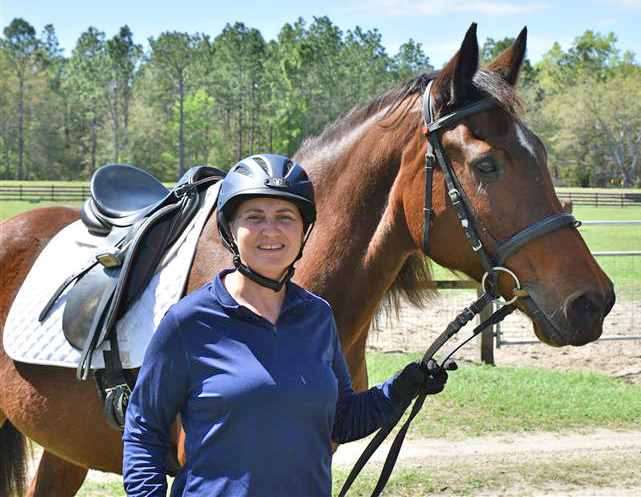
Stephanie Ruff has spent her entire career in various facets of the equine industry. She was a freelance writer for many years, was the owner/editor of Arabian Finish Line, managing editor of Arabian Horse Life and content manager of Practical Horseman and Dressage Today before moving to The Horse. She has ridden many different disciplines, but for the last 20 years has focused on dressage. Stephanie has both a B.S. and M.S. in Animal Science from the University of Kentucky and has always had a keen interest in equine health, science, and research. A native of Pennsylvania, Stephanie enjoys hanging out with her Arabian and Half-Arabian mares, two German Shorthair Pointers, traveling and embracing the Florida lifestyle where she currently lives.

Articles by: Stephanie Ruff

TRF to Create Secretariat Center at Kentucky Horse Park

Two of Kentucky’s most famous industries, bourbon and horse racing, have united to raise money for a new 25-acre center at the Kentucky Horse Park to facilitate adoption of former racehorses. Since 1996, Maker’s Mark and Keeneland have produced a limited edition Maker’s Mark bottle to benefit a good cause. This year’s beneficiary is the Thoroughbred Retirement Foundation, which hopes to put

Read More

Kentucky Ag Commissioner Issues Agro-Terrorism Statement

As the United States fights a war in Iraq and a larger war against terrorism, Kentucky Agriculture Commissioner Billy Ray Smith has called upon farmers and farm businesses to do their part to secure the nation’s food supply.
“Since Sept. 11, 2001, agro-terrorism–malicious and intentional acts intended to disrupt our food supply–has become a new word in our vocabularies, and bio-security

Read More

Heel Pain in Horses

Many conditions that cause heel pain can be successfully treated, so a “heel pain” diagnosis is certainly not an athletic death knell for many horses. Some horses confirmed with navicular disease itself can also be treated successfully and continue with useful careers, at least for a period of time.

Read More

Responsible Horse Ownership

Animal rights, owner responsibility, health and welfare, and all the attendant issues occupy more and more of our time and energy these days as we horse owners struggle to find a place in our busy lives for what once was a routine part of life in a long-ago society. Now, a few generations removed from our agrarian roots, we are bombarded, it seems, with ethical and political questions unasked

Read More

Caring for a Newly Blind Horse

We have a 19-year-old Appaloosa gelding that is going blind fast from a genetic disease. He is not coping with it well; he stumbles around, runs into things, leaves the herd, then gets confused and panics. Any advice?

Read More

Foaming at the Mouth

My friend’s 3-year-old filly plays with her tongue so much that she foams at the mouth (without a bit). She also plays with the rails in her stalls at feeding time such that she has foam all over. What could be the problem?

Read More

Mare vs. Stallion Genes

I hear people talking about how genetic lines all trace through the paternal side of the horse. What about the mares?

Read More

Kicking Out at Feeding Time

My gelding is stall kicking. I’m not there at feeding time, but my trainer tells me the stall kicking occurs when it’s feeding time. The same thing happened the last two places he lived. She has tried feeding him first, but that didn’t help. His care at this barn couldn’t be better, and we are at a loss as to how to stop the kicking. A suggestion was made to me about kicking chains used

Read More

Faulty Bone Formation

A disease that can be debilitating in young horses is osteochondrosis. This affliction has its genesis during the youngster’s growing years and can compromise the horse’s ability to perform later in life if it is not dealt with early. Osteochondrosis is one of the diseases that comes under the general umbrella of developmental orthopedic disease (DOD), a term coined in 1986 by a blue

Read More

Broodmare Diet Basics

The body condition of a broodmare can affect reproductive performance and milking ability. Recent research has indicated that mares should be kept in a minimum body condition score of 5.5 (see “Selected Body Condition Scores and Descriptions,” below or download this Body Condition Score poster here). This body condition is

Read More

Pregnant Mares and Supplements

Eleven months is a very long time to wait for a foal. I know from personal experience that the further along the mare is, the more your hopes and dreams for your “perfect foal” grow. It doesn’t matter if the foal is bred to gallop to the wire or jump to the moon, or whether you are dreaming about lots of markings or a perfect blanket, everyone wants one thing–a healthy foal. So, it’s no

Read More

Flea Control Product for Fungal Endometritis in Mares

Lufenuron is a once-a-month flea control product for dogs and cats. The active ingredient inhibits chitin production; chitin is a component of the outer surface of many insects. Fungal organisms also contain chitin in their cell walls, making them susceptible to lufenuron. Researchers at the Virginia-Maryland Regional College of Veterinary Medicine recently published a series of cases where

Read More

Conservative Therapy for Crooked Foals

The most common angular limb deformity in foals is carpus valgus (sometimes called toeing out) in which affected foals have limbs that flare outward below the carpus (knee). This deformity can be corrected surgically with hemi-circumferential periosteal transection and elevation (HCPTE). The procedure involves lifting the fibrous layer, called the periosteum, off of the outside of the carpal

Read More

Intravenous Nutrition for Colicky Horses

Horses which survive an episode of severe colic can be temporarily unable to eat. Anorexia, nasal regurgitation, and ileus (lack of bowel movement) prevent oral feeding. After several days of malnutrition, the horse’s ability to heal is impaired. Humans who are unable to eat normally are fed intravenously; this method is known as parenteral nutrition (PN). While PN has been used in horses, it

Read More

Navicular Syndrome/Heel Pain

In most cases of navicular disease, the condition affects both front feet with lameness as described previously. Horses most at risk are those with certain heritable conformation features such as upright pasterns and small foot size relative to body mass.

Read More

More From The Horse

horse nose
horse in stable
Insektenplage. Schönes Pferd frei zwischen gelben Blumen auf einer Wiese wird von Insekten attackiert
Beautiful horses, animals, pasture, stables, horseback riding

Stay on top of the most recent Horse Health news with

FREE weekly newsletters from TheHorse.com

Sponsored Content

Weekly Poll

sponsored by:

How do you plan to keep your horse safe during fireworks and Fourth of July festivities? Please select all that apply.
122 votes · 152 answers

Readers’ Most Popular

The Horse
Privacy Overview

This website uses cookies so that we can provide you with the best user experience possible. Cookie information is stored in your browser and performs functions such as recognising you when you return to our website and helping our team to understand which sections of the website you find most interesting and useful.