Stephanie Ruff

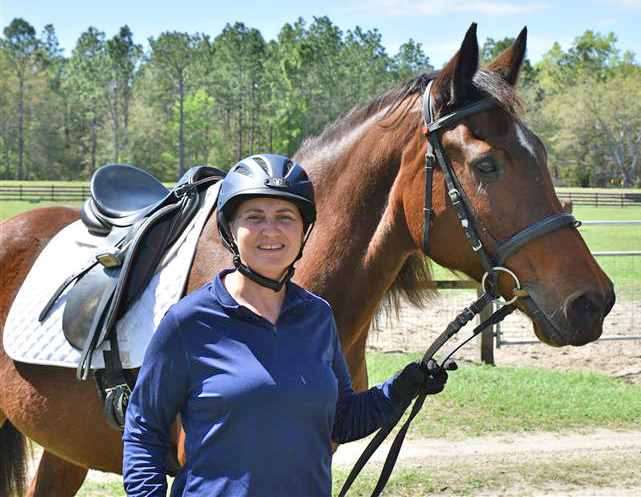
Stephanie Ruff has spent her entire career in various facets of the equine industry. She was a freelance writer for many years, was the owner/editor of Arabian Finish Line, managing editor of Arabian Horse Life and content manager of Practical Horseman and Dressage Today before moving to The Horse. She has ridden many different disciplines, but for the last 20 years has focused on dressage. Stephanie has both a B.S. and M.S. in Animal Science from the University of Kentucky and has always had a keen interest in equine health, science, and research. A native of Pennsylvania, Stephanie enjoys hanging out with her Arabian and Half-Arabian mares, two German Shorthair Pointers, traveling and embracing the Florida lifestyle where she currently lives.

Articles by: Stephanie Ruff

Test for EPO in Horses Developed

The New South Wales Racing Laboratory has developed a test to detect the drug erythropoietin, commonly known as EPO, in racehorses, according to release on the Racing New South Wales Web site. The medication is considered a

Read More

Kentucky Public Invited to Attend Farm Policy Conference

Decisions made in Washington D.C. will have a profound effect on the future of Kentucky agriculture. To learn about that impact, the public is being urged to attend a daylong educational conference, 2002 Farm Policy and You.

Decisions made in Was

Read More

Flu-Avert Patented; Bound For Canada

Heska received a patent for its equine intranasal influenza vaccine, Flu Avert I.N., on March 15, 2001. The unique vaccine is administered in one dose using a nasal applicator.

The modified live vaccine was introduced in November of 1999,

Read More

IN Strangles Vaccine Report

While many practitioners and horse owners have used the Pinnacle IN intranasal strangles vaccine with no problems, there have been some reports of adverse reactions and complications. According to Tom Overbay, DVM, of Fort Dodge Animal Health,

Read More

Vaccine Strains Identified?

A study reported in the Journal of Veterinary Internal Medicine said it now is possible to differentiate between the wild type strain of S. equi and the modified live strain used in the intranasal vaccine Pinnacle IN. The researc”P>A study reported in the Journal of Veterinary Internal Medicine said it now is possible to differentiate betwee

Read More

Special Report: The Year Of The Strangles

Horse owners have experienced an escalated fight with strangles in 2000-2001. Researchers have long observed that the highly contagious upper respiratory disease is more prevalent in some years than others. Historically, this happens about every

Read More

World-Wide Strangles Research

Strangles is probably the most important bacterial disease of the horse, explained John Timoney, MVB, PhD, DSc, MRCVS, of the University of Kentucky’s Gluck Equine Research Center, and one for which a safe and effective vaccine is so very”P>Strangles is probably the most important bacterial disease of the horse, explained John Timoney, MVB, PhD, DSc, MRCVS, of the University of Kentucky’s Gluck Equine Research Center, and one for which a safe and effective vaccine is so v”>Strangles is probably the most important bacterial disease of the horse, explained John Timoney, MVB, PhD, DSc, MRCVS, of the University of Kentucky’s Gluck Equine Research Center, and one for which a safe and effective vaccine is so”Strangles is probably the most important bacterial disease of the horse, explained John Timoney, MVB, PhD, DSc, MRCVS, of the University of Kentucky’s Gluck Equine Research Center, and one for which a safe and effective vaccine is s”Strangles is probably the most important bacterial disease of the horse, explained John Timoney, MVB, PhD, DSc, MRCVS, of the University of Kentucky’s Gluck Equine Research Center, and one for which a safe and effective vaccine is s”trangles is probably the most important bacterial disease of the horse, explained John Timoney, MVB, PhD, DSc, MRCVS, of the University of Kentucky’s Gluck Equi”rangles is probably the most important bacterial disease of the horse, explained John Ti”angles is probably

Read More

Disease Hampers Britain’s Horse Movement

Representatives from 27 British equine organizations met in London on March 1 to discuss the potential for spread of foot and mouth disease (FMD), which affects only cloven-hooved animals. The disease was discovered in pigs at a slaughterhouse i

Read More

Laminitis Researchers Meet

Current research suggests that laminitis has either metabolic or vascular causes. The First International Equine Conference on Laminitis and Diseases of the Foot made no apologies for presenting laminitis research in its current state of

Read More

FEI Veterinary Meetings

The Federation Equestre Internationale (FEI) held its annual veterinary meetings in Helsinki, Finland, from Feb. 3-6. The FEI Veterinary Committee has the overall responsibility for the management and surveillance of the veterinary aspects of

Read More

New Flu/Herpes Vaccine

On April 5, the USDA granted a license to Calvenza, a combination influenza/rhinopneumonitis vaccine produced by Boehringer Ingelheim Vetmedica. The company says there are several unique facets to this vaccine. First, the initial two doses are

Read More

EPM Vaccine

On Dec. 18, 2000, a vaccine to prevent EPM was approved by the USDA. As of Jan. 25, a total of 43 states had approved the use of the EPM vaccine under USDA conditional licensure. The vaccine must be used under the supervision of a

Read More

AHSA Names New Executive Director

Lori Rawls recently was appointed executive director of the American Horse Shows Association by Alan F. Balch, the organization’s president. Rawls was chosen with the unanimous recommendation of the AHSA Search Com-mittee and Executive Committee

Read More

Health Of Pony Club Horses

Each year, hundreds of thousands of research dollars go toward investigating ways to keep money-earning, highly competitive athletic horses physically sound and at their peak performance. One researcher in Australia has chosen a different type o

Read More

Horses Becoming Wimps?

Many Thoroughbred racehorses aren’t as tough today as their yesteryear counterparts, at least in the opinion of Bill Moyer, DVM, a professor and department head at Texas A&M University’s College of Veterinary Medicine. Moyer was one of

Read More

More From The Horse

When is an Older Horse Ready for Senior Feed?
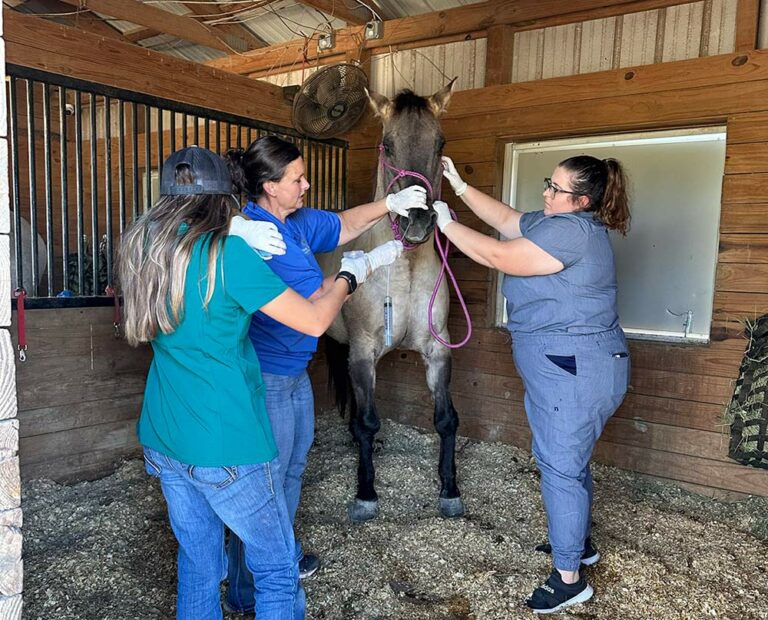
1--Pharnygeal-Wash_StranglesFeature_CourtesyEliseKahn
cutting horse
Hosing a horse's lower legs

Stay on top of the most recent Horse Health news with

FREE weekly newsletters from TheHorse.com

Sponsored Content

Weekly Poll

sponsored by:

How do you plan to keep your horse safe during fireworks and Fourth of July festivities? Please select all that apply.
102 votes · 126 answers

Readers’ Most Popular

The Horse
Privacy Overview

This website uses cookies so that we can provide you with the best user experience possible. Cookie information is stored in your browser and performs functions such as recognising you when you return to our website and helping our team to understand which sections of the website you find most interesting and useful.