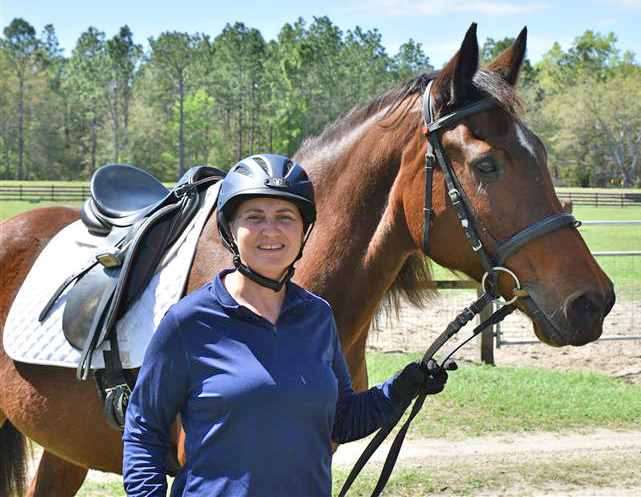
Stephanie Ruff

Stephanie Ruff has spent her entire career in various facets of the equine industry. She was a freelance writer for many years, was the owner/editor of Arabian Finish Line, managing editor of Arabian Horse Life and content manager of Practical Horseman and Dressage Today before moving to The Horse. She has ridden many different disciplines, but for the last 20 years has focused on dressage. Stephanie has both a B.S. and M.S. in Animal Science from the University of Kentucky and has always had a keen interest in equine health, science, and research. A native of Pennsylvania, Stephanie enjoys hanging out with her Arabian and Half-Arabian mares, two German Shorthair Pointers, traveling and embracing the Florida lifestyle where she currently lives.

Articles by: Stephanie Ruff

Hemorrhage in the Broodmare

A mare is at the greatest risk of a deadly complication associated with foaling known as hemorrhage in the 24-48 hours after giving birth. However, it is important to note that hemorrhage can occur at any time during gestation, and that it shoul
Read More

Coming Attractions: The Newest Dewormers

The next generation of dewormers is nearly here. Fort Dodge Animal Health anticipates final FDA approval for Moxidectin this year, while Pfizer Animal Health Group might see Doramectin reach the market in mid-1998. Like Ivermectin, Doramectin an

Read More

Navicular Syndrome

Most veterinarians and farriers agree that navicular-type lameness is the foot’s response to stress, particularly repetitive stress that can put uneven pressure on different parts of the horse’s foot.

Read More

Feeding the Foot

Can you feed a foot? You bet! Say a dozen ads in this (and almost every other) horse magazine. Can you improve a horse’s flexibility at higher levels of performance or increase the quality of joint fluid by feeding a supplement? It’s”P>Can you feed a foot? You bet! Say a dozen ads in this (and almost every other) horse magazine. Can you improve a horse’s flexibility at higher levels of performance or increase the quality of joint fluid by fee”>Can you feed a foot? You bet! Say a dozen ads in this (and almost every other) horse magazine. Can you improve a horse’s flexibility at higher levels of performance or increase the qualit”Can you feed a foot? You bet! Say a dozen ads in this (and almost every other) horse magazine. Can you improve a horse’s flexibility at higher levels of performance “an you feed a foot? You bet! Say a dozen ads in this (and almost every other) horse magazine. Can you improve a horse’s flexibility at higher l”n you feed a foot? You bet! Say a dozen ads in this (and almost every other) horse magazine. Can you improve a horse’s fle” you feed a foot? You bet! Say a dozen ads in this (and almost every other) horse magazine. Can you im”you feed a foot? You bet! Say a dozen ads in this (and almost every other) horse ma”ou feed a foot? You bet! Say a dozen ads in this (and almost ever”u feed a foot? You bet! Say a dozen ads in this ” feed a foot? You bet! Say a doz”feed a foot? You b”eed a

Read More

Anesthesia: Down, Not Out

Put a horse down. Euthanized. Humanely destroyed. The list goes on. It is how we in the business describe the unsavory, but sometimes necessary, task of killing a horse. Sometimes an animal becomes sick or crippled from a chronic problem, such a

Read More

Focus on Discipline: Hunters/Jumpers

Ears forward and eyes fixed, the horse concludes his gallop in front of the fence. He gathers himself and leaps gracefully into the air, clearing the obstacle with ease and landing on the other side of the obstacle to gallop on to the next

Read More

Focus on Discipline: Dressage

An elegant athlete, the dressage horse moves in perfect harmony with his rider. Following the artistic traditions of European horsemanship, the performer displays supple joints and natural balance, or expresses power and grace in the demanding

Read More

Derby Decisions

Every competitive horse has normal wear and tear, just like human athletes. Horses on the road to the Kentucky Derby in Thoroughbred racing receive more media attention than probably any other equine athletes. So, when a spring season arrives,

Read More

How to Read a Feed Label

Learning to interpret the information supplied by the manufacturer isn’t all that difficult, and it can tell you whether the feed you’re buying is truly the best choice for your horse.

Read More

Barn Construction

Kick, chomp, scrape, cough–horses challenge the strength and livability of the shelter you provide. A barn can conveniently enclose one or more horses, but you can’t forget that they wouldn’t choose to live indoors.

To house horses safely,

Read More

Chincoteague Ponies

Chincoteague is such a unique name and place that it is impossible to confuse it with anything or anywhere else. From children who have read Marguerite Henry’s Misty of Chincoteague, to travel buffs who ended up on the island in search of

Read More

Attitude

Sometimes we need to get away from what we do to appreciate the rest of the world. Sometimes we have to get away from what we do to appreciate what we do. Looking out helps us look in.

As I write, a thunderstorm is fighting

Read More

AESM Convention

Researchers, veterinarians, and horse people from around the world gathered in San Antonio in April for the 16th meeting of the Association for Equine Sports Medicine (AESM). The program included three full days of presentations concerning the

Read More

Exertional Rhabdomyolysis

Tying-up is a problem that has troubled horses and their owners for many years, and it has been known by many names. The old-timers who battled the syndrome in their draft horses following a Sunday away from the fields called it Monday morning

Read More

Chiropractic: Modality of Movement

Chiropractors have been treating human patients on a professional basis in this country since before the turn of the century, but it has only been in recent years that this alternative form of therapy has been applied to a substantial number of horse

Read More

Botulism

With foaling season upon us, vaccination for botulism is one of many management considerations facing North American horse breeders. This disease can be deadly in foals, and in adult horses which are unprotected, and it can be tremendously

Read More

More From The Horse

When is an Older Horse Ready for Senior Feed?
1--Pharnygeal-Wash_StranglesFeature_CourtesyEliseKahn
cutting horse
Hosing a horse's lower legs

Stay on top of the most recent Horse Health news with

FREE weekly newsletters from TheHorse.com

Sponsored Content

Weekly Poll

sponsored by:

How do you plan to keep your horse safe during fireworks and Fourth of July festivities? Please select all that apply.
102 votes · 126 answers

Readers’ Most Popular

The Horse
Privacy Overview

This website uses cookies so that we can provide you with the best user experience possible. Cookie information is stored in your browser and performs functions such as recognising you when you return to our website and helping our team to understand which sections of the website you find most interesting and useful.