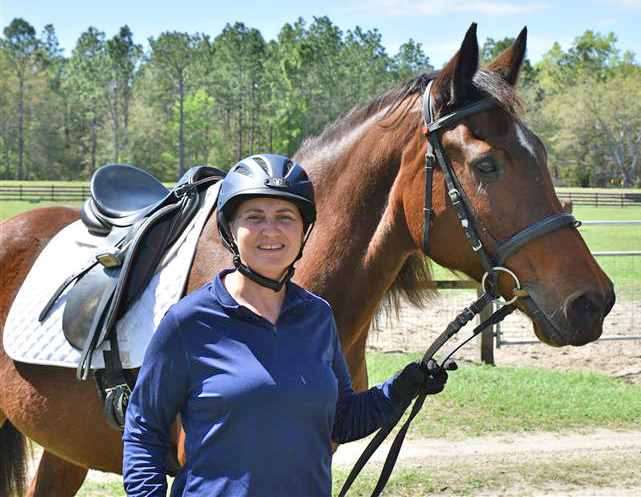
Stephanie Ruff

Stephanie Ruff has spent her entire career in various facets of the equine industry. She was a freelance writer for many years, was the owner/editor of Arabian Finish Line, managing editor of Arabian Horse Life and content manager of Practical Horseman and Dressage Today before moving to The Horse. She has ridden many different disciplines, but for the last 20 years has focused on dressage. Stephanie has both a B.S. and M.S. in Animal Science from the University of Kentucky and has always had a keen interest in equine health, science, and research. A native of Pennsylvania, Stephanie enjoys hanging out with her Arabian and Half-Arabian mares, two German Shorthair Pointers, traveling and embracing the Florida lifestyle where she currently lives.

Articles by: Stephanie Ruff

Kentucky Diagnostic Center Fetal/Foal Loss Update, 5/16

As of noon May 16, the Kentucky Livestock Disease Diagnostic Center had received nine additional aborted/stillborn equine fetuses/foals (five early-term and four late-term) for diagnostic testing/evaluation. The total received since April 28, 2001,
Read More

Ky. State Vet’s Office Communique

Following is a statement sent to other State Veterinarians on May 16, 2001

SUBJECT: Mare Reproductive Loss Syndrome

Dr. Don Notter, Kentucky State Veterinarian, has asked that I provide to you the latest information regarding what

Read More

Explanation: Ergotism or Ergot Poisoning

At the industry-wide meeting on Thursday, May 10, Dr. Steve Jackson, an equine nutrition consultant and owner of Bluegrass Equine Nutrition, and Dr. Jimmy Henning, an extension forage specialist at the University of Kentucky’s College of

Read More

Dr. Byars–Pericarditis Becoming More of a Problem

While the numbers are nowhere near those associated with early fetal loss and late gestation pregnancy loss, there is a pattern appearing with horses developing pericarditis (fluid in the sac around the heart), said Dr. Doug Byars, a specialist

Read More

May 12 Update: Foal Loss Appears to Be Slowing

As the breeding season winds to a close, you expect to see fewer foals being born. Therefore, there are fewer chances for the current syndrome to affect late-gestation mares. It also seems, however, that the loss of late-term gestations–and

Read More

Kentucky Diagnostic Center Fetal/Foal Loss Update, 5/15

As of noon May 15, the Kentucky Livestock Disease Diagnostic Center had received 26 additional aborted/stillborn equine fetuses/foals (18 late-term and eight early-term) for diagnostic testing/evaluation. The total received since April 28, 2001, is

Read More

Additional Information on Zearalenone

In the industry-wide meeting at Keeneland on Thursday, May 10, zearalenone, a kind of mycotoxin, was put forth as a possible cause of the recent rash of late-term stillbirths, critical foals, and early fetal loss. But while experts seem to be in

Read More

Kentucky’s Fields Of Dreams Now Nightmares

The old-timers say Kentucky is horse country because of its soil. What’s now growing on that soil could be the cause of a rash of late-term losses in foals, early embryonic death, pericarditis (fluid surrounding the heart), reduced growth rates

Read More

Phillip Dutton Teams Up With Cosequin

Olympic Gold Medalist Phillip Dutton and Cosequin have teamed up to create a mutually beneficial partnership program. Dutton, who won the Team Gold Medal for Three-Day Eventing at the 2000 Sydney Olympics as well as the 1996 Atlanta Olympics, ha

Read More

More From The Horse

When is an Older Horse Ready for Senior Feed?
1--Pharnygeal-Wash_StranglesFeature_CourtesyEliseKahn
cutting horse
Hosing a horse's lower legs

Stay on top of the most recent Horse Health news with

FREE weekly newsletters from TheHorse.com

Sponsored Content

Weekly Poll

sponsored by:

How do you plan to keep your horse safe during fireworks and Fourth of July festivities? Please select all that apply.
87 votes · 104 answers

Readers’ Most Popular

The Horse
Privacy Overview

This website uses cookies so that we can provide you with the best user experience possible. Cookie information is stored in your browser and performs functions such as recognising you when you return to our website and helping our team to understand which sections of the website you find most interesting and useful.