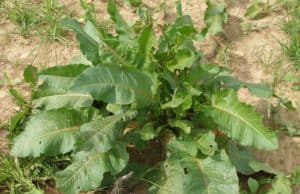
Weed of the Month: Curly Dock
Curly dock grows well in alfalfa, disturbed sites, cultivated fields, ditches, and especially in compacted, overgrazed pastures.


Curly dock grows well in alfalfa, disturbed sites, cultivated fields, ditches, and especially in compacted, overgrazed pastures.
Dr. Joe Baker received his DVM from Washington State University and completed an equine reproduction residency at the University of California, Davis.

One trainer didn’t received sanctions for a June 2013 drug violation until October. A Blood-Horse writer takes a look.
Drs. Elizabeth Davidson and Liz Arbittier will offer a joint lecture on sports medicine, including lameness evaluations.
Dr. Bryant Craig addresses a senior Appaloosa owner’s concerns about this eye disease, also called moon blindness. This podcast is from the Equine Life Stages: Senior Horses Q&A audio event, sponsored by Merck Animal Health.
Winter coats are a funny thing. Horse owners love them because they not only keep their four-legged family members warm when temperatures drop, but they

Of the 1,531 respondents, 650 (42%) said they plan on blanketing their horses only during inclement weather.

The Kentucky Horse Racing Commission necropsy program is continuing to provide evidence that many racehorses that suffer catastrophic injuries often have pre-existing conditions that lead to breakdowns.

Researchers found pre-existing abnormalities in all horses with lumbar vertebral fractures that underwent a necropsy.

This symposium will focus on strategies for controlling equine arteritis virus (EAV) and other infectious agents in stallions, semen, and embryos.
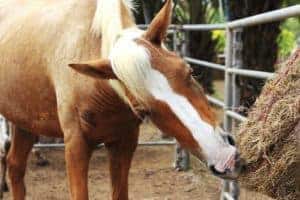
Dr. Clair Thunes weighs the benefits of using a slow-feeding haynet against feeding horses on the ground with their head down.
Colorado State University (CSU) researchers are seeking horse owner input for a study aimed at evaluating the economic impact of equine disease outbreaks.
Advocates targeted the North Carolina State Fair to protest the inclusion of Tennessee Walking Horse performance classes in the fair’s annual horse show.

The proposed rules establish threshold limits for 24 therapeutic medications that could be present in a horse on race day, and restrict three corticosteroids to joint injections only.

No matter what the riding discipline, wearing a helmet is one of the best ways to minimize the chance of a brain injury.