Blue-Eyed Blues
Are horses with blue eyes more sensitive to light or more prone to eye disorders than other horses?


Are horses with blue eyes more sensitive to light or more prone to eye disorders than other horses?

Dr. Mick Peterson says catastrophic injuries won’t be eliminated, but that’s no excuse for not investing resources in the best and safest racing surface possible.

A Northern Virginia horse euthanized late last week was confirmed positive for equine herpesvirus myeloencephalopathy (EHM), a neurologic disease caused by equine herpesvirus-1 (EHV-1).
A gather, conducted by the Bureau of Land Management (BLM), of horses belonging to the state of Wyoming drew fire from wild horse advocates, who say the animals were too quickly sold to a Canadian horse processing firm.

Other equids aren’t the only animals that can transmit disease to our horses: Birds, bugs, and other creatures can also carry diseases that can affect horses. What’s one way to reduce the number of animals in our barns? Careful feed and hay storage.
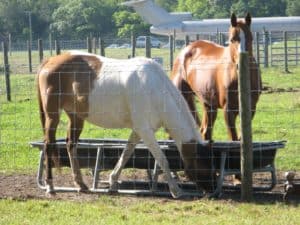
A group of rescued horses has a new home after being rehabilitated and donated to the Florida Sheriffs Boys Ranch.

An equine behaviorist offers tips on how to change your horse’s behavior.
The strain has now been reported in horses in many European countries as well as in a single Canadian horse. Zoonotic infection from a horse has also been reported.

Top dressing with oil is a common practice, which can be done successfully, when done in moderation with a careful eye on meeting the total nutrient requirements of the horse as well as the energy requirements.
All 77,001 serum samples tested for equine infectious anemia (EIA) in Kentucky in 2013 were negative for the disease.

Dr. Erin Denney-Jones explains what acupuncture involves and how it is used to help horses.
Sue McDonnell, PhD, Cert. AAB; Fred T. Woehl, Jr.; and Robert Cope, DVM, will each serve three-year terms on the BLM Wild Horse and Burro Advisory Board.
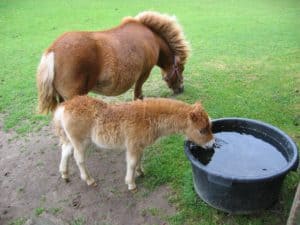
The transition in temperature and humidity from cool season to warm season, such as winter to spring, could require an adjustment in watering horses.
The winner will be announced at the Equine Industry Vision Award Breakfast on June 20 during the AHP Gallop n’ Grits Seminar in Charleston, S.C.
Following these six suggestions based on considerable research could make the difference between success and failure in a crisis response.
Reported diseases include strangles, influenza, herpesvirus, piroplasmosis, atypical myopathy, and hendra.