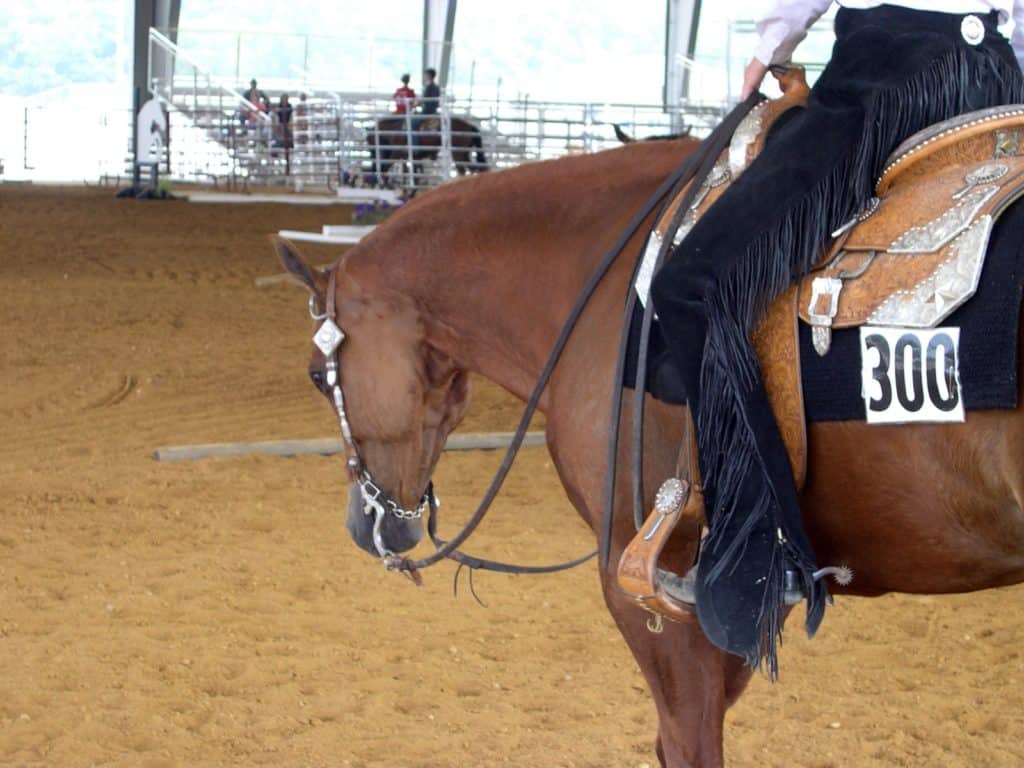
When the snow has melted, the pasture starts greening up, and your horse starts shedding his winter coat, you know spring and show season are on the way. If you’re one of the many horse owners ready to get back in the show ring after winter, now is the time prepare your horse. From veterinary care to conditioning, taking a proactive approach helps you ensure he’s ready when the season starts.
Have Your Veterinarian Assess Your Horse’s Health
Spring is an ideal time to schedule a veterinary exam, says Katy Sullivan, VMD, CVA, CVSMT, assistant professor of clinical equine field service at the University of Pennsylvania’s New Bolton Center, in Kennett Square. “A soundness exam is great for you and your vet to be on the same page with a baseline. It’s also a great time to talk about your horse’s fitness. Are we setting them up for success before going into the show season? When we have stronger muscles, we protect those soft tissues, and we help stabilize joints.”
Even if your horse isn’t showing signs of soundness problems, an exam can help you and your veterinarian establish a baseline for your horse. Watching him jog and longe, performing flexion tests, and evaluating him under saddle can glean valuable information if an issue arises later in the season.
“We just start with a very basic kind of going over the body, palpating the joints, palpating the soft tissues,” says Sullivan, checking for swelling or any changes. Veterinarians also evaluate muscle mass, noting whether the horse has a strong topline and enough strength for the work he’s doing. If not, especially if he’s sound and heading into a high level of work, she says your veterinarian will have you focus on building fitness before the show season so he is well-conditioned.
Address Equine Musculoskeletal Problems Early
If your horse needs attention to joints, spring can also be the right time for this.
“Some horses have established arthritis, and we know that every six months to a year they really benefit from injections,” says Sullivan. “There’s pluses and minuses to anytime you go into a joint and which products you use.” She says the veterinarian must consider the whole horse and any underlying conditions he might have, such as metabolic problems, which could affect how they manage the joints.
Sullivan says she has also noticed vitamin E deficiencies becoming more common in sport horses, especially in the Northeast, which can impact muscle and neuromuscular health. “Vitamin E is a great thing to check and making sure that if you are supplementing, that you’re using a supplement that’s getting well absorbed, and your money is getting put to good use,” she explains. Because vitamin E is derived from fresh forage, horses without pasture access or those coming off poor winter pasture might benefit from a blood test to determine the need for supplementation.
Check Your Tack, Records, and Routine Care
Spring preparation should also include checking your tack for any needed repairs, scheduling a saddle fitting if needed, and reviewing your feeding program with a nutritionist or veterinarian. It’s also a good time for a dental exam, which most horses need once or twice per year, and any necessary dental work.
When your veterinarian administers spring vaccinations, keep organized records in case a show requires documentation. You should also have an up-to-date negative Coggins—based on a test for equine infectious anemia—on hand whenever you travel.
Sullivan recommends checking your emergency medical supplies to make sure you have everything you need before leaving for a competition. “Hopefully, if you’re being proactive and having things ready, you won’t need them,” she says. “But inevitably, something comes up, and then you don’t have something, and you’re kind of scrambling.”
Work Backward When Planning Your Horse’s Conditioning
When conditioning your horse for a competition, start with your target date and work backward when planning his work, says Tim Worden, PhD, an equestrian sports performance consultant based in Ontario, Canada.
“It’s always really individual for the horse,” he says. “It depends a little bit on the horse’s mentality. If it’s a horse that really loves to work and is confident in the ring, you tend to get stuff done a little bit more quickly. If it’s a bit of a more nervous horse, or you don’t know the horse as well—maybe it’s new to the rider—you always need to add in a bit more time for that.”
Worden cautions that horses often feel fresher in the spring, which can make riders think they’re ready for more work than they are. Start with longer, slower rides to build base fitness, then gradually add more intense work in small increments (about 10 minutes per week) to build strength in the muscles and tendons.
Just like human athletes, horses also need recovery days. Incorporate easy hack days into the schedule to allow both mental and physical recovery and aim to include variety in your training routine. “It’s kind of like a classic human training model, where you start out with a little bit more volume or work in your training, then getting close to the season, you’d reduce the volume, since the horse is now working harder, it’s starting to jump bigger, or starting to do more complex dressage movements,” Worden says. “For more complex movements you always require more recovery time.”
Monitor Your Horse’s Fitness
Worden also recommends using a heart rate monitor during early conditioning work, if possible, to better understand how your horse responds to increasing exercise. “It depends so much on the horse,” he says. “Ninety percent of a trainer’s job is just listening to a horse and trying to figure out what it’s telling you. Each horse has its own strengths and weaknesses with how it communicates information about its mind and body to a rider.”
He adds that it’s important to understand indicators your horse is getting too tired, such as being unhappy in work or losing brightness (dull in mentation and to the aids), which can tell the rider the horse might need more recovery time. “Some horses are really clear communicating that,” Worden says. “Other horses are very stoic. A fitness wearable or heart-rate monitoring for those horses is much more important because they’re just not going to be as expressive, and you can miss the early warning signs you’re doing too much too soon.”
Take-Home Message
A successful horse show season begins long before the first competition. What’s done at home shows up when the season starts. Make sure your horse is sound, current on routine veterinary care, and fit enough for the work so he’s ready to perform his best.