Not every horse with equine glandular gastric disease (EGGD) responds to standard treatment. Some develop chronic glandular changes (CGC), a condition characterized by persistent changes in the stomach lining that can remain long after inflammation subsides and, in some cases, require more than medical management, said Richard Hepburn, BVSc, MS(Hons), CertEM(IntMed), Dipl. ACVIM, FRCVS, of B&W Equine Hospital, in Breadstone, U.K. He described medical management and surgical removal of nonresponsive EGGD during his presentation at the 2026 American College of Veterinary Internal Medicine Forum, held June 11-13, in Seattle, Washington.
Equine glandular gastric disease affects the lower portion of the stomach and can cause poor performance, appetite changes, behavioral problems, recurrent mild colic, and girthiness. However, these signs aren’t specific to EGGD, and many horses have concurrent conditions such as musculoskeletal pain or stress-related disorders contributing to the whole picture. Therefore, Hepburn emphasized that veterinarians should determine whether glandular disease is truly responsible for a horse’s clinical signs before pursuing treatment, especially before contemplating surgical removal of lesions.
Chronic EGGD in Horses
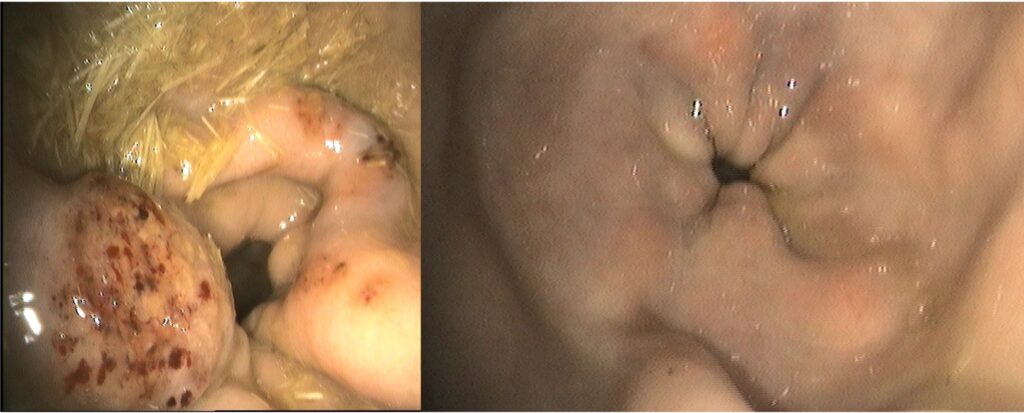
Chronic glandular changes appear as focal (one spot), multifocal (two or more places), or widespread tissue that protrudes? into the stomach lumen, which is the area where food and digestive juices mix. The lesions can resemble hyperplastic gastric polyps in humans, reflecting abnormal healing and remodeling of chronically inflamed and ulcerated glandular tissue rather than a separate disease process. Many horses respond to conventional EGGD therapy over time, while others (less then 10%) develop lesions that persist despite treatment, said Hepburn.
Gastroscopy remains essential for not only diagnosing these lesions but also helping determine whether they’re clinically important. “During the examination, veterinarians assess the lesion’s surface, surrounding inflammation, epithelial integrity, stomach motility, and whether feed retention suggests the lesion is interfering with gastric emptying,” said Hepburn. Just as importantly, they evaluate whether the horse’s clinical signs improve with medical EGGD treatment (currently, this is typically omeprazole and sucralfate, with misoprostol as a second step). A persistent lesion without clinical signs might only need monitoring, whereas an active lesion associated with ongoing poor performance or discomfort could warrant additional intervention, he added.
Long-Term EGGD Management
In many horses long-term management involves controlling clinical signs of EGGD rather than eliminating the chronic glandular change itself. Hepburn recommended maintaining appropriate ulcer-prevention management, adjusting acid-suppressing medications to the lowest effective dose, and repeating gastroscopy roughly every six months to monitor remodeling. “These lesions often change slowly, with improvement occurring over months or even years, rather than weeks,” he said.
Clinicians often continue monitoring horses with gastric lesions that remain stable and clinical signs that have resolved with treatment. They typically reserve surgical or laser-assisted removal (via gastroscopy in standing sedated horses) for horses with clinically significant lesions that continue to progress, obstruct stomach outflow, or repeatedly flare during stressful periods such as travel and competition despite appropriate management, as well as for horses needing high levels of medication to remain comfortable, said Hepburn. This is a relatively rare technique, only performed at one hospital in the U.K. and by one surgeon in the U.S.
Take-Home Message
Hepburn said veterinarians should base EGGD treatment decisions on the horse’s clinical signs and response to treatment, not just the gastroscopy findings, to determine when chronic glandular changes simply need observation and when they warrant more aggressive intervention.