
Stymied by Long-Stem Versus Short-Stem Forages?
Nutritionists normally recommend horses consume some “long-stem” forage each day. Long-stem forage is best defined as hay or pasture. This recommendation respects the natural desire of horses to graze, as horses are hardwired to spend more than half of their day eating. Forage products that include extremely short pieces of fiber such as cubes, pellets, or chaff are often fed in li
FEI: Kutscher ‘Person Responsible’ for Doping at 2008 Olympics
Two-time Olympian Marco Kutscher might not have known his horse Cornet Obolensky received injections of a prohibited substance during the 2008 Olympic Games in Beijing, but the German equestrian was still named the “primary person responsible” and, thus, negligent, according to the decision of the Tribunal of the Fédération Equestre Internationale (FEI).
Share Horse Safety Tips to Win Tickets to WEG
Saddle Up SAFELY, a program began by University of Kentucky HealthCare and UK College of Agriculture Equine Initiative and now including more than 30 medical and equine-related organizations, is giving away prizes in exchange for horse riding safety tips. Such prizes include four tickets to the Alltech FEI World Equestrian Games in September as well as many other horse-related items, and every per
American Horse Council Highlights Recreational Riding
On Tuesday June 22, the American Horse Council (AHC) held its first Recreation Forum in Washington, DC to highlight issues of importance to recreational riders. The forum was attended by representatives from national equestrian organizations and state horse councils from around the country, as well as individual recreational riders.
The forum began with a presentation by Step
World Equestrian Games Overview
For the first time in history, the United States will host a 16-day sporting extravaganza that will approach the U.S. Open (which drew 700,000-plus spectators in 2009)–the World Equestrian Games, starting Sept. 25, 2010. The Games include championships for the horse-and-human disciplines of eventing, jumping, dressage, para dressage, driving, endurance, reining, and vaulting.
Three Forms of Pigeon Fever in Horses
Infection caused by Corynebacterium pseudotuberculosis (commonly known as pigeon fever or dryland distemper) assumes three forms: external abscesses, internal infection, and ulcerative lymphangitis (limb infection). This article covers the history of this disease as well as therapy and prevention methods.
Analyzing Feed and Forage for Horses
Awareness of what your horse is eating can help you determine if his dietary needs are being met and, if not, what can be added to meet those needs. With respect to the nutritional needs of a horse, it is important to know the meaning of the chemical analysis on the feed and supplement labels and the chemical analysis results.
Ways to Wean Young Horses
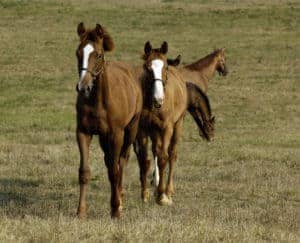
There are many ways to wean foals, but a method in which the foal can make a gradual adjustment to being apart from his dam or herdmates is often the least stressful.
Changes to WEG Transportation, Parking Options
There have been some significant changes to the spectator-parking and transportation options for the 2010 Alltech FEI World Equestrian Games since the publication of my
Mediterranean Tall Fescue/Endophyte Combination Might Be Fatal to Horses
A new, potentially fatal syndrome in horses called equine fescue edema has been reported by Australian scientists in the Australian Veterinary Journal. The researchers noted that all affected horses in the study were grazing pastures sown with Mediterranean (winter active) varieties of tall fescue containing endophytes, and have suggested that a combination of fescue variety and endophyte strain
Horse Racing Study Looks at Number of ‘DNFs’ by Surface
A study performed by Equibase at the request of the Thoroughbred Owners and Breeders Association (TOBA) indicates the percentage of “career-ending did-not-finish” (CEDNF) incidents was about twice as high on dirt than synthetic surfaces in 2009. The study is based on a review of official racing charts. The “CEDNF” statistics, as they are called, are for horses
Tendon Injuries Could Be Explained By New Research Results
Two novel discoveries about how different types of tendons age and “refresh” themselves made by researchers from University College London in the United Kingdom help explain why aging horses are atrisk for tendon injury. Tendons play key roles in locomotion as they are the link between muscles and bones. Ten
Increased Relief for Kentucky Horse Owners on the Way
According to a recent report, one out of every 10 work-eligible Kentuckians is unemployed. In response to the significant increase in jobless horse owners, the Kentucky Horse Council (KHC) has modified eligibility requirements for their Equine Safety Net program. Started in April 2007, Equine Safety Net provides feed for horses owned by individuals who have recently lost a job or
EEE: Florida Horse Owners Cautioned about Spike in Cases
Florida horse owners are being urged by Florida Agriculture and Consumer Services Commissioner Charles Bronson to get their animals vaccinated following an upsurge in the number of Eastern Equine Encephalitis (EEE) cases.
According to the USDA, in 2009 Florida led
Hurricane Alex No Immediate Threat to Horses
Hurricane Alex poses no immediate threat to the safety of horses residing Gulf Coast communities, according to owners in the region.
The first storm of the 2010 season, Hurricane Alex began pelting Brownsville, South Padre Island, and Los Fresnos, Texas with heavy rains and strong winds on Wednesday, June 30. The Category 1 storm is expected to continue produce similar severe weat
Breaking The Link
Reliable evidence establishing a link between animal abuse and domestic violence continues to grow. According to the American Humane Association, a national advocacy group established


