

UC Davis Standing Equine PET Scanner Now in Use at Golden Gate Fields
The UC Davis standing equine PET scanner provides imaging at the molecular level to monitor racehorse health and guide training and medical care.

Survey: Higher-Level Riders Take and Accept More Risks
Researchers found many people accept that working with horses is dangerous—especially more experienced riders or those working with horses for financial gain.

South Carolina Thoroughbred Tests Positive for WNV
The case of West Nile virus marks the state’s first in 2021.

EIA Confirmed in Alberta Horse
The horse was tested at the request of a rescue facility’s owner to comply with pre-entry requirements.

How Much Do You Know About PPID?
Here’s a look at some common misconceptions about PPID and the truth behind them.
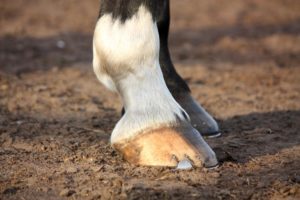
New Test Can Detect Tildren Three Years After Treatment
Researchers recently confirmed that a new drug test can detect the bisphosphonate tiludronate disodium (Tildren) in horses up to three years after they received the medication.

Washington State Horse Confirmed With Equine Influenza
The private facility where the horse resides is under voluntary quarantine.

Baffert Facing Suspensions in Multiple Horse Racing Jurisdictions
Churchill Downs Inc. has suspended racehorse trainer Bob Baffert for two years. The disciplinary action is the latest for Baffert as the investigation into Kentucky Derby winner Medina Spirit’s positive drug test continues.

Colorado Confirms Second Equid Rabies Case for 2021
The 12-year-old unvaccinated Miniature Horse was euthanized.

Essential Quality Wins Belmont Stakes
Kentucky Derby favorite Essential Quality made up for his loss at Churchill Downs with a Belmont Stakes win.

Urine Test Developed for Vitamin-E-Related Disease Screening
Veterinarians could soon determine which horses are at risk of certain neurologic diseases through a simple urine test that reveals how a horse breaks down vitamin E.
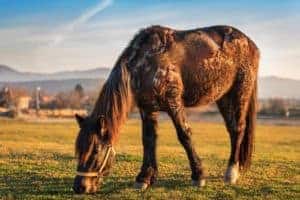
PPID: An Endocrine Disease
Pituitary pars intermedia dysfunction (PPID, or equine Cushing’s disease) is caused by an enlargement of the pituitary gland’s middle lobe (the pars intermedia), which results in an overproduction of hormones that regulate bodily functions. Learn more about this disease in our slideshow.

Does Your Horse Head-Butt? Learning Theory Can Fix That
The key lies in offering the horse other behaviors—backing, for instance—to perform besides head-butting.
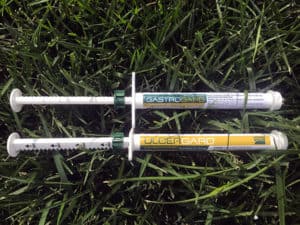
Omeprazole Causes Only Minor Equine Microbiota Changes
Researchers found the gastric ulcer drug might affect microbiomes less in horses than in humans and dogs.
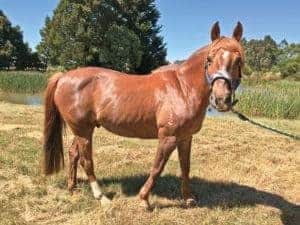
Equine Cushing’s: Case by Case
Learn how veterinarians diagnosed and managed six real-life equine Cushing’s cases that strayed from the classic scenarios.
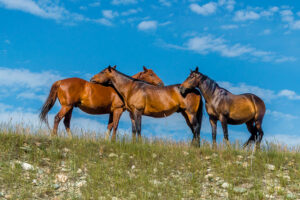
Is Your Horse Lonely? The Negative Effects of Social Isolation
As social animals, horses have a basic need to connect with others, and it is essential to their well-being and survival.


