California Show Horses Poisoned with Oleander
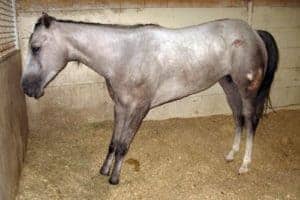
In California, a San Diego County ranch owner says 23 show horses have been poisoned by someone who fed them highly toxic oleander leaves.
Debbie Tomin, owner of Rockridge Farm in Rancho Santa Fe, Calif., says three horses are seriously ill and are undergoing treatment at an equine hospital.
The other horses, including two pregnant mares, are being treated at the ranch.
World Equestrian Games 2010 Test Event: Kentucky Cup Vaulting
Kenny Geisler and Megan Benjamin, the most successful American vaulters competing today, solidified the Mt. Eden Vaulters’ domination of the Kentucky Cup Vaulting on July 31. Geisler, 28, was leading the CVI2* men’s division (6.979) at the competition’s halfway point, and Benjamin, 21, was leading the CVI2* women’s division (7.933).
The Kentucky Cup is the vaulting test event for
Poisoned Horses Update; One Still Critical
Debbie Tomin, co-owner with her husband, Bill, of Rockridge Farm in Rancho Santa Fe, Calif., told TheHorse.com late Sunday morning that “23 horses were fed the poisonous concoction (of apples, carrots, and oleander leaves).
“All the ones in the barn and three outside (were fed the dangerous mixture),” she said of the Saddlebreds at their farm. “We brought two home from the hospital
Anhidrosis: Should I Sweat It?
Anhidrosis, or nonsweating, is a poorly understood condition affecting thousands of horses worldwide. Horses are most commonly affected in areas with hot, humid climates, such as in the southeastern United States. Let’s look at the causes of and treatments for this condition.
What Causes Anhidrosis?
Veterinarians and researchers are still trying to deduce the exact
Nip Nipping in the Bud
A few of our therapy horses are very mouthy. When they are in session and have a child on their back they try to nip at their leaders. We have a hard time correcting it because of the child. How do I help incoming horses not develop these habits?
Earning Back Trust
Up until recently I have never had any behavioral issues with my 15-year-old Thoroughbred gelding. Awhile back he flipped out in the cross-ties with a new farrier. Since then he has been very upset to be shod in cross-ties. How can I calm him down?
Causes of Diarrhea in Horses (Beyond Salmonella)
Diarrhea can rapidly develop into a life-threatening condition that can cost thousands of dollars to treat. Knowing the potential causes of diarrhea can help ensure a full recovery and minimize the chances of the development of fatal complications.
Despite a horse's apparently sturdy exterior, his various internal body systems are delicate–particularly his
Ventilation: Go With the Flow
Ventilating your equine facilities is critically important for your horses’ and your own health and well-being. Taking advantage of natural ventilation is the best way to design your facility for long-term comfort.

The Equine GI Tract: Down the Hatch
If the horse’s gastrointestinal (GI) tract were a highway, no self-respecting engineer would take credit for its design. Take a trip along the highway of the equine GI tract to learn more about how your horse digests his food.
The Well-Equipped Vet
Veterinarians can better diagnose problems in our horses because of the improving array of equipment they have in their arsenals.
Horse Hock Health
The hock is one of the most complex and hardest-worked joints in the horse’s body, so it must be strong and sturdy to avoid injury. Much of what we ask our horses to do, whether high-performance dressage, reining, jumping, or simply going up and down hills on trail rides, requires strong and well-functioning hocks. In this article we’ll examine hock conformation, injury, ways to counteract
Expert and Novice Riders See Jumps Differently, Study Says
Training unmounted riders to look at jumps the right way could enhance horse and rider performance and prevent jumping accidents, suggest researchers who recently published a study on rider visualization.
Researchers from the United Kingdom and Ireland found more advanced riders were significantly better at recalling important points of focus in a picture of a jump than were nonriders an
They’re OFF! Tevis Cup 2009 Riders Hit the Trail
After months of planning by ride officials, and often years of conditioning for both human and equine participants, the Western States Trail Ride 2009, popularly called the Tevis Cup Ride, started with around 171 human/equine teams at dawn on August 1 from Robie Park (7200 Elevation) near Lake Tahoe. If past statistics hold, only about half of the teams will complete the 100-mile journey to
Tevis 2009: Dr. Marcia Smith Leads into Robinson Flats
With crew and volunteers crowding the forest road, Marcia Smith, DVM, of Loomis, Calif., (rider #12) appeared around the bend at the Robinson Flat vet check and crewing point. First to arrive at Mile 36 of the 100-mile Tevis Ride, Smith and her mount, AM Sands of Time (Sandy) were making excellent time. The 12-year-old gray Arabian mare moved easily and Smith’s proficient crew began
Headshaking Triggers and Treatment
What triggers a horse to flip his head uncontrollably, sometimes to the point of endangering him and his rider?
Snakebite Woes
My mare’s personality seems to have changed since a rattlesnake bite six years ago. She seems less people-friendly and less energetic. Is it from some sort of facial nerve damage from the bite? Have you heard of long-term effects from a snake bite?