Ingested Wires Cause Colic, Adhesions
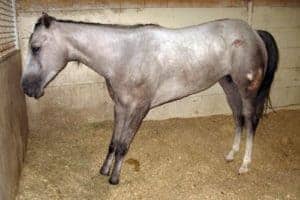
When ingested, small wires can wreak havoc in the equine digestive system. They might even cause different segments of the tract to fuse together, leading to painful and usually fatal consequences, according to South African and American researchers who recently published a study on the subject.
The four cases discussed in the medical review, which appeared in The Veterinary Record
Sports Medicine Veterinarians Gather to Learn Advanced Diagnostic Techniques
Sport horse veterinarian Kent Allen, DVM, and Virginia Equine Imaging (VEI) hosted a workshop of the International Society of Equine Locomotor Pathology (ISELP) March 27-29. According to Allen, who owns the imaging practice based in Middleburg, ISELP’s goal is to provide contemporary knowledge and techniques in the continually evolving fiel
Virginia Tech Hosts Vet School Annual Open House April 4
The Virginia-Maryland Regional College of Veterinary Medicine at Virginia Tech’s Annual Open House is under way today from 10 a.m. to 3 p.m.
Visitors will have the opportunity to take guided tours of the 225,000-square-foot complex, glimpse the inside of a dog’s stomach, witness equine acupuncture, and learn about the modern veterinary medical profession, among other things.
Join the AHC’s Annual Congressional Ride-In
The American Horse Council (AHC) is holding its annual Congressional Ride-In on Wed., June 17, in Washington, D.C. The Ride-In will take place as part of the AHC National Issues Forum, which will focus on “The Welfare of the Horse” this year. All interested members of the horse community are encouraged to participate.
There are many federal issues that Congress deals with that impact
… And I’m Taking the Horses!
Virginia State Police are searching for a 13-year-old boy who appears to have run away from home. But he didn’t go alone–Wyatt McLaughlin took
Readers Give Insight on Head Protection Choices
More than 1,350 readers of TheHorse.com responded to a poll asking, “Some people never wear helmets. What would change their minds?”
|
Centered Riding founder Sarah “Sally” Swift, of Brattleboro, Vt., whose imaginative approach to equitation and rider biomechanics revolutionized the teaching of riding, died April 2. April 20, 2009, would have been her 96th birthday. As a child, Swift was diagnosed with scoliosis, a curvature of the spine. Sessions with therapist Mabel Ellsworth Todd helped overcome the condition by The Middleburg Agricultural Research and Extension Center (MARE Center) will host a Technical Large Animal Emergency Rescue Training (TLAER) training session May 13-15, 2009. Instructors Tomas Gimenez, DrMedVet, and Rebecca Gimenez, PhD, manage the TLAER organization. They lead training for members of the emergency response community nationwide. This course covers the latest concept The visible signs of chronic laminitis are enough to break any horse owner’s heart–the dished, ridged hoof walls, the uncomfortable gait. But what’s at the heart of the visible clinical signs, and, once a horse has progressed to this stage, can we do anything to significantly improve his quality of life? A Colorado woman is walking from Newark, Del., to Long Beach, Calif., in an effort to urge lawmakers and others to help the nation’s unwanted horses. Kristina Kremer set out March 14 on the slow journey she expects to finish this fall.
Montana Governor Brian Schweitzer vetoed a bill that would encourage the horse processing industry to establish itself in that state on grounds that it insulates the industry from future legal challenges. HB 418 prohibits Montana courts from granting injunctions to stop or delay horse processing plant construction based on permit or licensing challenges, or on environmental
Upper airway disorders, such as dorsal displacement of the soft palate or dynamic collapse of the upper respiratory tract, can be challenging to diagnose in performance horses. Nonetheless, these are important causes of poor performance and can, in some cases, be career-limiting. Resting endoscopy remains an inferior diagnostic tool and even endoscopic examination during high After an extensive review process, the American Veterinary Medical Association (AVMA) has awarded full accreditation to the Texas A&M College of Veterinary Medicine & Biomedical Sciences (CVM). By receiving this recognition, students can be assured they will graduate with the competencies and skills necessary to enter practice and that they will meet the requirements for Influenza is one of the most contagious diseases of horses and therefore requires a timely and accurate diagnosis to help prevent a major outbreak. This diagnosis can be achieved only by testing clinical specimens from nasal swabs. Rapid diagnosis facilitates rapid intervention, including quarantine and vaccination–historically the most successful means to prevent the spread of Horse owners aren’t immune from financial challenges, and for some people bankruptcy might serve as the best, or only, option. But what happens to the horses if their owner declares bankruptcy? The Court of Arbitration for Sport (CAS) has upheld an appeal requesting enhanced sanctions against Olympic equestrian Christian Ahlmann. The Federation Equestre Internationale (FEI) Tribunal suspended and fined Ahlmann after his horse, Cöster, tested positive for capsaicin during the 2008 Olympics. Capsaicin is the ingredient that gives chili peppers their heat. It can make a |