Making the Best of It
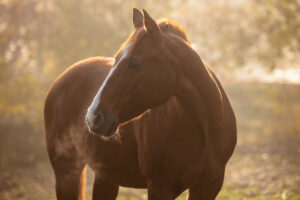
Not all dreams work out the way we hope or plan, but Moon Doggie went from a dream of glory to a fulfilling companion. He is now a 3-year-old appendix Quarter Horse that is a friend to a once lonely performance horse. Moon can run and play with
Salmonella in Horses
Salmonellosis affects humans, horses, most mammals, and birds. It can cause debilitating–and even deadly–diarrhea. Salmonella bacteria can affect both foals and adults, and they spread easily by horse-to-horse contact and by fomites
The Perfect Hoof
An interesting dichotomy exists when we turn our attention to the horse’s foot. On the one hand, without a healthy foot, a modern-day horse really has no value. On the other hand, the foot often is the most neglected part of the horse’s anatomy.
Big Feet, Big Shoes
Whether you’re a heavy horse fancier or not, a big hitch of fancy draft horses is an arresting sight. But what’s the connection between all this flash and the ideal function of a heavy horse? Show ring insiders say you’re seeing an animal
Buckets of Muck
When food is ingested at one end of the horse, waste material will exit at the other end. That process will continue as long as the horse lives and will cause varying problems to the horse owner, depending on where he or she lives.
As urban
Hoof Radiographs
Your horse is limping and a detailed visual exam by your veterinarian reveals a small black spot, suggesting a puncture wound. Your veterinarian radiographs the hoof: The X rays confirm the diagnosis, clearly showing the direction and depth of
Lyme Disease Update
Lyme disease is a problem more commonly thought to occur in our canine and human friends than horses. However, occur it does, and it can have a wide range of signs and symptoms. This disease is a perplexing and confusing one to diagnose and trea

Probiotics: Worth the Price?
Research proving probiotics’ worth is missing, even though they have backing from anecdotal evidence.
Managing Wet Feet
Hoof care is one of the most important aspects of quality horse management. Hoof trimming, good nutrition, and

Pasture-Associated Heaves
What owners can do when faced with recurrent airway obstruction in their horses.
To Shoe or Not to Shoe?
They are questions most horse owners have pondered at one time or another. Does my horse really need shoes? Do they help or hinder him?
There is no one-size-fits-all answer. Consideration must be given to several factors, including a horse’
Controlling Influenza
Editor’s Note: This is the fifth in a 12-part series of articles on vaccinations for horses.
Equine influenza is a common respiratory infection. While it affects many horses, it has a low mortality rate; horses generally recover.
Online Horse Health Care
The Internet has permeated nearly every aspect of our lives; we use it for music, movie tickets, tools, clothing, research, a social life, sport picks, and who knows what else. Information is so easy to find, but there is, as always, a
Fitting the Saddle to the Withers
Were we to select the perfect withers for our mounts with the idea of arranging the best possible fit for the saddle, we would probably settle on well-placed, prominent withers that blended nicely into the slope of the shoulder and the back.
EPM: Not So Common?
“Equine protozoal myeloencephalitis (EPM) is a common cause of neurological disease of horses in North and South America, and results from a protozoal infection with Sarcocystis neurona or Neospora hughesi (less commonly),” said