Corneal Disease in the Horse
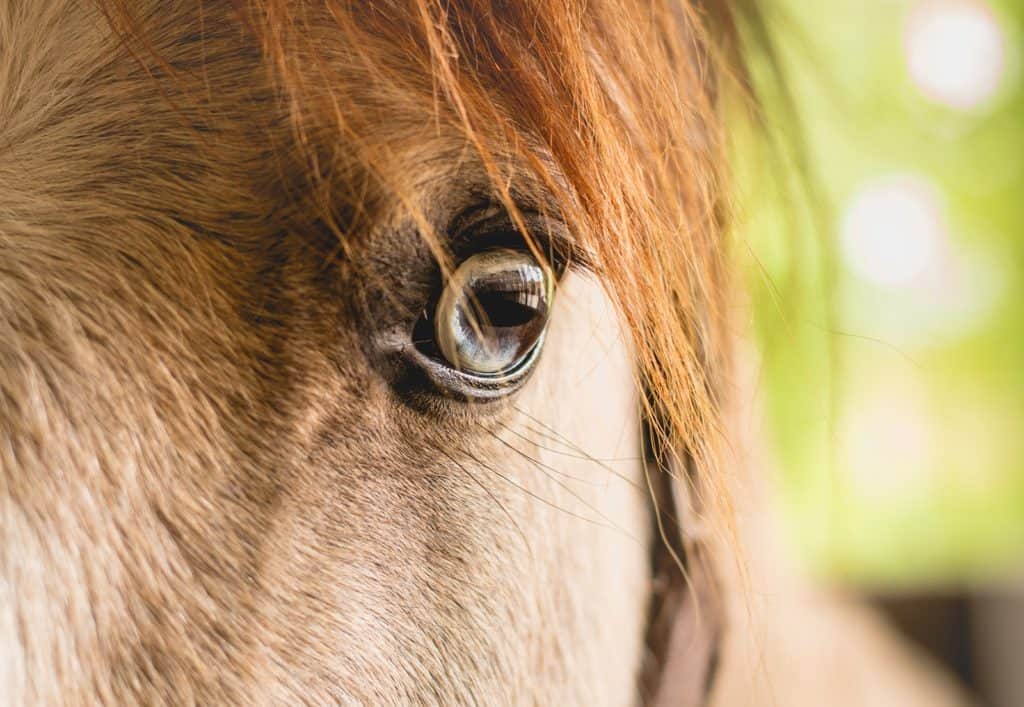
Corneal diseases can range from minor annoyances to serious problems resulting in blindness in horses.

Corneal diseases can range from minor annoyances to serious problems resulting in blindness in horses.
While visibly obvious, fatigue is hard to quantify. Electromyography (EMG) measures conduction along nerves in a particular muscle group–as muscle fibers fatigue, EMG signals shift from high to low. Taking EMG readings during galloping is
There is a new 3-year-old gelding in my barn. He cribs and wears a collar; the collar seems awfully tight to me. A respected friend says that the other horses might pick up this habit from this horse. Is that true? And how can I work with
Veterinarians are quite capable of identifying a painful joint in a lame horse, but determining what is occurring within the joint and how far it has progressed is not yet possible without removing synovial fluid or exploring the joint with
The old adage, “Something’s gotta give,” holds true when you accidentally bump a dinner plate on the counter and it chips or you bang your car door on the car next to you and the paint chips. Trauma inflicted upon an object can cause a chip. The
Mosquitoes are more than a nuisance, they are a public and equine health hazard. In addition to spreading West Nile virus (WNV), mosquitoes can carry malaria, yellow fever, dengue, filariasus (e.g., dog heartworm), and several encephalitis
Skeletal injuries–those involving bones and joints–are a major concern for all athletic horses. The usual outcome of these injuries is a lameness problem that hampers a horse’s training and competition program or, in some cases, is so severe
Symbiosis occurs when two living creatures survive better by working together. For example, there are populations of microbes living in the digestive system of the horse that help break down feedstuffs and create nutrients needed by the horse.
Your young horse is growing up. From birth to age two, a horse will achieve 90% or more of his full adult height. But growing up too fast can cause problems, including an increased risk of developmental orthopedic disease (DOD), which includes which includes several skeletal problems in growing foals.
Veterinarians experienced in the surveillance, treatment, and public education of West Nile virus (WNV) presented their research and observations of the disease at the recent annual meeting of the American College of Veterinary Internal Medicine
Q: My trainer says that my 1 1/2-year-old Thoroughbred colt is forging, but only at the trot. What can I do?
A key in West Nile virus (WNV) surveillance is reporting disease incidence–WNV is a reportable disease in all states. Testing of suspect clinical cases is a service provided by the federal and state governments. It costs nothing at the national
How can you tell if a mare is a hermaphrodite (what does she look like, and what is her behavior like)?
West Nile virus (WNV) has become a 365-day-a-year virus–new cases of disease have been detected every month in Florida since its initial appearance there last year, except for March of 2002. Where there are mosquitoes year-round, there will be
Gray is a 22-year-old Quarter Horse gelding. My question is how/whether to clean his penis. When he lengthens it to urinate, I try to pick off the black crusty stuff, but it is somewhat unpleasant to do this.
A recently completed collaborative effort at the University of Kentucky (UK) associated the Eastern tent caterpillar and its frass (excrement) and mare reproductive loss syndrome (MRLS). This is only the first step in looking at the