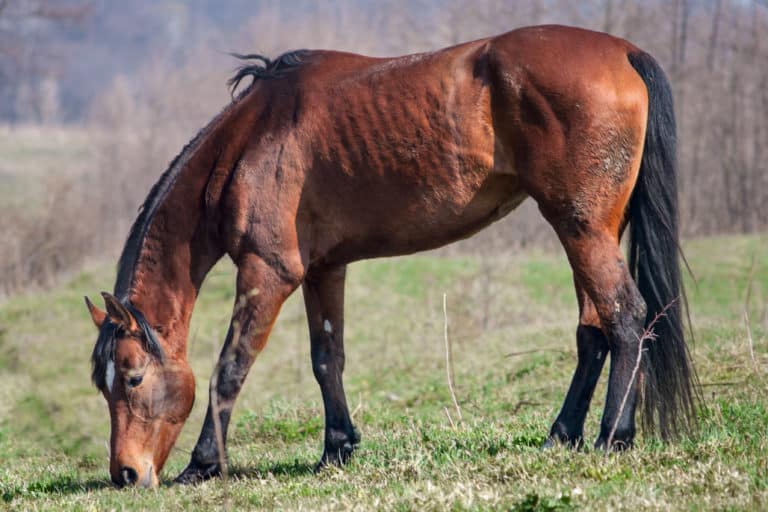
We are ready for a new season of fun riding or competing. The question that must be answered at this point is this: How ready are our horses? In some cases, the answer is that they are kept ready all year long.
Leading researchers in the quest for the solution to equine protozoal myeloencephalitis (EPM) lectured to a packed room at the North American Veterinary Conference. While the protocol didn’t allow for debate among the speakers, debate
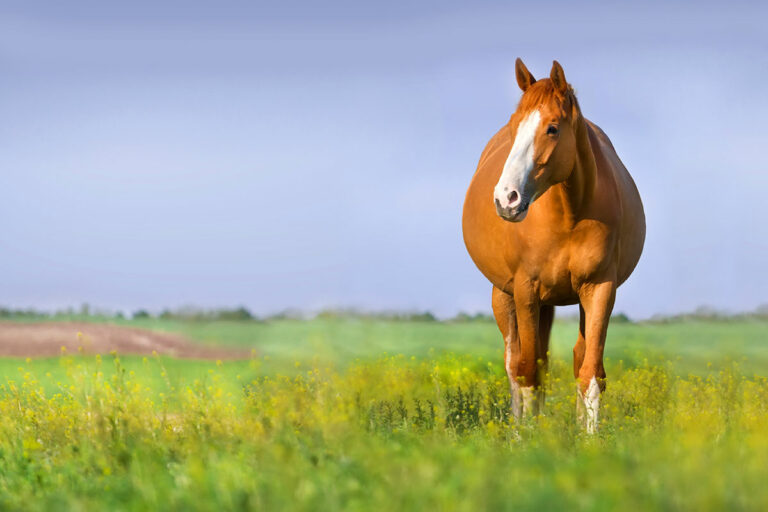
No one ever said mothering was easy. As your broodmare gets closer and closer to her due date, you’ve been noting, with some satisfaction, her bulging belly, her increasingly matronly attitude, and the look of lazy contentment in her eyes. But
Eleven Mustang foals taken to Oklahoma State University last summer when they tested positive for equine infectious anemia (EIA) now have tested negative. A temporary restraining order filed by the International Society for
Five horses located west of New Smyrna Beach, Fla., have tested positive for equine infectious anemia, an infectious disease that can be fatal. All five horses which tested positive for EIA antibodies came from a single premise (farm) that house
Staff members at Oklahoma State University’s Boren Veterinary Medical Hospital collect data from the new gait force analyzer. The technology helps veterinarians assess the degree of lameness in animals.Thanks to a new piece o
Three formerly VS positive premises located in Larimer County, Colorado, were released from quarantine during the week ending Jan. 22, 1999. A new investigation in El Paso County, Colorado, was determined to be negative.
New tools to detect mycotoxins that contaminate corn, barley, wheat and other commodities have been developed by an Agricultural Research Service scientist. ARS is USDA’s chief scientific research agency.
CSIRO (Commonwealth Scientific and Industrial Research Organization—Australia’s largest scientific research organization) Animal Health scientists have discovered more about the mysterious Hendra disease that killed two human
AQHA’s Executive Committee, at its January meeting, reduced the cost for a DNA kit from $40 to $30 per horse. The new price became effective Feb. 1, 1999.
The grazing fee for Western public lands administered by the Bureau of Land Management and the Forest Service will be $1.35 per animal unit month (AUM) in 1999, which is the same amount charged in 1998. The formula used for
A disease that destroys brain cells in horses, moldy corn poisoning or equine leukoencephalomalacia (ELEM), is currently a death sentence. But promising new research findings may someday improve the odds.
A 1-800 information line was established today to aid Northern Arizona horse owners concerned by the recent death of several horses near Ash Fork, located west of Flagstaff off Interstate 40.