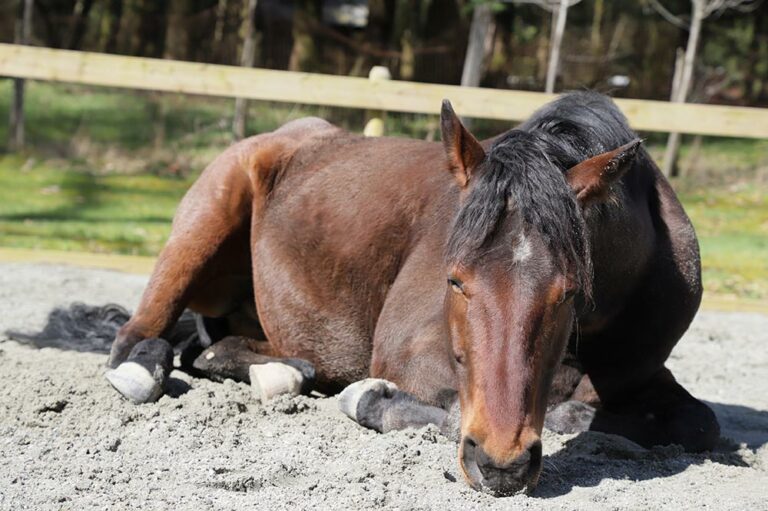
With spring now upon us, Kristina Hiney, PhD, Omega Fields equine nutrition advisor, has prepared a series of seasonal tips to help the horse owner in transitioning his or her horses and property from winter to spring:
During the 2010 calendar year, 95,384 serum samples were tested for equine infectious anemia (EIA) in Kentucky with no positive animals being discovered. Of these, 84,111 samples were collected and tested to comply with state regulations governing
Three horses have been euthanized after testing positive for equine infectious anemia (EIA) in connection with an ongoing investigation into cases in the Ard?che department, an area in south-central France. The cases and control measures were
Scarlett Springate, Editorial Intern
July 25, 2008
A mule in Central Ohio was recently euthanized after testing positive for equine infectious anemia (EIA), according to the Ohio Department of Agriculture.
The Pickaway County farm has been quarantined for 60 days in accordance with Ohio law
Washington State University College of Veterinary Medicine
July 3, 2008
Faculty members at Washington State University have been awarded a $1.4 million grant from the National Institutes of Health (NIH) to study the equine infectious anemia (EIA) virus in horses. The grant was awarded to Susan Carpenter, PhD, a
Horse owners and veterinarians are being asked to watch their animals closely for any unusual clinical signs, in light of a cluster of recent positive cases of equine infectious anemia (EIA).
During the 2007 calendar year, 128,912 serum samples were tested for equine infectious anemia (EIA) in Kentucky. Private testing accounted for 111,607 samples. These samples were collected and tested to comply with state regulations governing th
A group of about 100 horses at Ruidoso Downs Race Track in New Mexico has been tested for equine infectious anemia (EIA) by the New Mexico state veterinarian’s office after a horse stabled near the track’s barn area tested positive for the virus
The waters might be receding, but horse owners in Kansas, Oklahoma, Texas, and other areas affected by recent flooding shouldn’t drop their guard against flood-related problems just yet. Veterinary authorities say owners in the soggy states
The Biologic and Therapeutic Agents Forum at the 2006 AAEP Convention was facilitated by Craig Barnett, DVM, Intervet Senior Equine Technical Services Specialist, and co-facilitator Carol Clark, DVM, Dipl. ACVIM, of Peterson & Smith
Two horses have been euthanatized after testing positive for equine infectious anemia (EIA) in Ard?che, a department in the Rh?ne-Alps region of southern France, according to an announcement made by the French Minister of Agriculture
Ireland’s Department of Agriculture and Food on March 21 lifted all movement restrictions still in place due to the outbreak of equine infectious anemia (EIA) that started last summer and claimed 28 horses. The last case was confirmed