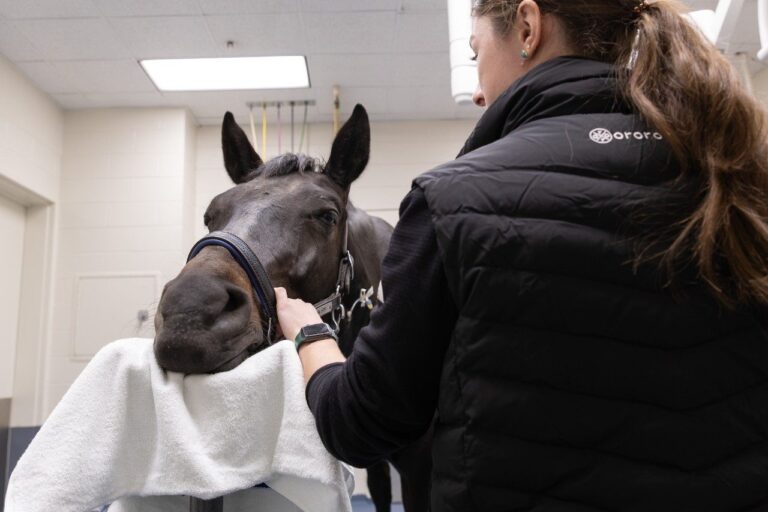
Tips for Maintaining Racehorse Respiratory Health
Reducing particulates in a horse’s environment can go a long way toward ensuring his airway is as healthy as possible.

Reducing particulates in a horse’s environment can go a long way toward ensuring his airway is as healthy as possible.
Diagnosed diseases include vesicular stomatitis, EHV, strangles, influenza, piroplasmosis, rabies, and more.

Diseases and abnormalities of the upper airway are some of the main reasons for poor performance in sport horses.

One researcher believes additional studies are needed to improve IAD diagnosis, treatment, and prevention.

Few study horses with strangles showed the “classic” signs of disease, researchers determined.
The summit will feature talks on racing surfaces, equine injuries, nutrition, biosecurity, respiratory health, and more.

Does your horse have asthma? UPenn’s Dr. Rose Nolen-Walston shares management tips for offering your horse relief.

As a result, officials are advising owners in Jackson and adjoining counties to use caution when moving their horses.

Is your horse protected from infectious disease? Here are tips on how to keep him safe at home and on the road.
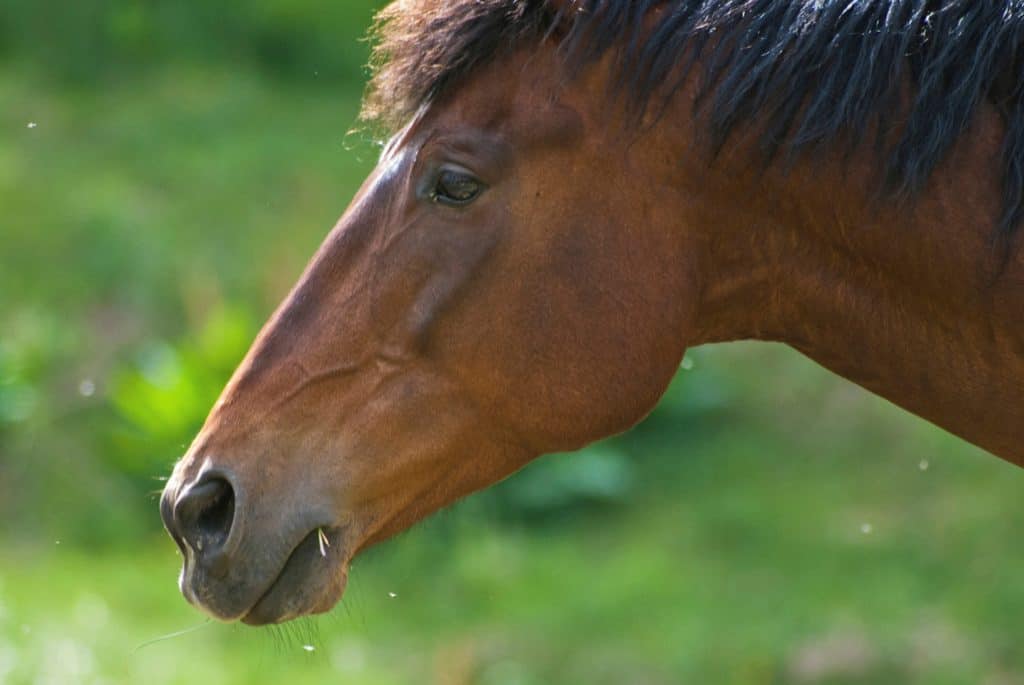
Inflammatory airway disease and recurrent airway obstruction fall under the “equine asthma syndrome” umbrella.

Long-distance transport poses risks for horse health and welfare that should not be taken lightly, researchers found.

Confinement is difficult but often necessary for healing. Learn how to keep horses healthy while on stall rest.

Attendees from around the world gathered to discuss the latest topics and trends of equine infectious diseases.

Racing performance was unaltered regardless of which technique was used to correct soft palate displacement.
Research topics include musculoskeletal and respiratory issues, parasites on stud farms, early pregnancy loss, and more.
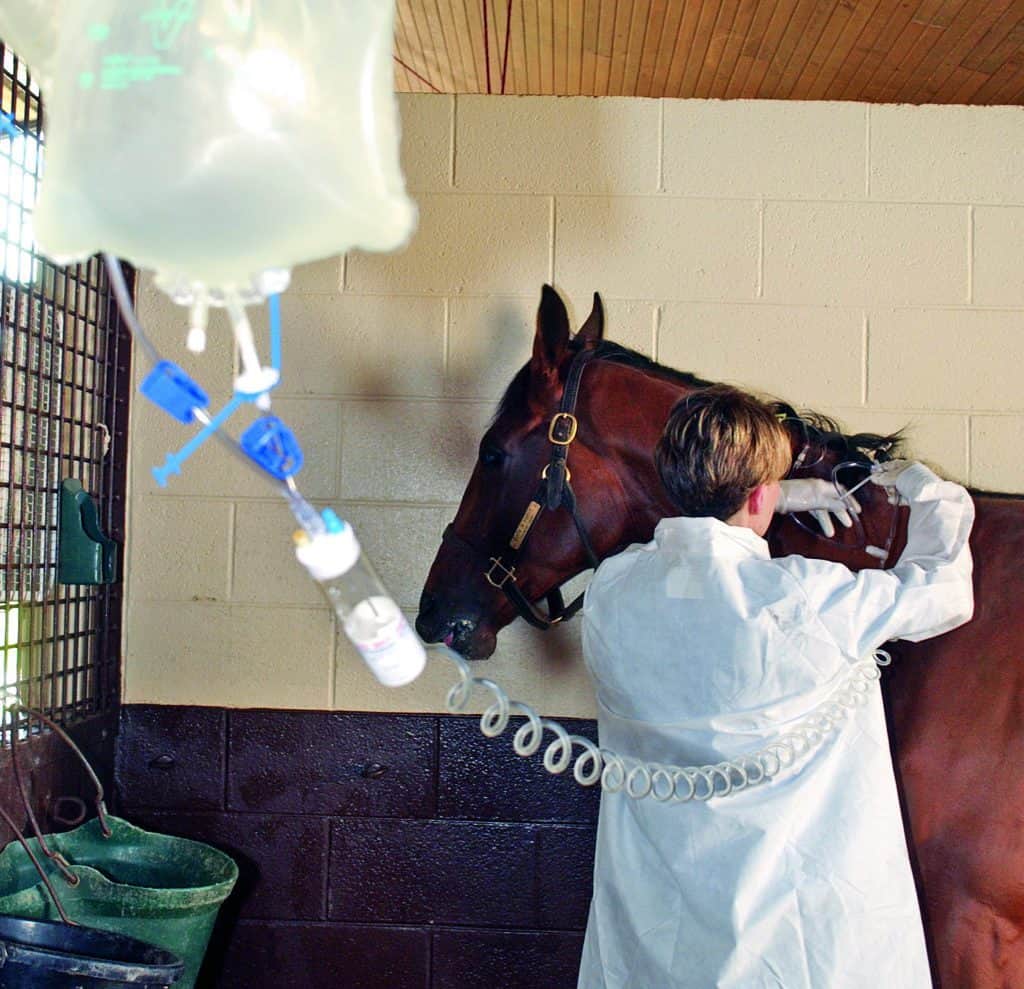
Researchers found that bloody nasal discharge was common in horses with Klebsiella pneumonia.