Answers Sought in Treating Foal Respiratory Disease
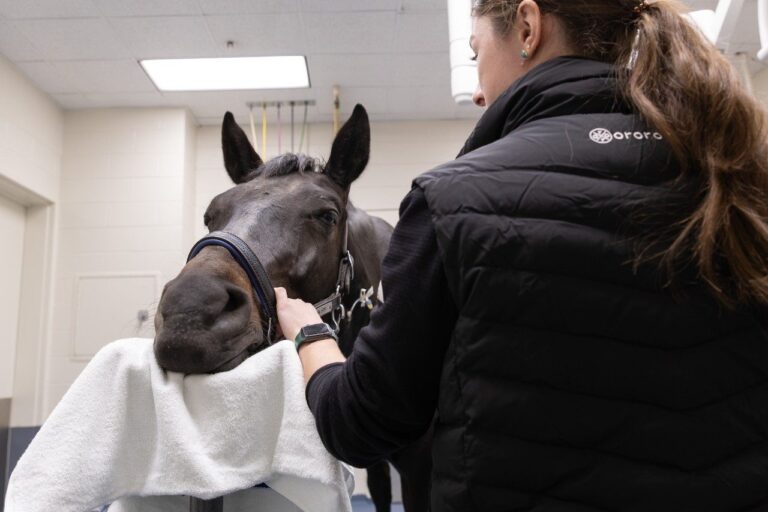
Foals are small enough to fit in the gantry of a CT machine, which is helpful in assessing lung disease.

Foals are small enough to fit in the gantry of a CT machine, which is helpful in assessing lung disease.

The RMTC will continue to study a pilot program proposal to ban the use of Salix in 2-year-old Thoroughbreds.
Proper vaccination by a veterinarian is the best way to help protect horses against strangles and other

The most common equine respiratory disease signs were nasal discharge, fever, depression, and coughing.
The National Horsemen’s Benevolent and Protective Association supports elimination of race-day medications
Most equestrians know firsthand the dangers that accompany their passion for horses: bumps and bruises
The International Collating Center, Newmarket, United Kingdom, and other sources reported the following
Horses in intense exercise, such as racing or three-day eventing, need full lung capacity to perform to the to
Transportation is a rish factor for the development of broncho or pleuropneumonia (commonly known as shipping
Researchers have made strides in understanding airway diseases and what helps (or does not help) control them.

Flu, equine herpesviruses 1 and 4, and strangles commonly cause upper respiratory tract problems in horses with coughing, runny nose, and fever. How can you tell which one your horse has, and what can you do to prevent these diseases?
Learn about flu, equine herpesvirus, and strangles respiratory disease at TheHorse.com/Webinars on June 30!
A baby step toward progress was how organizers described the two-day International Race Day Medication Summit
Concerns about Salix’s performance-enhancing attributes may pale in comparison to the potential detrimental
Anyone hoping to learn the intricacies of Salix use, research, and regulation at the June 13 International
Exercise-induced pulmonary hemorrhaging discussed on Day 1 of the International Summit on Race Day Medication