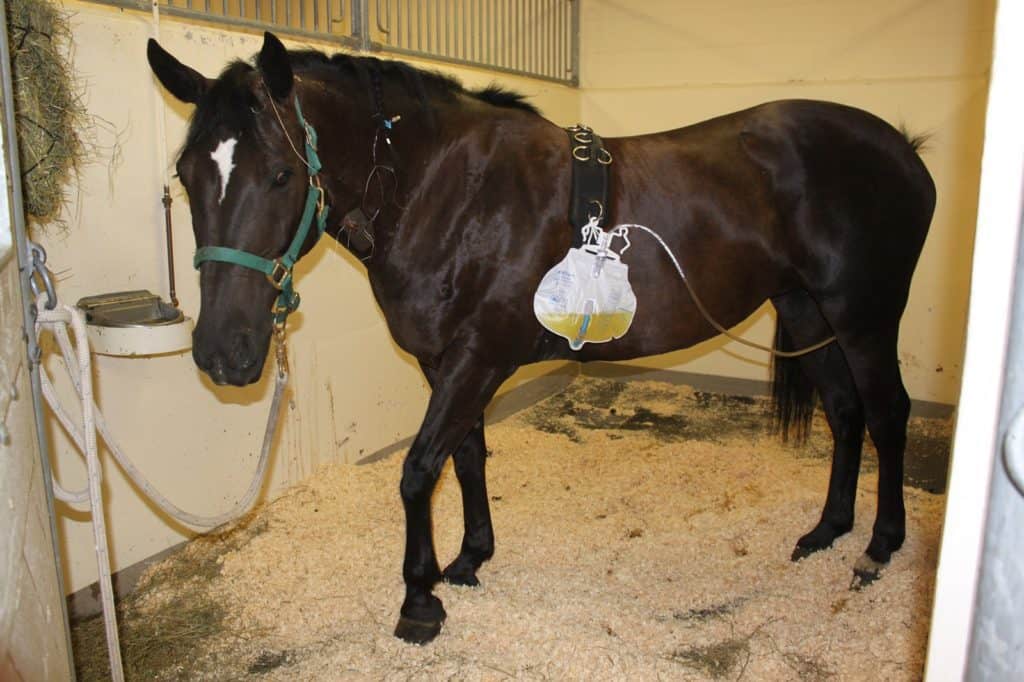
Firocoxib Study Leads to Equine Canada Rule Change
Firocoxib is a non-steroidal anti-inflammatory drug used to treat musculoskeletal inflammation and pain in horses.

Firocoxib is a non-steroidal anti-inflammatory drug used to treat musculoskeletal inflammation and pain in horses.
The preconference workshop and conference for vets and farriers will take place May 20 and 21, respectively.

Unilateral TMJ inflammation not only affects the way horses chew but also likely creates a certain level of pain.

Confinement is difficult but often necessary for healing. Learn how to keep horses healthy while on stall rest.

Researchers hope study results will help them establish guidelines for administering nerve blocks in horses’ hind limbs.

Standardbreds training over shorter distances lost fewer training days to injury, but still raced successfully.
Dr. Kyla Ortved specializes in orthopedic surgery, including arthroscopy, tenoscopy, and fracture repair.

Siard is studying inflamm-aging in senior horses, polyphenols as anti-inflammatory treatments, and more.

The event is designed to teach owners how nutrition can affect their horses’ health and longevity.

None of the 26 study horses suffered nephrosplenic entrapment recurrence following surgery.
The presentation on the Equimagine system will take place May 6 at the Penn Vet New Bolton Center.

Nuclear scintigraphy is especially useful for honing in on the locations of active bone conditions in horses.
Racing performance was unaltered regardless of which technique was used to correct soft palate displacement.

Certain strains of fungi found in moldy fodder can cause serious problems in both horses and handlers, scientists found.
Research topics include musculoskeletal and respiratory issues, parasites on stud farms, early pregnancy loss, and more.

Selective breeding could lead to horses more tailored for endurance and improve welfare and performance, scientists say.