Sponsored by Tough1
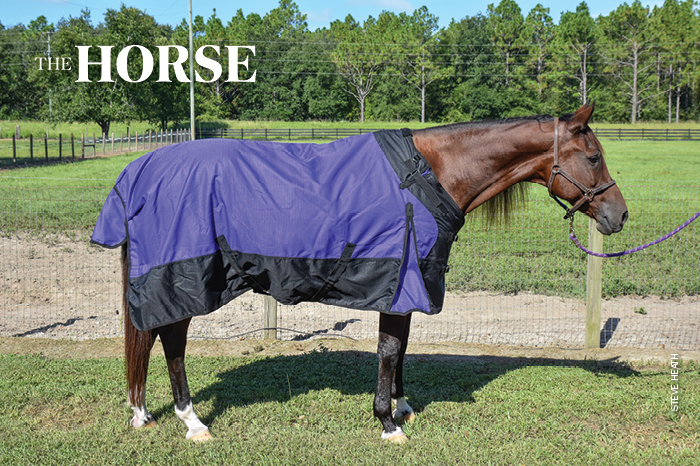
bay horse wearing purple blanket

When it comes to horse blankets, there are many different styles, types of fabrics, levels of insulation, and degrees of water repellency. Once you make those choices, proper fit becomes the priority from the time of purchase onward. Be sure to check the fit regularly to keep your horse comfortable and safe. 

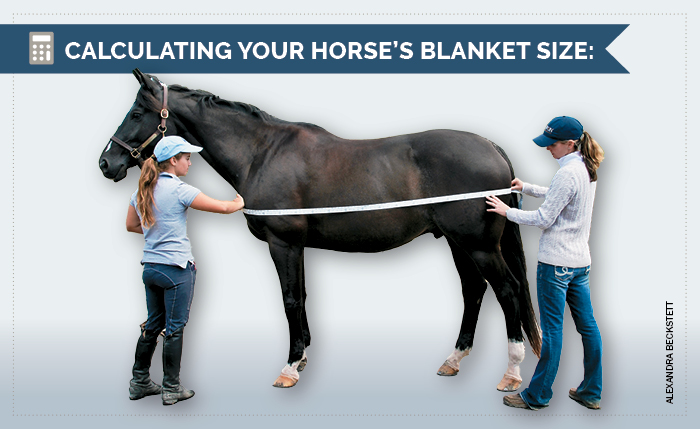
Calculating Your HOrse's Blanket Size
  • Stand the horse square.
  • Place one end of a soft measuring tape in the center of his chest, just below the spot where the neck joins the body.
  • Recruit a helper to pull the tape around the chest and the widest part of the shoulder and along the side of the horse’s body, parallel with the ground, to the point of the buttocks, about 10 inches below the tailhead.
  • This length in inches correlates to your horse’s blanket size.
  • If your horse’s measurements fall between sizes, it is usually best to go with the larger size.
  • Most blanket manufacturers follow standard sizes, but brands can differ slightly. Check online reviews to find out if a brand’s sizes tend to run larger or smaller.

How Do I Prevent Rub Marks?

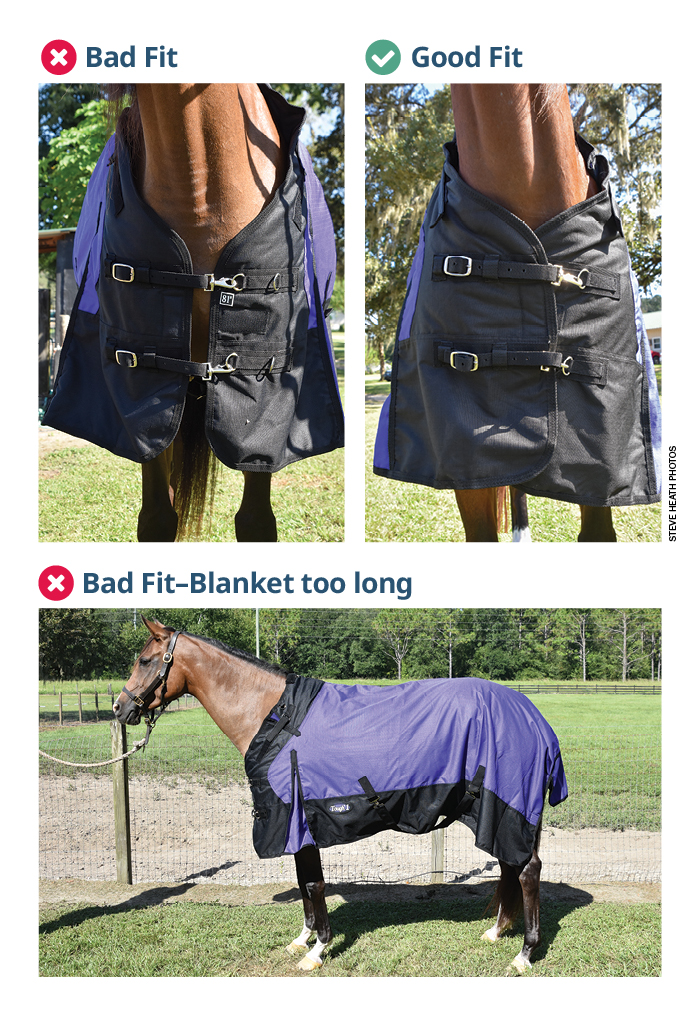
The best way to prevent rub marks is to buy a blanket that fits. A properly fitted blanket allows the horse to put down his head and have complete range of shoulder motion. There should be no pressure on his withers, and you should be able to slide your hand under the blanket and up the shoulder easily. If it pinches or is tight in this area, it will probably start to rub. Blanket liners and shoulder protectors can also help prevent rub marks.

Safety Tips


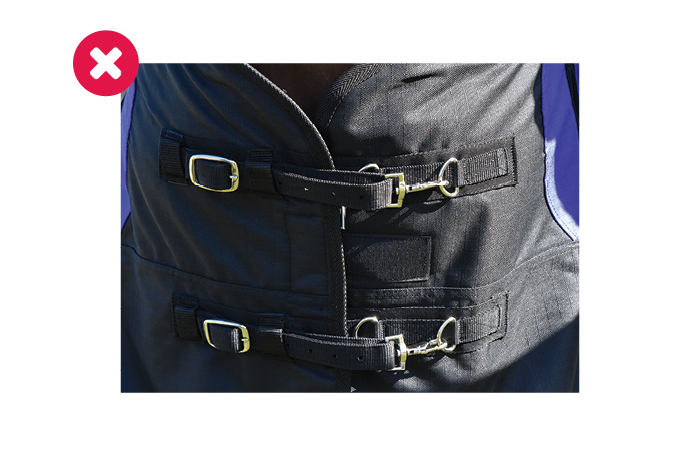
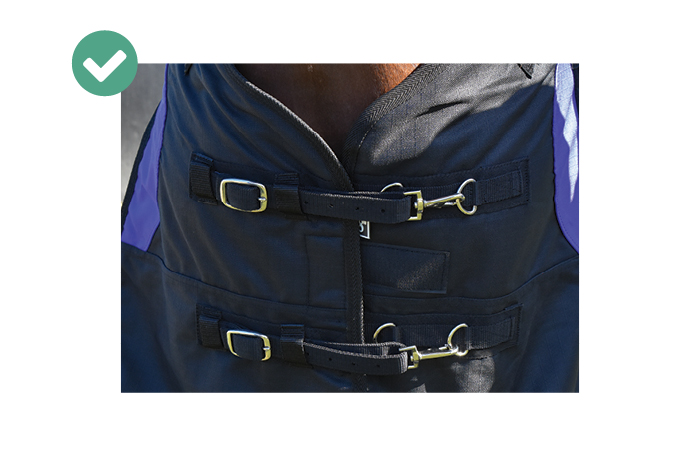
  • Use the correct fastening order (chest, belly, leg) to keep the blanket from falling if the horse spooks.


  • If snaps are at the front of the blanket, make sure the snap part faces toward the horse to avoid it getting caught on things.

horse blanket buckles correctly fastened


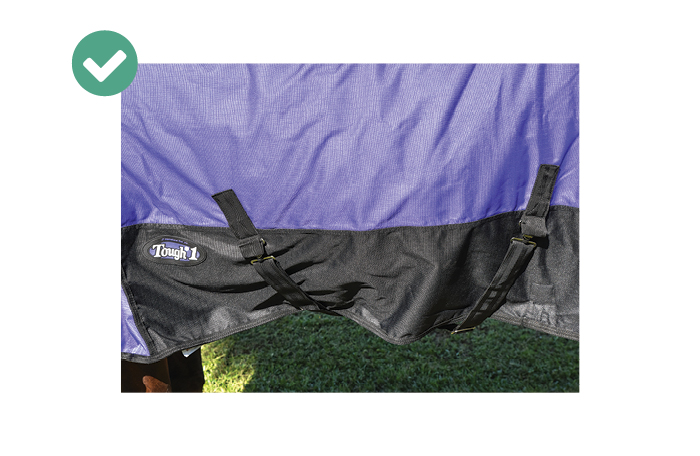
  • Adjust the belly straps so they are snug against the horse’s body. Legs can get caught in straps that hang down too far when the horse lies down and gets up.
horse blanket leg straps
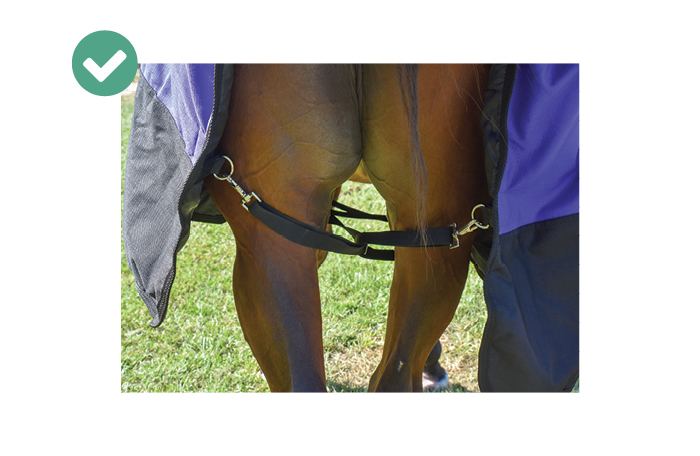
  • With the back leg straps, attach one clasp, making sure the strap is not too loose or too tight. It should not fall below the horse’s hock or be too high against the leg. Take the second strap and loop it through the first strap. That secures the blanket in place when the horse runs, bucks, rolls, and gets up and down. Also, the straps will pull against each other instead of against the horse’s legs.
  • With the back leg straps, attach one clasp, making sure the strap is not too loose or too tight. It should not fall below the horse’s hock or be too high against the leg. Take the second strap and loop it through the first strap. That secures the blanket in place when the horse runs, bucks, rolls, and gets up and down. Also, the straps will pull against each other instead of against the horse’s legs.
  • Check the blanket daily for damage and proper fit.
  • Check the horse daily for rubbing, skin conditions, and body condition.
  • Change blankets as necessary for weather conditions.

Take-Home Message

Horse owners often blanket horses, but the job demands vigilance. Check blanket fit daily and evaluate the horse regularly for rubs, being too hot or too cold, or changes in body condition. If you have questions about your horse’s blanketing care, contact your veterinarian.