Over the past two decades, horse owner awareness of equine gastric ulcers has grown dramatically. In parallel, researchers’ understanding of the disease has shifted. Today’s veterinarians and scientists recognize equine glandular gastric disease (EGGD) as a distinct condition with its own risk factors and challenges. Unlike equine squamous gastric disease (ESGD), which occurs in the upper region of the stomach, EGGD affects the lower region. EGGD risk is closely tied to a horse’s exercise schedule, management practices, and behavioral stress. Standard medications often fall short when treating EGGD, making long-term support and prevention essential for affected horses.
PROTEK GI and Equine Glandular Gastric Disease
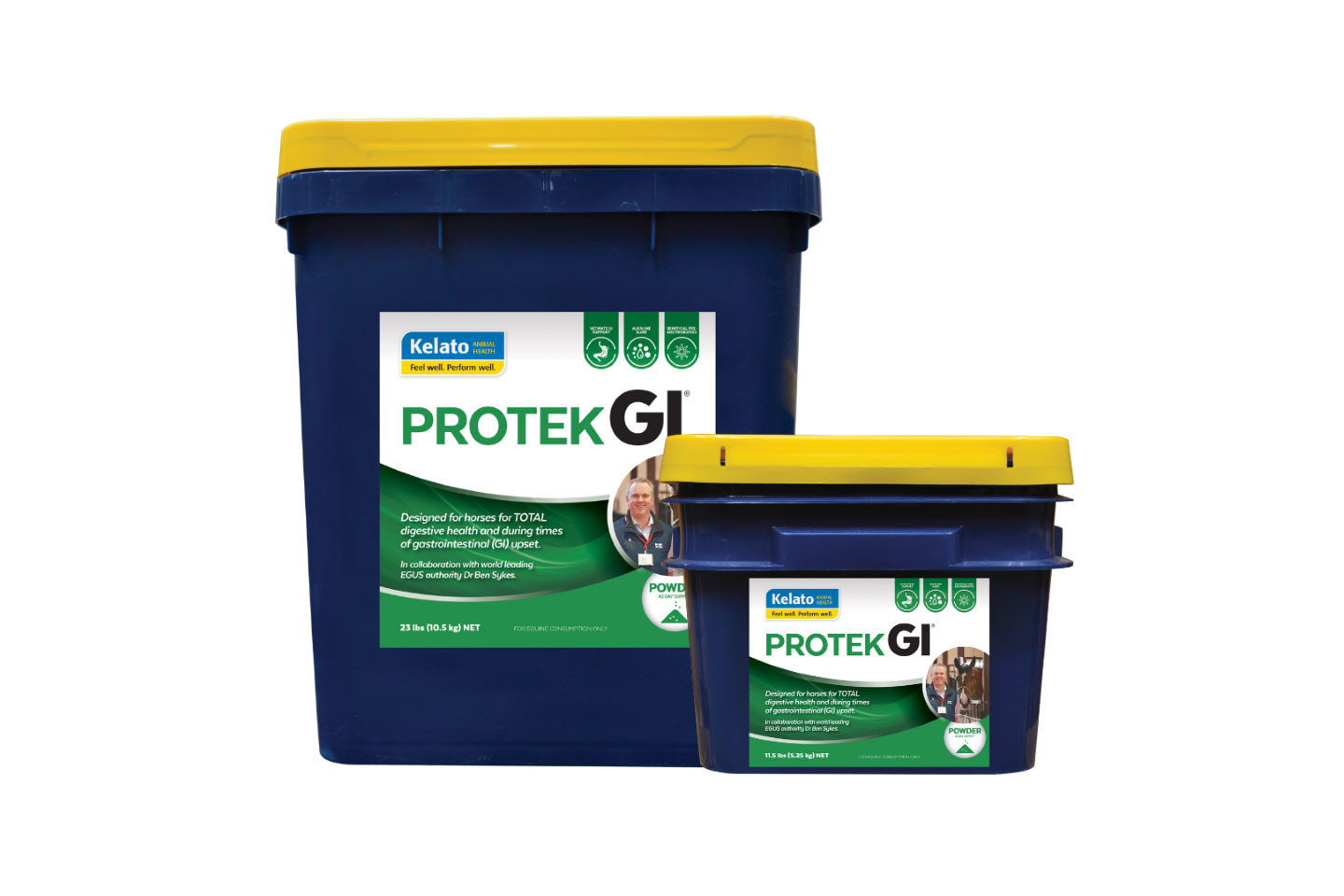
This is where PROTEK GI steps in. Developed in collaboration with world-leading equine gastric ulcer syndrome authority Dr. Ben Sykes, BSc, BVMS, MS, MBA, Dipl. ACVIM, PhD, FHEA, a clinical researcher and educator based in Australia, PROTEK GI is an evidence-based supplement, backed by two peer-reviewed clinical studies, designed to improve how we support horses with chronic EGGD. PROTEK GI provides a holistic approach to digestive health, targeting both the foregut and hindgut rather than focusing solely on stomach acid suppression.
At the core of PROTEK GI’s innovation is its alkaline slime barrier, created by a proprietary blend of pectin, lecithin, and antacids. This layer coats the horse’s stomach lining and buffers acid. Beyond protection, PROTEK GI also mimics the mucobicarbonate layer of the glandular mucosa, supporting the stomach’s natural defenses against acid burn.
PROTEK GI also supports a balanced hindgut environment with a combination of Levucell SC® live yeast probiotic and Agrimos® yeast prebiotic. These ingredients reduce lactic acid accumulation, stabilize the hindgut pH, and encourage the growth of beneficial microbes, resulting in an overall more resilient equine digestive system.
The Research Behind PROTEK GI
For owners managing horses with a history of gastric disease, timing is critical. Research has shown that gastric ulcers can return within just days of stopping an omeprazole treatment. Transitioning to PROTEK GI at this point has been shown to reduce ulcer recurrence rates in high-risk horses, making it an ideal bridge from the treatment to long-term management (Shan et al., 2023).
Owners of horses supplemented with PROTEK GI often report improved appetite, weight gain, better coat condition, and a more positive attitude. In performance settings, riders have reported more consistent behavior, improved rideability, and enhanced stamina.
A Holistic Approach to the Whole Horse
Dr. Sykes emphasizes the best outcomes for EGGD come from a holistic plan—one that balances training loads, reduces environmental and behavioral stressors, and supports the digestive system with evidence-based solutions. PROTEK GI fits seamlessly into that plan, giving horses the support they need to stay healthy and perform at their peak.
Take-Home Message
Chronic EGGD demands more than short-term fixes. PROTEK GI is an evidence-based supplement, backed by peer-reviewed clinical studies, designed to coat the horse’s stomach lining, buffer acid, and strengthen digestive defenses while supporting hindgut balance. Transitioning horses from omeprazole to PROTEK GI has been shown to reduce ulcer recurrence and promote long-term digestive resilience.
With its scientifically proven formulation, PROTEK GI is not just another digestive supplement—it’s a smarter way forward in the long-term management of chronic EGGD.
Do you have a question about equine gastric ulcers? We want to hear from you! Please submit your question below.