What medications do veterinarians use in broodmares and why? And are they completely safe?

Despite careful management, broodmares still face injury and illness during pregnancy. When medical issues arise, treatment decisions carry added weight because of the fetus, raising questions about which medications are known to be safe in pregnant mares.
C. Scott Bailey, DVM, MS, Dipl. ACT, associate professor at Cornell University’s College of Veterinary Medicine, in Ithaca, New York, says few medications have been specifically studied in broodmares.
“The exceptions are a few common antibiotics and firocoxib in their ability to penetrate to the foal,” says Bailey. “Studies show that common antibiotics and firocoxib do reach the foal. But early research didn’t detect flunixin meglumine (Banamine) in fetal fluids, and crystalline ceftiofur (Excede, an antibiotic) did not appear to reach the foal. In reality, though, we have to assume every drug we give is going to reach the foal unless demonstrated otherwise. The placenta is designed for the efficient transfer of all manner of things. This doesn’t, however, mean drugs administered to mares are going to cause a toxic effect to the foal.”
Despite the lack of safety data on many medications in broodmares, this population still needs treatment when necessary. In this article we’ll describe common medical conditions affecting broodmares, along with some of the most widely used medications. This discussion builds on a previous article in The Horse, “What Medications Are Safe for Broodmares?”
Common Conditions Affecting Broodmares
Rebecca Mouncey, BVetMed, PhD, PGCert, FHEA, MRCVS, of the Royal Veterinary College, in Hatfield, England, and colleagues recently reviewed data from 275 pregnancies on seven stud farms over two breeding seasons (Mouncey et al., 2022). They recorded the occurrence of veterinary-attended episodes of illness and medications prescribed during those episodes.
Overall, 34% of the 203 pregnancies with available data needed veterinary intervention at least once during the study period.
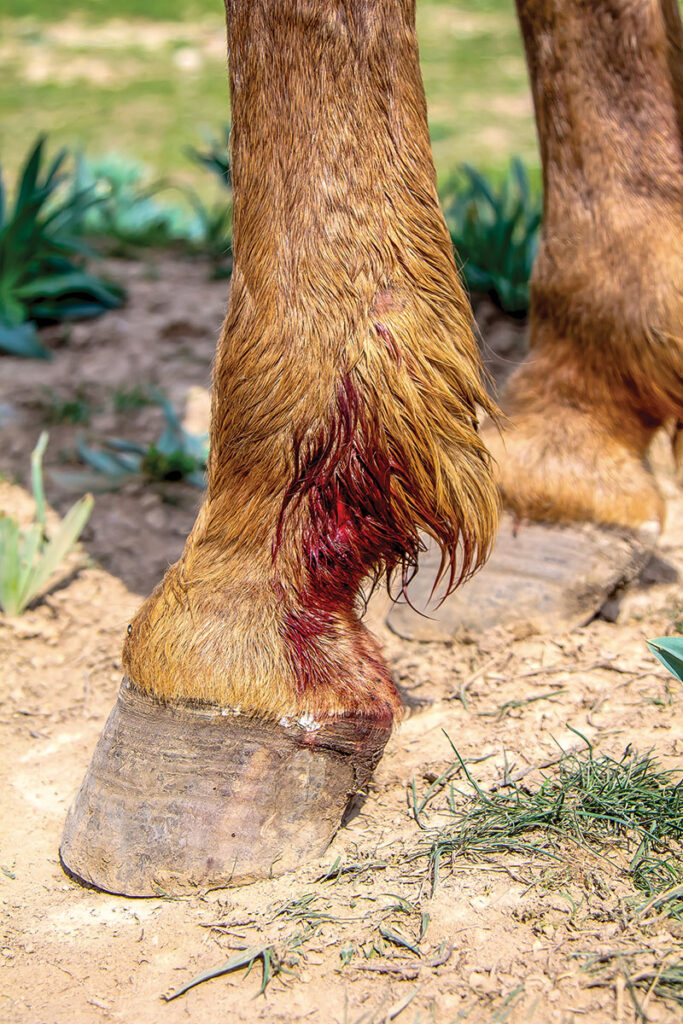
Top conditions recorded for those 203 pregnancies were:
- Musculoskeletal injuries in 22.7% of the pregnancies, occurring around 140 to 215 days of gestation (specific examples included trauma, 9.8%; cellulitis, 7.4%; and foot pain/abscess/laminitis, 6.4%)
- Placentitis (inflammation of the mare’s placenta, 4.9%)
- Colic (abdominal pain, 4.4%)
- Conjunctivitis/corneal ulcer (inflammation or ulceration of structures within the eye, 2.5%)
Bailey confirms these are common conditions seen in broodmares, based on his six years spent working at Claiborne Farm, in Paris, Kentucky
This story requires a subscription to The Horse magazine.
Current magazine subscribers can click here to and continue reading.
Subscribe now and gain unlimited access to premium content.
Subscribe NowWe at The Horse work to provide you with the latest and most reliable news and information on equine health, care, management, and welfare through our magazine and TheHorse.com. Our explanatory journalism provides an understandable resource on important and sometimes complex health issues. Your subscription will help The Horse continue to offer this vital resource to horse owners of all breeds, disciplines, and experience levels.