Strangles remains one of the most common and important contagious diseases affecting horses worldwide. Although the disease has been recognized for centuries, outbreaks continue to disrupt breeding farms, boarding facilities, training centers, veterinary hospitals, and equine events. The movement and commingling of horses, combined with the ability of apparently healthy horses to carry and spread the causative bacterium, make strangles particularly difficult to control.
Strangles is caused by Streptococcus equi subspecies equi, commonly abbreviated as S. equi. The bacterium is highly adapted to horses and spreads primarily through direct contact with infected animals or through contaminated equipment, clothing, hands, water sources, feed containers, trailers, stalls, and other surfaces.
Clinical Features of Strangles
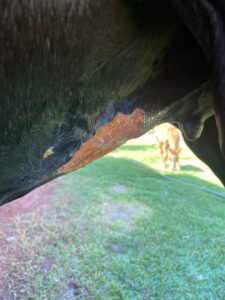
The incubation period is approximately three to 14 days, depending on the horse’s immune status and level of exposure. Fever, often exceeding 102°F (38.9°C) and frequently accompanied by lethargy and reduced appetite, is typically the first clinical sign of strangles. As the disease progresses, affected horses might develop purulent nasal discharge, coughing, swallowing difficulty, painful enlargement of the lymph nodes beneath the jaw or behind the throat, and abscess formation with subsequent drainage from affected lymph nodes. Swelling of the retropharyngeal lymph nodes can obstruct the upper airway, producing the respiratory difficulty that gave the disease its name. Although the majority of horses recover, 10% of horses in some outbreaks might die from the disease. Affected animals experience substantial pain, dehydration, and weight loss. Some horses experience prolonged illness, and might develop serious complications such as metastatic strangles, in which abscesses develop in lymph nodes or organs distant from the upper respiratory tract. Another complication that occurs in some horses is purpura hemorrhagica, an immune mediated condition characterized by inflammation of blood vessels, resulting in swelling of the limbs and head, and areas of hemorrhage (bleeding) below the skin and mucous membranes. Pneumonia, accumulation of pus in the guttural pouches (empyema), persistent infection, and airway obstruction can also occur.
Diagnostic Approaches for Strangles
Clinical signs might strongly suggest strangles, but laboratory confirmation is important for managing individual horses and controlling an outbreak. Diagnosis commonly involves bacterial culture, polymerase chain reaction, or both. Appropriate samples for diagnostic testing include nasal swabs, nasopharyngeal swabs or washes, guttural pouch washes, and purulent material collected directly from abscesses. The most appropriate specimen depends on the stage of infection and the horse’s clinical presentation. Polymerase chain reaction is a rapid and highly sensitive method for detecting S. equi, while culture has less sensitivity, but permits further investigation of the strain causing the outbreak. Results must be interpreted together with the horse’s clinical history, exposure status, and sampling method.
A single negative test does not always exclude infection. Horses sampled very early in the incubation period might test negative before bacterial shedding begins. Similarly, nasopharyngeal samples might fail to identify horses with persistent guttural pouch infection. Endoscopic examination and testing of guttural pouch lavage fluid are especially important when evaluating possible carriers.
The Hidden Role of Persistent Carriers
Most horses stop shedding S. equi within several weeks after clinical recovery. However, a small proportion develop persistent infection within one or both guttural pouches. Thickened accumulations of pus, known as chondroids, might form in the guttural pouches and harbor viable bacteria for months or even years. These clinically normal carriers are a major reason strangles can reappear on farms after long disease-free intervals. A carrier might shed the organism intermittently, making detection difficult and allowing infection to spread when horses are transported or introduced into new groups.
Consequently, the end of visible clinical disease does not necessarily mark the end of an outbreak. Recovered horses should be evaluated according to a veterinarian-directed testing plan before they return to an uninfected population. Horses with guttural pouch infection might require endoscopic removal of chondroids, lavage, local antimicrobial treatment, or a combination of approaches.
Controlling Disease Spread During an Outbreak
During outbreaks, rapid recognition and immediate separation of affected and exposed horses are essential. During a strangles outbreak, record rectal temperatures at least once, and preferably twice, daily because fever often develops before bacterial shedding and other recognizable clinical signs. Waiting until abscesses or significant nasal discharge appear can allow infected horses to continue transmitting the disease, increasing the risk of further spread.
An affected facility should be divided into epidemiologic groups whenever possible: 1) horses with confirmed or suspected disease; 2) horses exposed to affected animals but not yet showing clinical signs; and 3) horses with no known exposure.
Personnel, equipment, water sources, feed containers, grooming tools, and manure-handling procedures should be separated among these groups. Ideally, staff should care for healthy horses first, exposed horses second, and affected horses last. Dedicated protective clothing and footwear should be used, and hands should be cleaned between groups.
A new fever might indicate that a horse is entering the infectious stage and should trigger immediate isolation and veterinary evaluation. A new fever should also prompt discussion with the attending veterinarian about diagnostic testing and whether any treatment is appropriate at that stage of disease.
The organism can be transferred mechanically through hands, clothing, buckets, hoses, trailers, and other equipment. Cleaning should therefore remove organic material before an appropriate disinfectant is applied. Shared water troughs are especially concerning because S. equi can survive for extended periods in water, allowing nasal secretions to contaminate the water and facilitate transmission.
Movement of horses on and off the premises should be restricted until the outbreak investigation and post-recovery testing are complete. Clear communication with veterinarians, owners, staff, neighboring facilities, and event organizers helps limit further spread and reduces misinformation.
Treatment Must Be Individualized
Treatment decisions depend on the stage and severity of disease. Many uncomplicated cases are managed with supportive care, including adequate hydration, soft feed, anti-inflammatory medication, and careful monitoring. Warm compresses might encourage maturation and drainage of external abscesses.
Antimicrobial treatment is not routinely indicated for horses with uncomplicated strangles. Once lymph node abscesses are established, antibiotics might delay resolution by interfering with abscess maturation, timely drainage, and the development of natural immunity. Importantly, lymph node abscessation can develop early in the disease course, even within the first few days of fever, so antimicrobial treatment decisions should not be based on fever alone. Antimicrobials are generally warranted for horses with respiratory distress, severe systemic illness, dysphagia, pneumonia, metastatic infection, or other complications. They might also be used, under veterinary guidance, to help clear persistent guttural pouch infection after chondroids or purulent material have been removed. Because antimicrobial decisions affect disease progression, carrier risk, outbreak control, and antimicrobial stewardship, treatment should always be directed by the attending veterinarian.
Reducing Strangles Risk Through Biosecurity
Biosecurity remains the foundation of strangles prevention. Reducing the level of exposure to S. equi can help reduce the risk and severity of disease. Newly arriving horses should be isolated and monitored for at least three weeks before being introduced into the resident population. Their health history, recent travel, potential exposure to strangles, and vaccination history should be reviewed. Depending on the risk assessment, testing for S. equi or evidence of previous exposure might be recommended. Facilities should also have written procedures for monitoring horses for fever and respiratory disease, isolating sick or newly arrived animals, cleaning and disinfecting shared equipment, managing horse movement, investigating suspected cases, communicating during an outbreak and determining, under veterinary guidance, when recovered horses can safely leave isolation.
Progress Toward Improved Strangles Vaccines
Vaccination is an additional risk-reduction tool, but it does not replace quarantine, surveillance, testing, and good biosecurity measures. In the U.S., currently available strangles vaccines include killed injectable products and a modified-live intranasal vaccine. Vaccination decisions should be based on the horse’s exposure risk, age, health, previous history of strangles, and use pattern including travel, showing, boarding, training, breeding, or other situations involving frequent commingling with unfamiliar horses. Available vaccines do not provide complete protection, but they might reduce the likelihood or severity of disease. Vaccination during an active outbreak requires careful veterinary risk assessment, particularly for horses that might already have been exposed or infected, because of the potential risk of post-vaccinal immune-mediated adverse reactions.
A recombinant protein vaccine, Strangvac®, is available in European markets and is being evaluated through the regulatory process for potential use in the U.S. Unlike modified-live vaccines, it does not contain a living infectious organism. In Europe, Strangvac® has been used as part of veterinary-directed strategies to help control and contain active strangles outbreaks; however, vaccination during an outbreak still requires careful risk assessment. Strangvac® was designed to induce immunity against eight different S. equi proteins while allowing the differentiation of infected from vaccinated animals, an approach commonly referred to as DIVA. This DIVA capability can support outbreak investigations by helping distinguish vaccinated horses from those naturally exposed to S. equi. Notably, the vaccine does not contain the M protein, a major virulence factor that has been associated with immune-mediated adverse reactions, including purpura hemorrhagica, in some contexts following natural infection or immunization.
The Helmy Laboratory, led by Yosra A. Helmy, DVM, MVSc, PhD, together with Beatrice Sponseller, Dr. med. vet. Dipl. ABVP, and Brett Sponseller, DVM, PhD, all from the University of Kentucky’s Maxwell H. Gluck Equine Research Center, in Lexington, is evaluating the efficacy of Strangvac® in collaboration with Andrew Waller, PhD, and Romain Paillot, PhD, of Intervacc AB. In parallel, the U.K. team is collaborating on multi-state safety studies being conducted in Kentucky, Pennsylvania, Iowa, and Texas, in collaboration with Nathan Slovis, DVM, Dipl. ACVIM, CHT, of Hagyard Equine Medical Institute, in Lexington, Jodi French of Mg Biologics, Ashley Boyle, DVM, Dipl. ACVIM, of the University of Pennsylvania, in Philadelphia, Macarena Sanz, DVM, MS, Dipl. ACVIM, PhD, of Iowa State University, in Ames, and Noah Cohen, VMD, MPH, PhD, Dipl. ACVIM, and Leslie Easterwood, DVM, of Texas A&M University, in College Station. Together, these studies are evaluating the safety and efficacy of Strangvac® under conditions relevant to U.S. horses. These studies are important because vaccine performance must be assessed against locally relevant S. equi strains and within the regulatory framework required for U.S. licensure. Results from this work are intended to guide future approaches to strangles prevention, but the vaccine is not currently licensed for routine commercial use in the U.S. This project is supported by Intervacc AB.
Effective strangles control requires an integrated approach that combines early detection, rapid isolation, appropriate diagnostic testing, identification of persistent carriers, strong biosecurity, and vaccination. No single measure can prevent every outbreak. Ongoing advances in surveillance, diagnostics, and vaccination strategies provide new opportunities to reduce the negative health, welfare, and economic impacts of strangles. Continued collaboration among researchers, veterinarians, horse owners, and industry partners will be essential to translate these advances into more effective strangles prevention and improved equine health and welfare.
Editor’s note: This is an excerpt from Equine Disease Quarterly, Vol. 35, Issue 3, funded by Equus/Standardbred Station Inc. and M&J Insurance. It was written by Yosra A. Helmy, DVM, MVSc, PhD, associate professor, and Beatrice Sponseller, Dr. med. vet., Dipl. ABVP, clinical professor, both at the University of Kentucky’s Gluck Equine Research Center, in Lexington.