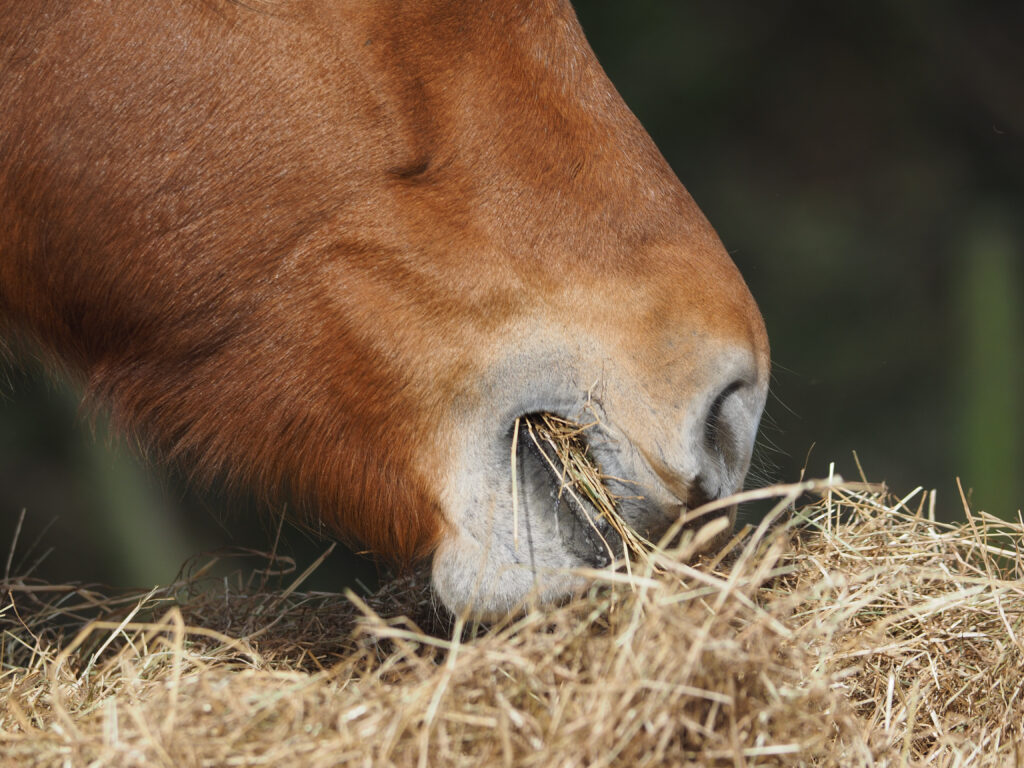
As horse owners, we know many of our equine friends do best on an all-forage diet. After all, that’s what Mother Nature intended, right?
But even top–quality grass or hay likely does not deliver all the nutrients a horse needs for a balanced diet.
So what’s the answer? (Hint: It isn’t more hay!) While it’s always best to consult your veterinarian or an equine nutritionist about dietary changes, you might consider adding a ration balancer or a vitamin/mineral supplement formulated specifically for horses on an all-forage regimen.
Why Isn’t Forage Enough?
It’s true that fresh grass and quality dried forage can meet many, if not most, equine dietary needs. However, their nutritional value isn’t as stable as you might assume.
The nutritional composition of pasture grasses and legumes changes seasonally and can shift rapidly over the course of a day. For example, spring pasture is bursting with nutrients at first, then becomes more fibrous as it matures, with less protein and fewer of the digestible nutrients needed for energy.
Other factors that can contribute to a pasture’s changing dietary values include overgrazing and poor management. This is especially true if the soil has become depleted of nutrients.
Once hay is cut and cured, the amount of vitamin E and beta-carotene (a vitamin A precursor) it contains declines sharply. Therefore, freshness and the length of time spent in storage matter as much as the type of hay (alfalfa vs. orchard grass, for example). The hay’s nutritional value will vary with each batch you purchase.
This is important to consider if you’re feeding horses with greater nutritional demands, such as high-performance horses, breeding stock, youngsters, or horses recovering from stress or illness. Horses in these categories often require nutritional support beyond what even the best pasture or hay can offer.
Concentrates, often referred to as grain, are not reliable gap-fillers. With fortified feeds, you must offer the manufacturer’s recommended amount to reap the advertised vitamin/mineral benefits. That volume often provides more calories than easy keepers need.
This is where a ration balancer designed for easy keepers—or horses whose systems cannot tolerate much grain—might help.
What is Lacking in My Horse’s Diet?
Most horse owners assess their hay regularly for color, smell, maturity, and leafiness.
However, to get a more definitive assessment of the nutritional content of your hay, consider pulling a representative sample across several bales in a single load and sending it to a lab for testing. A basic analysis usually includes values for digestible energy, fiber, crude protein, sugar and starch levels, as well as some minerals. Additional testing for mold counts and other minerals and vitamins can sometimes be arranged by request.
Of course, you’ll need to take into account the cut and cure dates mentioned previously, as well as how long the hay has spent in storage. Because forage makes up a large part of most equine diets, even small imbalances can have an impact over time.
You can also send pasture samples in for analysis by commercial labs. However, the ever-changing nutrient levels in green pasture are much harder to pin down than those in hay. At best you’ll have a snapshot of the pasture content at a certain time of day during a certain week during a certain season.
What to Look for in a Balancer or Supplement
So, once you have an idea of the nutritional value of your horse’s current forage—including its weak points—what next?
Searching for a suitable ration balancer or supplement is as much about avoiding “doubling up” on nutrients as it is filling the gaps. Remember, too, that if you’re feeding anything in addition to forage, some ingredients might interfere with the absorption of others. Feeding multiple supplements can be risky for the same reasons.
Do your research and make sure you’re targeting your horse’s needs as specifically as possible. You should be correcting imbalances without going overboard (and without piling on extra calories or protein).
Things to look for include:
- Formulas designed especially for horses on forage-based diets, featuring reduced or concentrated feeding rates, minimal starch and sugar, and nutrient levels that reflect well-established equine requirements
- Levels of vitamins A and E that adequately address the depletion rates common in stored hay
- Essential amino acids for growth and muscle development
- Omega-3 fatty acids for healthy skin, hair coat, and hooves, with organic trace minerals (copper, selenium, manganese, zinc) in readily absorbable forms
Consider Sentinel Care Topline 30 or Sentinel Simply Lite to satisfy the components of a proper balancer depending on the needs of your horse
You might also contemplate supplements containing B-complex vitamins for horses with increased needs, along with prebiotics/probiotics for digestive health and maximum assimilation of nutrients.
Take-Home Message
Before making any changes to your horse’s ration, gather information and weigh all the factors. To ensure you’re on the right track, consult your veterinarian or contact a qualified equine nutritionist for a dietary analysis.
Thoughtful supplementation can compliment good forage for a healthier, more complete equine diet.