Veterinarians use complementary therapies alongside conventional care to ease pain, aid recovery, and support performance
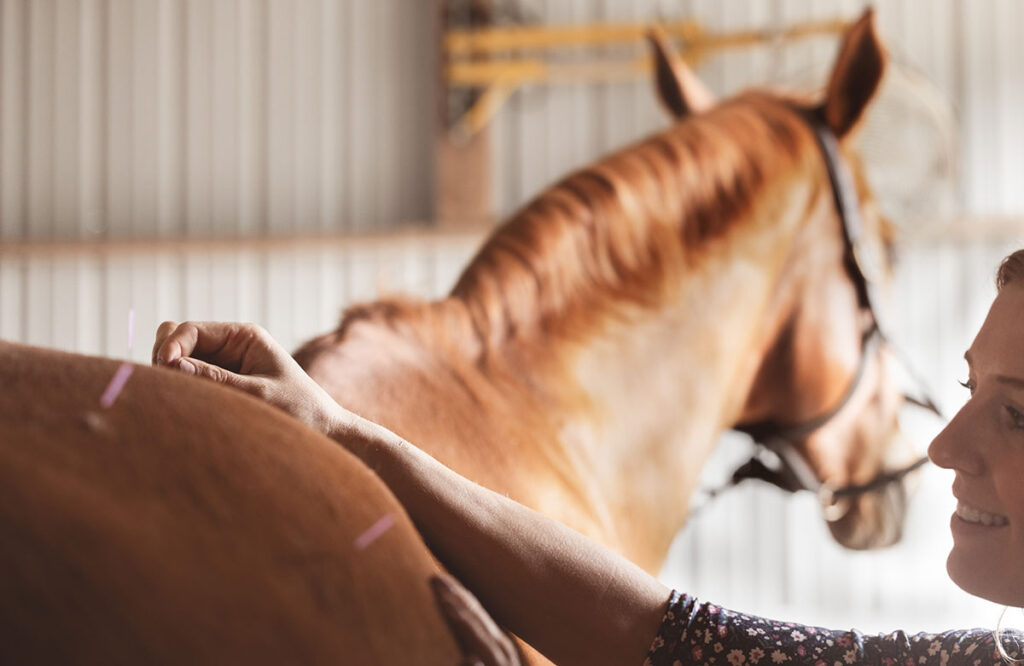
More and more, veterinarians have incorporated complementary therapies—such as acupuncture, chiropractic, and electroacupuncture—into equine care. With these modalities they aim to address chronic conditions, such as headshaking and pain, and support health and performance in competitive and recreational horses. Owners can work with their veterinarians to determine whether these approaches are appropriate for their animals.
Vets who use these modalities say they can complement conventional treatments and, in some cases, improve comfort and performance when other options fall short.
Why the Rise in These Therapies?
Sarah Senn, DVM, a general practitioner at Littleton Equine Medical Center, in Colorado, graduated from vet school in 2015 and earned her chiropractic certification four years later. With a strong emphasis on performance horse medicine, Senn says she considers integrative therapies a profound tool in her work. “I think over the past 10 years, integrative therapies have been widely accepted,” she notes. “Increasingly, veterinarians are being trained in these modalities and incorporating them into their practices. I feel that it’s quite mainstream now to have at least one—if not more—practitioners in a practice who are able to offer these services.”
Sara Wefel, DVM, Dipl. ABVP (equine specialty), associate professor in the Department of Veterinary Population Medicine at the University of Minnesota’s College of Veterinary Medicine, in Long Lake, says she believes the industry’s savviness contributes to the popularity of integrative therapies. Primarily a part of the university’s ambulatory service, she has training and certification in acupuncture and spinal manipulation.
Expanding the Practice Toolkit
Early in her career, Katie Seabaugh, DVM, MS, Dipl. ACVS and ACVSMR, now an associate professor at Colorado State University’s College of Veterinary Medicine & Biomedical Sciences, in Fort Collins, managed the care of equestrian team horses at the University of Georgia and was first introduced to acupuncture and spinal manipulation therapies, which horse owners frequently requested.
Upon returning to Colorado, Seabaugh sought acupuncture (Medical Acupuncture for Veterinarians) and chiropractic (Veterinary Chiropractic) certification. “I went into it to learn … so that I could communicate with my clients better,” she says. “I started to embrace it and utilize it. The therapies are integrative, but also holistic.”
Expanding Treatment Options
Wefel says complementary therapies such as acupuncture and chiropractic offer a flexible approach to address a wide range of equine conditions. Veterinarians can use these noninvasive modalities alone or in conjunction with conventional medicine to address musculoskeletal issues, chronic pain, and other problems, she says.
“Every horse has something that we’ve got to manage,” she says. “It might be mild arthritis. You might have back pain. I really see their value in taking care of some of our older patients. There are a lot of ways we can add to their conventional therapy. A good example would be something like anhidrosis—when horses don’t sweat. Acupuncture can be hugely helpful in restoring some of that function and improving the horse’s care and quality of life
This story requires a subscription to The Horse magazine.
Current magazine subscribers can click here to and continue reading.
Subscribe now and gain unlimited access to premium content.
Subscribe NowWe at The Horse work to provide you with the latest and most reliable news and information on equine health, care, management, and welfare through our magazine and TheHorse.com. Our explanatory journalism provides an understandable resource on important and sometimes complex health issues. Your subscription will help The Horse continue to offer this vital resource to horse owners of all breeds, disciplines, and experience levels.