Your horse flinches when you saddle him, pins his ears when you tighten the girth, and reacts when you touch his back. The pain is obvious. What isn’t always obvious is the best way to treat it.
Therapies, medications, and time off can relieve the horse’s pain, but they won’t help if they don’t address the underlying problem. Here are six common mistakes horse owners make when managing back pain and how to avoid them.
Skipping an Accurate Diagnosis for Back Pain in Horses
You know your horse’s back hurts. But do you know why?
Treating back pain starts with identifying its source, says Sue Dyson, MA, VetMB, PhD, former head of clinical orthopedics at the Animal Health Trust Centre for Equine Studies, in Newmarket, England.
“Is the diagnosis correct?” she asks. “There are many crossovers in clinical signs between bilateral lameness and a primary back problem, for example.”
Imaging findings must be interpreted carefully. A radiographic abnormality doesn’t always explain the horse’s pain. Kissing spines remain a classic example. “Radiographic evidence of impinging spinous processes does not necessarily equate with clinical significance,” Dyson says.
Using Whole-Body Vibration Therapy as a Quick Fix
Whole-body vibration therapy—having horses stand on vibrating plates—is commonly used to stimulate muscle contractions and support circulation, conditioning, and rehabilitation. Owners should not expect it to provide immediate pain relief for horses with back pain, however.
Katie Ellis, DVM, MS, an equine sports medicine and rehabilitation clinician in the University of Georgia’s Department of Large Animal Medicine, in Athens, and her team recently found horses with back pain showed no immediate reduction in pain after a whole-body vibration therapy session and appeared more uncomfortable 24 hours later. That response could reflect differences between bipeds and quadrupeds (researchers have shown whole-body vibration therapy provides short-term benefits for people with back pain), the specific vibration protocol used in the study, or simply muscle soreness from a new exercise.
“It’s sort of like if you or I were doing an exercise that we’ve never done before,” she says. “We’re probably going to feel that for a day or two afterwards.”
The findings don’t suggest whole-body vibration therapy lacks value for horses. Instead, they indicate owners shouldn’t expect immediate pain relief. In the same research program, horses that completed 30-minute sessions five days a week for a month developed stronger multifidus muscles, which support spinal stability, and improved core strength. “It just takes time and consistency of standing on the plate,” Ellis says.
Relying on Products Without Evidence for Equine Back Pain
Ellis says she has made it her “personal mission” to evaluate products marketed for equine back pain. “I have clients ask me about so many different products every day, and I have to say, ‘I don’t know; nobody’s done any research on that,’” she explains. Even when products have been studied, the research often applies only to specific horses or conditions. “So, then I think, ‘Huh, maybe I could get some answers to that myself. ’”
So far, most products she’s evaluated—including therapeutic blankets and light therapies—appear unlikely to cause harm. “The worst thing that happens is it just doesn’t help,” she says.
The bigger concern comes from relying on a product that isn’t making a difference while the horse’s pain continues untreated. Instead, Ellis encourages owners to evaluate whether a product genuinely benefits their individual horse rather than assuming it works. “Unfortunately, we just need a lot more research to know for sure what helps and what doesn’t,” she adds.
Overlooking Management Changes
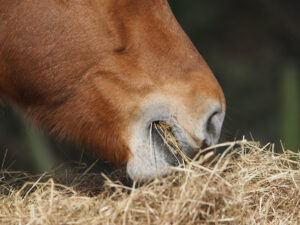
Veterinary treatment alone won’t resolve a horse’s back pain if daily management continues to strain his back, says Dyson. “Is the horse fed from the ground to encourage flexion of the back?” she says. “Eating hay from a high hay net or rack encourages thoracolumbar extension, which is not desirable.”
Adequate turnout also matters, giving a horse the opportunities to move freely with his head and neck lowered. Blanket fit deserves attention, too. “A rug that is too tight will restrict movement,” Dyson warns.
These management factors can slow recovery and might even contribute to back pain in the first place.
Returning the Horse to Work Too Soon
As a horse’s back pain improves, it might be tempting to ease horses back into work. But how they return matters.
Groundwork can help, Dyson says, but only if it encourages healthy movement patterns. Handlers should learn techniques from reliable sources rather than assuming all groundwork will ease pain.
Under saddle, riders should encourage movement that promotes healthy flexion and rotation of the thoracolumbar spine. “Correct work patterns are crucial for optimal movement,” Dyson explains. She also recommends regularly riding in a two-point position to reduce pressure on the horse’s back.
Rider position matters in other ways, too. Hilary Clayton, BVMS, PhD, Dipl. ACVSMR, FRCVS, professor and McPhail Dressage Chair emerita at Michigan State University, in East Lansing, points to research from her PhD student, Maria Terese Engel. Pressure-mat data showed that when riders tilt the top of the pelvis backward—a common position used for driving (pushing) the horse forward or collecting (compressing) the horse’s gait—pressure increases beneath both sides of the front of the saddle.
“This study showed that if a rider spends a lot of time in a driving or collecting seat, it may repeatedly exacerbate pain beneath the front of the saddle,” Clayton says. “It’s an interesting piece of the puzzle.”
Treating Back Pain Without Addressing the Cause
Relieving pain is only the first step. Unless owners address why the pain developed, it likely will return.
“It’s important for people to realize that maybe the reason their horse isn’t gaining topline or is remaining painful is because the pain cycle is still really too strong,” Ellis says. She recommends first working with a veterinarian to diagnose and control the pain, then to identify and correcting its underlying cause.
Tack should be one of the first things owners evaluate, Dyson says. Saddles, bridles, girths, and other equipment all need to fit the horse correctly. “This is an essential prerequisite for optimal back function and performance,” she explains. “Without this, the epaxial (dorsal trunk) muscles cannot work normally.”
Riders should also assess whether their own size, fitness, balance, and position suit the horse.
Finally, don’t overlook conditioning. “It’s really important that we first break the pain cycle,” Ellis says. “But then you have to really work on the horse’s strength and conditioning, because if you just break the pain cycle without working on core strength, that pain will return really quickly in most cases.”
Take-Home Message
Back pain in horses rarely has a quick fix. Successful treatment starts with an accurate diagnosis, addresses the underlying cause, and includes appropriate rehabilitation, conditioning, and management. By avoiding these common mistakes, owners can help horses recover more comfortably and reduce the risk of recurring back pain.