Fitness, joint care, and nutrition can help horses in midlife stay in work
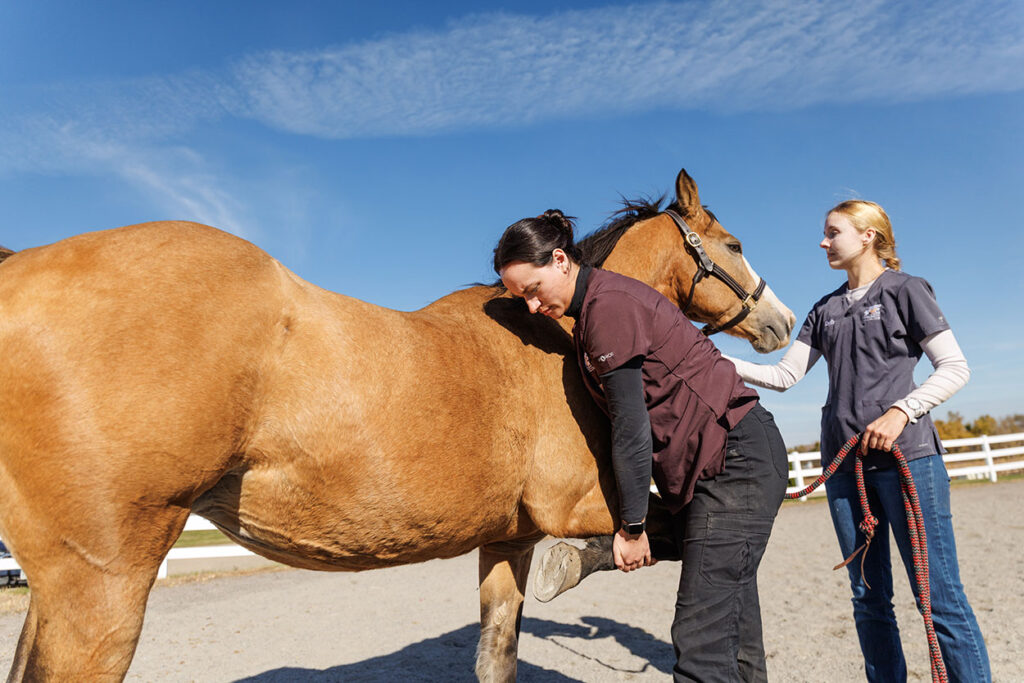
Equine nutritionist Nerida McGilchrist, B. Rur Sc (Hon1) PhD, refers to athletic horses in their teens being “in the prime of their lives.” And while we might think of them as bursting with energy and musculoskeletally sound, horses in this age category still need TLC and could already have health issues.
These conditions can include osteoarthritis (OA) and equine metabolic syndrome (EMS)/insulin dysregulation (ID). Horses might already suffer from conditions secondary to less-than-ideal nutrition earlier in life, such as leaky gut syndrome and hindgut acidosis due to intestinal dysbiosis (imbalance of the gut microbiome) resulting in laminitis. So, horses in midlife have specific needs to stay in optimal health and at peak performance.
In this article three experts offer suggestions for keeping horses in their teens primed for action. Sue Dyson, VetMB, PhD, an independent equine performance consultant from the U.K., and Charlie Barton, BVetMed, MS, Dipl. ACVS-LA, a postdoctoral fellow at Colorado State University, in Fort Collins, each address soundness from a conditioning perspective, while McGilchrist approaches it from a nutritional viewpoint.
Osteoarthritis Already Prevalent in Midlife
Now known to be a whole-joint disease, OA occurs commonly even in young horses.
“OA often starts as synovitis (inflammation of the synovium, which is the joint capsule lining), and then inflammatory mediators in the joint set off a catabolic cascade that results in damage to all aspects of the joint, including the articular cartilage,” explains Barton.
Researchers demonstrated the high prevalence of lameness and OA in young horses, presumably extending into the teen years, in a study conducted by Boado et al. (2025) and co-authored by Dyson. The study included a population of 272 dressage horses that underwent comprehensive orthopedic examinations.
The median age of the horses was 8 years old, with 36 of them between 13 and 17 years of age, according to Dyson. The most common sources of pain were localized to the lower limb. They identified foot pain in 39.7% of horses; fetlock region pain in 29.4% of horses; and pain from the metacarpal/metatarsal region (the front and hind cannon bones) in 32.0%. Spinal problems were relatively common also, identified in 21.7% of horses. Osteoarthritis of the distal interphalangeal (coffin joint) was the most common diagnosis, occurring in 76.8% of 108 horses with foot pain.
Veterinarians identified OA in many other joints as well, including: 71 fetlock joints (26.1% of horses), 26 distal tarsal (lower hock) joints (9.6%), eight carpal (knee) joints (2.9%), 21 femorotibial and femoropatellar (stifle) joints (7.7%), 19 caudal cervical articular process joints (those within the neck and located closer to the horse’s withers than his skull, 7%), and 36 lumbosacroiliac joints (13.2%)
This story requires a subscription to The Horse magazine.
Current magazine subscribers can click here to and continue reading.
Subscribe now and gain unlimited access to premium content.
Subscribe NowWe at The Horse work to provide you with the latest and most reliable news and information on equine health, care, management, and welfare through our magazine and TheHorse.com. Our explanatory journalism provides an understandable resource on important and sometimes complex health issues. Your subscription will help The Horse continue to offer this vital resource to horse owners of all breeds, disciplines, and experience levels.