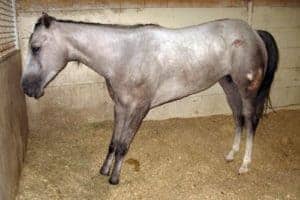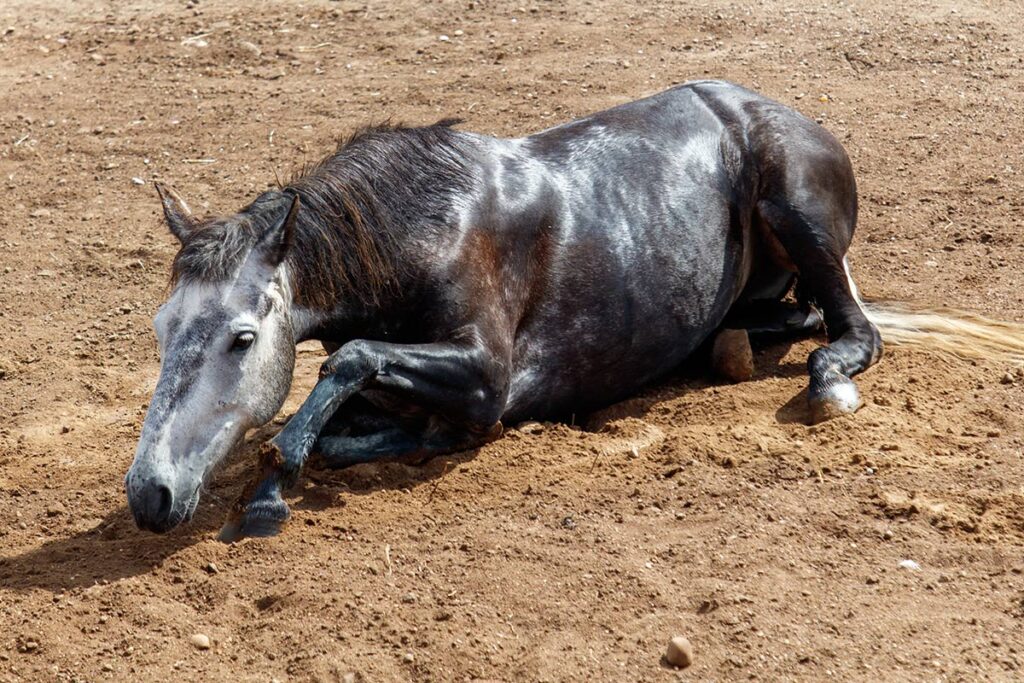
When you go to the barn for evening chores you hear banging in the far stall—your horse is down and rolling. They get to their feet when you run to the stall but immediately start pawing and circling and quickly drop again to roll. They’re sweaty and in pain—clearly, they’re dealing with colic (abdominal pain). But this isn’t the first time. After your vet comes and treats them again for “just a gas colic,” you ask yourself, “What can I do to avoid calling the vet once a month for my horse’s colic?”
What Causes Equine Colic?
Horses are more prone to digestive upset than other domestic animals because of how their gastrointestinal (GI) tracts function and how we feed them. Horses evolved as grazing animals, and the GI tract is designed to utilize forage (hay or pasture). It functions best and remains healthiest when horses are allowed to roam at pasture, eating continuously and consuming small amounts often. We’ve confined domesticated horses and typically feed hay and grain in scheduled meals. This unnatural environment often leads to digestive problems and colic.
Horses are one of a few animals that digest most of their feed in the hindgut (cecum and large intestine) rather than the stomach and small intestine. The horse’s GI tract is designed to transfer food to the hindgut swiftly. Feed travels through the small intestine to the hindgut in a couple of hours, which can create digestive problems if owners offer large volumes of grain per feeding.
Small Amounts of Forage, Often
You can improve your horse’s digestive health by managing the dietary regimen the way nature intended. Ideally, a horse’s diet should include good-quality forage (hay or pasture) with added concentrates only if the level of work demands it.
The trouble with a large concentrate meal is there’s not enough time to digest it in the small intestine. It enters the hindgut too quickly, and the microbe population shifts toward those that can rapidly digest starch, creating gas in the process. If the horse can’t adequately pass the gas, it can stretch the intestinal wall, leading to painful signs owners recognize as colic. If the change is too severe, with large proliferation and die-off of certain bacteria, toxins might be produced, leading to more serious problems such as the painful hoof condition laminitis.
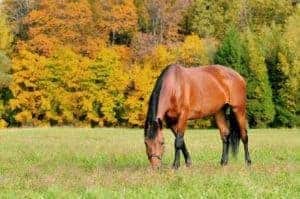
Keeping your horses moving while they graze helps keep circulation going, simulating predomestication free-ranging, when horses were walking all the time. Ensuring horses eat small amounts keeps their GI tract moving, promoting gut motility. Colic risk increases the more horses stand still, especially if they have nothing to eat.
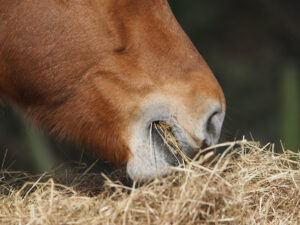
If a horse must be confined, maximize the amount of forage you feed. Alterations such as feeding forage in a slow feeder, so your horse takes longer to consume it, have been shown to minimize colic.
Tips for Preventing Colic
- Feed at least 60% of the daily ration as forage. Current recommendation is 1-2% of body weight per day in forage.
- When possible, turn out horses in nonirrigated fields and/or use grazing muzzles to control weight and rich forage intake.
- Limit grain to a minimum—high-fat/lowstarch concentrates are preferable.
- Provide feeding systems that limit the intake of sand and dirt.
- Provide plenty of turnout and exercise each day.
- Provide clean, ice-free drinking water for your horses. Add powdered electrolytes when traveling or at shows to minimize dehydration risk.
- Implement targeted deworming programs for the herd. Consult your veterinarian about recommendations for your horses.
- Implement preventive care dentistry for your whole herd on an annual basis.
- Minimize stress (transport, shifting herd dynamics, housing, illness, injury) as much as possible.
Take-Home Message
The cause of many colic episodes often goes undiagnosed and, many times, colic can be initiated by a combination of factors. While some factors are associated with higher colic risk, most episodes arise from unknown causes, with any combination of the above factors. Consult your veterinarian to work through the possible causes of your horse’s colic and develop a plan to keep your horse healthy.
Originally published on the Colorado State University James L. Voss Veterinary Teaching Hospital’s Animal Health Blog. Reprinted with permission.