One unusual cause shows how headshaking can have an infectious origin
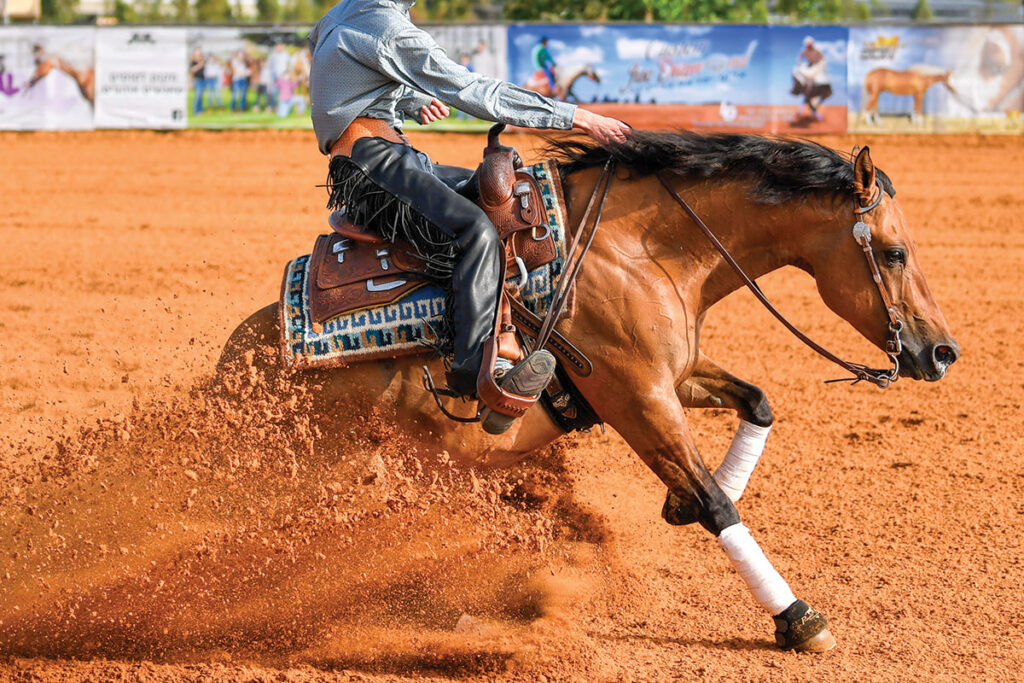
Gunmetal Whiz Kid (name changed for privacy) could slide. Or, as the Italians would say, “fare lo sliding stop.”
The stocky roan, seeped in DNA from America’s Great West, was born in Tuscany, the northern Italian wine region thousands of miles from his ancestors’ homeland. In the sunbaked alpine hills near Pisa and Florence, the American sport of reining and the breeding of American Quarter Horses for this sport has spread across the region over the past two decades, fast as a blur of a hindquarter spin.
“Whiz Kid” had an impressive start in the Tuscan futurity ranks as a 3-year-old in 2023. His first events drew cheers from Italian spectators, to the elation of his owners and trainers.
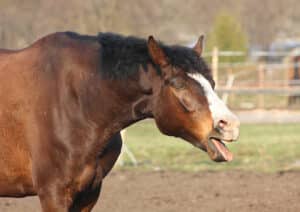
But then Whiz Kid didn’t seem as enthusiastic about his work anymore. A month after his first competition, the colt started snorting and tossing his head every time his rider asked for collection. No matter what the trainer tried—changing bits, saddles, and other tack and tactics—the young horse just threw his head more and more.
As a result, Gunmetal Whiz Kid resumed his training and competition schedule with great success. A year later the owner checked in with his veterinary team. The horse had continued to do well, with no headshaking whatsoever.
The Problem Worsens
Despite the rider and trainer’s efforts, things went from bad to worse. What was once an issue under saddle gradually morphed into similar problems on the ground.
A veterinarian who was on-site to see other horses at the facility watched Whiz Kid’s behavior and said it looked like clinical headshaking—a neuropathic condition in which horses show sudden, repetitive, and seemingly involuntary shaking movements of the head.
Concerned, Whiz Kid’s owner opted to skip referrals and go directly to the University of Bologna’s Veterinary Teaching Hospital in the Department of Veterinary Medical Sciences
This story requires a subscription to The Horse magazine.
Current magazine subscribers can click here to and continue reading.
Subscribe now and gain unlimited access to premium content.
Subscribe NowWe at The Horse work to provide you with the latest and most reliable news and information on equine health, care, management, and welfare through our magazine and TheHorse.com. Our explanatory journalism provides an understandable resource on important and sometimes complex health issues. Your subscription will help The Horse continue to offer this vital resource to horse owners of all breeds, disciplines, and experience levels.