Advancements in technology and their growing use aim to reduce injuries in Thoroughbred racehorses

A cluster of equine deaths at California’s Santa Anita racetrack prompted the passage of the Federal Horseracing Integrity and Safety Act in 2020. The act’s intention was to reset industry standards for track safety and equine care.
Racehorse Fatalities Prompt Industry Reforms
The act established the Horseracing Integrity and Safety Authority (HISA), the entity charged with drafting and enforcing uniform safety and integrity rules in Thoroughbred racing. The Federal Trade Commission reviews and approves any regulations and rules proposed by HISA concerning medication administration, racetrack maintenance and safety, and premeet equine checks with a goal of reducing racehorse deaths on the track and ensuring racing community accountability.
While HISA provided a framework, these efforts built upon years of global discussions about racehorse fatalities and the need for improved track protocols and equine welfare, as noted by equine surgeon Ryan Carpenter, DVM, MS, Dipl. ACVS (LA), independent racing industry veterinarian, and Chris Kawcak, DVM, PhD, Dipl. ACVS, ACVSMR, professor of orthopedics at Colorado State University, in Fort Collins.
“The industry has been working on this problem of injured horses for decades,” says Carpenter, who is based in Cypress, California. “We identified areas to address and made improvements, and we significantly improved year after year.”
Kawcak suggests HISA’s establishment had a transformative impact on horses, jockeys, trainers, vets, and the industry’s safety and welfare approach. “Bringing HISA on board was highly contentious, but it’s been effective and thoughtful regarding injury prevention,” he says. “HISA has prioritized injury prevention, decreased fatalities, and held people accountable. It has also helped the industry be more thoughtful about racing conditions and the factors we know can be associated with injury. For instance, this year, there’s been a lot more cancellations of racing days based on weather. That’s good. The horses are being looked at closer. The medical records are being better organized.”
AAEP Guides Efforts to Improve Racehorse Welfare
Concurrent with the implementation of HISA, the American Association of Equine Practitioners (AAEP) put together a Forum on Thoroughbred Safety and Injury Prevention. It invited 25 prominent private, racetrack, and regulatory practitioners, equine surgeons, and diagnostic imaging specialists to come together, review national and international trends and available technologies, and draft key recommendations to address racetrack safety, veterinary protocols, and progress and availability of advanced imaging.
Recommendations included screening methods to identify horses at increased risk of injury pre- and postentry based on training and medical records by regulatory and private veterinarians; improved access to higher-level diagnostic technology, including regional positron-emission tomography (PET) scans; and sustainable funding options. However, Sara Langsam, VMD, chair of AAEP’s Racing Committee, says the most significant recommendation involved a request for proposals to study wearable biometric technology focusing on musculoskeletal injuries.
“We initially had 12 responses to the RFP. We scaled the 12 down to six and asked for full proposals. I could fundraise enough to cover the budgets of all six sensor companies, so we commissioned all six to recruit 2-year-olds not in training. We officially started in January.”
The six manufacturing entities’ wearable technology forms will be tested and studied on 600 horses—100 per company. Each sensor will be placed on an individual horse after a regular breezing schedule commences.
“We chose 2-year-olds because they’re a bit of a blank slate,” Langsam says. “We know a fair percentage will fall out for bucked shins or something noncatastrophic, but we want the wearables to find lower-level injuries.” She adds that a potential goal of the study involves developing a list of sensors approved by AAEP and HISA.
Wearable Sensors Offer Insight
Wearable technology measuring movement and heart rate variability in people dates back decades. Heart rate monitors came on the scene more than 25 years ago for horses, and the ability to record and interpret movement characteristics and gait analysis accelerated over time, says Kawcak.
“In the 1990s, companies had big, bulky wearable devices,” says Kawcak. “Those devices were typically classified as inertial measurement units with accelerometers, gyroscopes, and magnetometers that helped show in space where a body part or an individual is and how much they’re twisting, turning, moving, and how fast a horse is going. As the sensors have miniaturized, become more dependable, and data analytics have become easier, software has made it simpler and faster.”
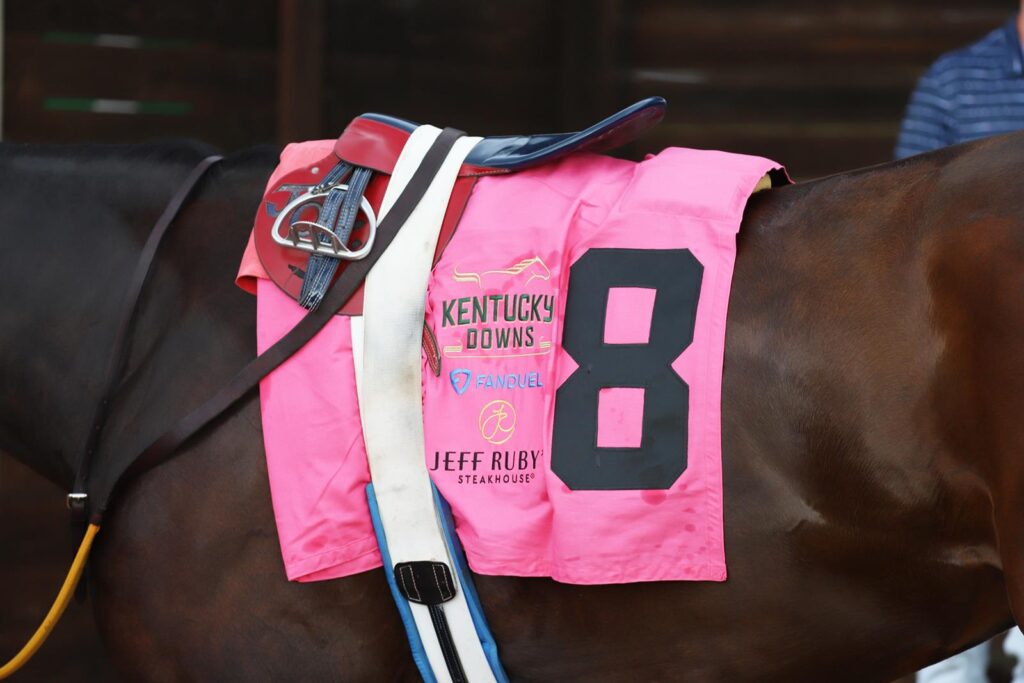
Researchers have suggested catastrophic injuries in racehorses produce distinct stride patterns that demonstrate a preexisting pathology, says Denise McSweeney, equine surgery resident at Washington State University, in Pullman. She is part of a research team studying biometric sensors developed by StrideSAFE at the Hitchcock Research Track, the only dedicated university racecourse in the United States. Engineers at StrideSAFE, a company formed by David Lambert, BVSc(Hons), MRCVS, designed a sensor smaller than an iPhone to be worn under a racehorse’s saddle cloth. The sensor measures a horse’s movement in three directions—dorsal/ventral (back to front), mediolateral (extending from midline toward the sides), and longitudinal (lengthwise). During a race it collects 2,400 data points per second.
“We used the objective data on a horse’s stride of 1,800 horses to identify those most at risk of a catastrophic injury,” says McSweeney. “From this data, we were able to work with some of the veterinarians involved in individual horses’ care, which led to increased scrutiny and advanced imaging. At-risk horses underwent advanced imaging by a standing PET scan, highlighting areas that put them at risk of potential fracture. Ninety-plus percent of the horses showed preexisting pathology at that time, which we were trying to identify before an actual fracture occurred.”
Based on a sound horse’s stride, equine researchers were able to identify how much and how a stride deviates from normal. These abnormal stride movements recorded by the sensors reveal potential bone and muscle damage, which can be a warning sign of a high-risk fatal injury.
McSweeney confirms all Kentucky tracks and those owned by Churchill Downs Inc. place a sensor on every horse for every race in the saddle cloth weight rooms. “If we successfully get sensors on horses on every track, the more we will be able to see if one horse’s stride is changing throughout a couple of weeks or months. We’ll also be able to see as those horses move from track to track,” she says.
Calls for Consistency to Improve Track Safety and Equine Welfare
Carpenter says he has observed a cultural and value shift in the racing industry. “We’ve moved from the perspective of having to get a horse to race as opposed to we’re only going to run a horse if it’s right,” he says. “We’re putting the health and safety of the horse first. I think what most people feared was the restrictiveness and tightness of HISA rules. However, once you get in the middle of them and do them daily, you realize they’re not a big deal. Your horses can still train and compete competitively, and the change is in the horse’s best interest.”
Lisa Lazarus, chief executive officer of HISA, says the organization’s rules apply to 47 racetracks in 19 states, including some of the industry’s most prestigious courses. “Maintaining consistent rules across all tracks is essential for ensuring fairness, safety, and integrity within the sport,” she says. “A level playing field for all participants enhances the sport’s overall credibility. It also minimizes risks and ensures the best possible care for horses, regardless of where they’re racing.”

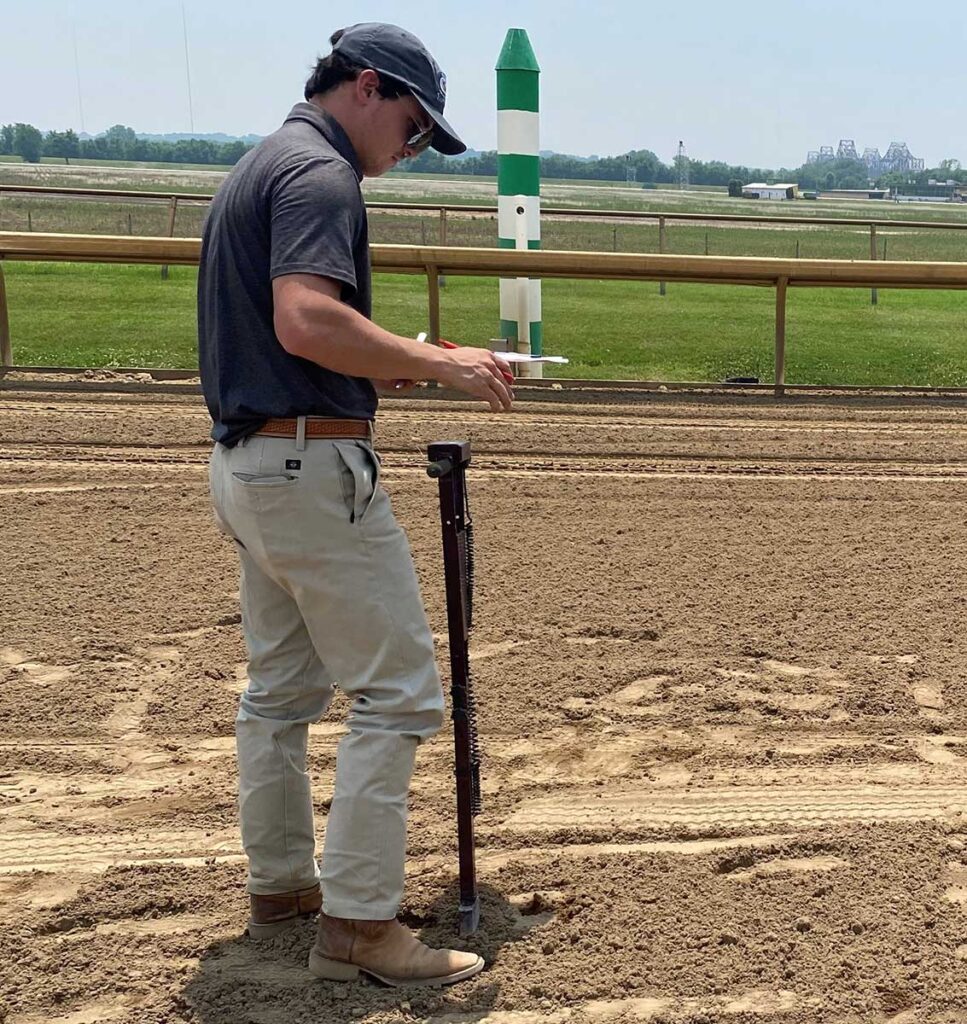
Under the Racetrack Safety Program, officials must inspect all turf and synthetic racetracks before each race. They document cushion and base surfaces, collect surface material samples for analysis, inspect irrigation systems, and take daily surface measurements—all of which they report to the independent Racing Surfaces Testing Laboratory, led by Mick Peterson, PhD, director of the Racetrack Safety Program and professor of Biosystems and Agricultural Engineering at the University of Kentucky, in Lexington.
Peterson says there are both the premeet inspections and daily testing. “Daily testing is crucial to understanding if there is an event or, even more importantly, to identify issues before anybody gets hurt,” he says. “Daily testing evaluates the moisture cushion depth, the penetration resistance on turf, and the temperature of the synthetic. We also have a weather station that logs the weather, especially the precipitation, at 15-minute intervals.”
The HISA Track Surfaces Advisory Group, made up of seven track superintendents, conducts on-site inspections and reviews historical data to assess racing surface conditions as needs arise. Lazarus says the group provides year-round guidance to HISA and recommends improvements to ensure consistency in maintenance across dirt, turf, and synthetic tracks. She says HISA also enforces safety measures through rigorous inspections by its accreditation team, on-site monitoring, and mandatory data reporting.
Medical Accountability and Transparency Examined
The Anti-Doping and Medication Control Program administered by HISA went into effect in March 2023. The program established a list of prohibited substances—including those never permitted and those not allowed before races—while updating testing procedures, enforcing penalties, and clarifying guidelines for when substances can be administered.
Carpenter describes these changes as some of the most significant the racing industry has seen. “We restricted intra-articular injections two weeks before a race,” he says. “We significantly reduced the amount of non-steroidal anti-inflammatories that could be used leading up to a race. Ten years ago it was common for a horse to get three non-steroidal anti-inflammatories within 48 hours of a race. Now they can only receive one. Our thresholds are half, if not less than half, of what they were five years ago. We’ve lowered the amount of medication that can be used and the volume of each medication. The horse is running medication-free when they reach the starting gate now.”
Lazurus notes that attending veterinarians must submit records to the HISA portal within 24 hours of treating or examining a horse. As of September 2024 approximately 4 million records have been uploaded and are available to regulatory veterinarians. When a horse sells, the treatment histories are also available to new owners, trainers, and veterinarians.
Predicting Future Advancements
The Horseracing Integrity and Safety Authority reported dramatic declines in equine fatality rates in 2024, with an aggregate decrease of 36% by the end of the third quarter.
Advancements will continue in the availability of advanced diagnostic testing, biomarker research (a biomarker is a measurable indicator in the body that changes with health or disease), the integration of artificial intelligence (AI) into wearable technologies to improve data capture and processing, and emergency care training and action planning services.
“The goal in the biomarker arena is that one day you could do a blood test on your horses once a month and see if there’s a potential of a bone or soft tissue injury coming based on what we would establish as a normal baseline,” says Carpenter. Again, that’s a theory, but we’re working with the University of Kentucky and Colorado State University to test some of our hypotheses.”
However, Kawcak points to the quandary these indicators also present, noting the same biomarkers that help a horse build resiliency and training might also be responsible for an injury.
“It’s hard to discern a response to training from injury because the factors involved are similar,” he says. “For example, bone injuries are caused by the same factors responsible for strengthening the bone.”
Peterson says the acceleration of AI will impact multiple aspects of equine welfare. He points to data quality as a key factor shaping the future of racetrack safety across all surfaces.
“My goal right now is to know what the moisture and the cushion depth is daily,” he says. “Where I’m headed, and where we’re headed, and where we’re getting support to head is to know the moisture content every time the harrow goes around the track, so we know if we need to add water between Race 3 and 4, or if we need to skip the watering between 7 and 8 as the sun is going down. We’re looking at new technologies for these real-time moisture sensors.”
Final Thoughts
Technology advancements have increased the speed of change in horse racing, impacting the lives of horses, jockeys, owners, trainers, and veterinarians.
“In human athletics, behavior is a huge indicator of welfare and readiness to perform,” Kawcak says. “There are some excellent foundational studies on horses. I think we’re getting better at using those techniques to assess behavior because it’s an important factor to know whether an athlete’s ready to go effectively or not.
“The biggest impact is going to be how the industry organizes itself around these advancements,” he adds.