The WEG Opening Ceremony from the Press Box
Our international reporter offers a look into the best moments of the 2014 World Equestrian Games’ opening ceremony in Normandy, France.


Our international reporter offers a look into the best moments of the 2014 World Equestrian Games’ opening ceremony in Normandy, France.

Researchers found that horses with sarcoids have elevated levels of T-regulatory, or Treg, cells–special white blood cells that play a central role in regulating immune responses.

Researchers sought the most common causes of poisoning in Swiss equids. Toxic plants and medications topped the list.
This marks the first time coronavirus has been detected in European horses. Previously, it had only been identified in the United States and Japan.

Recent research results suggest that, while modern horses are still partially “programmed” to create five toes in each foot, those four extra toes either don’t develop fully or essentially disappear during fetal development.

Researchers found that saddle type did not appear to impact movement in a group of Icelandic horses.

Our international freelancer wonders if equestrian competitions in a modern, conscientious world are reaching the borders of unethical. Find out what top horsemanship science researchers have to say.
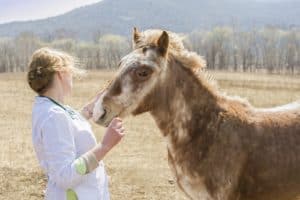
French scientists recently completed a study that showed that paying too little–or too much–attention to a trainer can hinder a horse’s learning ability.

The encephalitis virus once thought to be inert in horses has been identified in a Brazilian horse exhibiting neurologic signs, researchers in that country say.

As Normandy prepares for the 2014 Alltech FEI World Equestrian Games, French scientists are performing biosecurity research to prevent the spread of equine disease. In particular, they’re looking into a syndrome they’re calling “piro-like.”

Ireland is working to take the guesswork out of the unwanted horse crisis: By compiling data dating back to 2005, researchers are establishing trends and seeing clearer numbers with regard to the country’s unwanted horse population.

When it comes to equine periodontal disease, red complex bacteria could be a red flag for impending tooth reabsorption.

Researchers recently developed a scale of behavioral indicators to identify both the valence (is the emotion positive or negative?) and the intensity of equine emotions.
Follow along as our intrepid international reporter offers a look into the excitement surrounding WEG in Normandy.

With “parasite portfolio” monitoring, significantly fewer adult horses in one program required treatment for intestinal parasites, one researcher said.

When feeding horses in groups, increasing their distance apart and time spent eating might help reduce aggression.