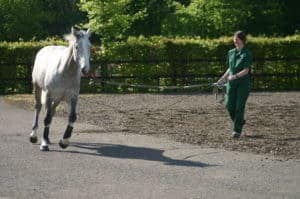
Lameness Assessments While Longeing Studied
Researchers found poor agreement among less experienced vets and moderate agreement between more experienced ones.


Researchers found poor agreement among less experienced vets and moderate agreement between more experienced ones.

Researchers found non-sperm cells present in fresh semen release an enzyme called MPO during freezing, which could have a negative impact on thawed semen quality.

Researchers found that oral supplementation of glucosamine, chondroitin sulphate, and MSM did not improve stiff gaits in one senior horse population.

Solar foot penetrations involving the joints can be career- and even life-threatening injuries.

By using hoof kinematics, researchers are developing a technique to aid in the diagnosis of mild or subclinical lameness.
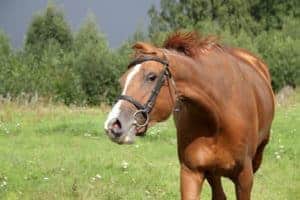
Researchers found a feed supplement designed to combat headshaking provided little relief to affected horses.

Vets evaluated the potential application of dynamic endoscopy when examining Thoroughbred yearlings.

Swedish researchers discovered that genetic makeup affects locomotion patterns in horses.
Researchers evaluated the impact of postpartum breeding date on pregnancy, pregnancy loss, and foaling rates.
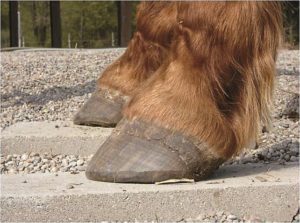
A specific trimming technique increased the hoof’s weight-bearing area and increased the heel angle.

Researchers recently tested if idiopathic headshaking in horses could be similar to a condition in humans.

Researchers found an intravaginal progesterone-releasing device effective in inducing early estrus in mares.

Many fencing options are available, but there are no hard-and-fast rules as to which is the best choice.

While the drug initially reduced airway sensitivity, long-term use seems to result in reduced effectiveness.
Rotational grazing allows horses to graze one section of pasture while other sections recover.

One study showed bacteria on stallions’ external genitalia do not appear to affect stallion or mare fertility.