Equine Joint Injections
Equine joint injections can help veterinarians diagnose lameness or medicate a horse’s painful joint.


Equine joint injections can help veterinarians diagnose lameness or medicate a horse’s painful joint.
Equine lameness, defined as a deviation from a normal gait, is an indicator of a structural or functional disorder of the musculoskeletal system (the limbs or spinal column) that is noted while the horse is either moving or stationary.

Efficiently managing manure is an important aspect of caring for horses. Composting is an economical and efficient method for managing manure for virtually any equine operation, regardless of size.
Not only can exercise safely be imposed in any age horse, but it also might be protective to joints, reported a Colorado State University research team led by Chris Kawcak, DVM, PhD, Dipl. ACVS, an associate professor and equine surgeon.
“Injuries involving the musculoskeletal system in horses are common and can typically result in secondary to chronic changes in the structur
Horses could suffer from irritable bowel syndrome (IBS) like humans do, hypothesized human gastroenterologist John Hunter, MD, from the Gastoenterology Research Unit at Addenbrooke’s Hospital in Cambridge, United Kingdom.
In humans, IBS is extremely common and thought to affect up to 15% of the population at some point in their lives. Symptoms include recurrent abdominal pain accompanied wi
Bone marrow-derived mesenchymal stem cells (BMDMSCs) can be genetically modified in culture and subsequently used in live horses to enhance healing of bone defects, according to Colorado State University (CSU) researchers.
“BMDMSCs are ‘flexible’ cells that have the capacity to become one of a variety of connective tissue cell types, including bone cells (osteoblasts)
For the first time, researchers have demonstrated that the corticosteroid prednisolone improves the lung function of horses with recurrent airway obstruction, even in the presence of continuous exposure to antigens. The same study also revealed that a low dose of a similar drug, dexamethasone, reversed airway obstruction despite continues antigen exposure.
“Recurrent airway o
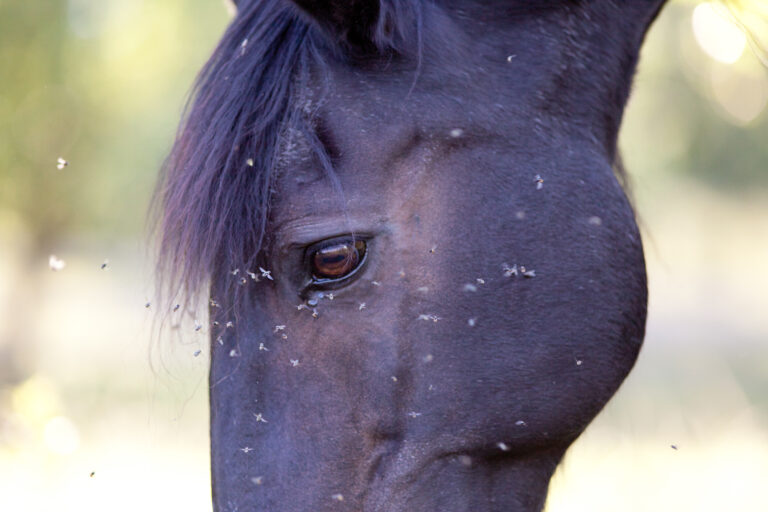
The antihistamine cetirizine has no apparent benefit in treating insect bite hypersensitivity (IBH), reports a group of Swiss researchers led by Lena Olsén from the Division of Pathology, Pharmacology, and Toxicology at the Swedish University of Agricultural Sciences.
Also referred to as sweet itch or summer eczema, IBH is a seasonally recurrent skin disorder caused by a hy
Historically a rare disease, type 2 diabetes mellitus should be considered an important differential diagnosis in mature or elderly horses and ponies with weight loss and excessive drinking and urinating.
Consider cancer as a possibility in older horses with long-bone fractures and no history of trauma, encouraged a group of veterinarians from Oklahoma State University’s Center for Veterinary Health Sciences.
Cancer is relatively rare in horses, and intestinal cancers are even more unusual. Because intestinal adenocarcinomas are especially rare, they are not often considered as
A review of 17 cases of horses with primary liver tumors revealed that equine and human tumors are similar and that the classification scheme currently employed in human medicine could be applied to equine tumors.
The primary malignant liver tumors hepatoblastoma (HB) and hepatocellular carcinoma (HCC) are rare. According to Dorothee Bienzle, DVM, PhD, Dipl. ACVP and colleagues fr
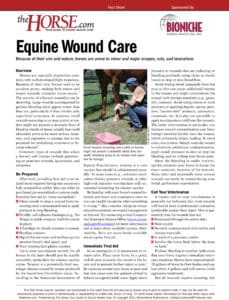
Due to their inquisitive nature, a well-developed flight response, and that they are commonly confined in areas with potential obstacles such as metal or wire, horses tend to be accident prone, making wounds a fairly common occurrence.
Resistant Parascaris equorum on Thoroughbred and Standardbred farms to ivermectin and moxidectin was identified in Ontario, Canada.
Rolph de Gannes, an equine veterinarian practicing in Southern Ontario, Canada, had the impression that ivermectin was not removing the equine roundworm Parascaris equorum in foals and weanlings on a Thoroughbred farm. Because resistance of P
Pyrantel pamoate and ivermectin paste formulations appear to be effective against the equine pinworm Oxyuris equi despite allegations that resistance was developing, reports Craig R. Reinemeyer, DVM, PhD, president of East Tennessee Clinical Research Inc., in Rockwood, Tenn.
The bacterium Helicobacter pylori, a known disease-causing organism in human medicine, does not appear to be important in horses.
In humans, intensive research efforts have revealed that H. pylori can induce chronic gas
A team of veterinary researchers in the United Kingdom recently reviewed the use and results of homeopathy for equine ailments including arthritis, headshaking, laminitis, and more.
“Homeopathy is a 200-year-old therapeutic meth