Stephanie L. Church, Editorial Director

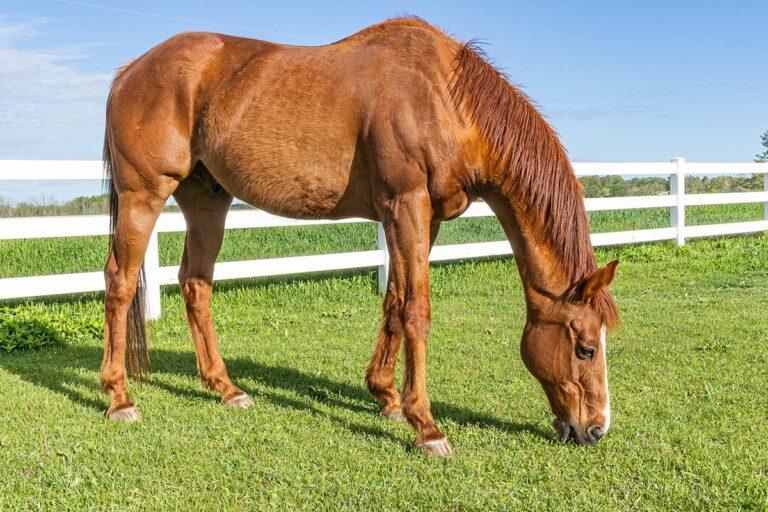
Stephanie L. Church, editorial director for The Horse and Stable Management, grew up riding and caring for her family’s horses in Central Virginia and received a B.A. in journalism and equestrian studies from Averett University. She joined The Horse in 1999 and has led the editorial team since 2010. A 4-H and Pony Club graduate, she enjoys dressage, eventing, and trail riding. Her heart horse, It Happened Again (“Happy,” pictured), a former graded-stakes-winning Thoroughbred gelding, was her longtime mount and remains a lasting inspiration. She now has an 8-year-old off-track Thoroughbred, Dune of Pilat (“Dune”), and is enjoying building a partnership with him. Stephanie is based in Lexington, Kentucky.

Articles by: Stephanie L. Church, Editorial Director

AAEP 2003: Comparative Efficacy of Vaccines

Very little scientific research has been done in the way of comparing the effectiveness of equine vaccines. However, several researchers have been hard at work over the past few years trying to determine if any particular U.S.-registered equine vaccines had advantages over others. It turns out that the serologic responses to–and protection given by–these vaccines varies significantly. Hugh

Read More

Acyclovir for Treating EHV-1 Myeloencephalopathy

Acyclovir is an anti-viral drug with a high activity and selectivity for herpesviruses. It has been used in equine outbreaks, even though past studies have not established a clear-cut benefit of using the drug.

Read More

Preventing Gastric Ulcers: Study

White and 10 other veterinarians from private and university equine hospitals in the United States and Canada investigated whether a dose of 1 mg/kg/day would prevent occurrence and recurrence of gastric ulcers in racehorses.

Read More

AAEP 2003: Shock Wave Table Topic

Veterinary application of shock wave therapy has come a long way in five years, with many veterinarians now finding it helpful in the treatment of their patients. Rather than the “What is this all about, and does it work?” questions of past forums on the subject, the general consensus question at the 2003 AAEP Convention’s shock wave therapy table topic was, “How can I make this technology

Read More

Subclinical Exposure Rate to West Nile Virus

If you’ve had equine cases of West Nile virus (WNV) pop up in your county, most of the equids in the area probably were exposed to the disease or even infected by the time those infections occurred. That is why it’s extremely important to vaccinate horses at least two months before the WNV season.

Read More

New WNV Equine Recombinant DNA Vaccine Approved

Editor’s note: A letter to the editor from Fort Dodge Animal Health cited inaccuracies in this article and has been included below.

A new West Nile virus (WNV) equine recombinant canarypox vaccine received USDA registration approval on Dec. 23, 2003, and could pave the way for a new generation of equine

Read More

Purdue Team Solves WNV Structure

Purdue University biologists recently determined the viral structure of the West Nile virus (WNV), a development that could greatly augment our understanding of the virus’ life cycle.

Using cryoelectron microscopy and advanced imaging techniques, the Purdue team has determined the orientation of the major surface proteins in a West Nile viral particle. Because these proteins are

Read More

Kentucky Pasture Monitoring Programs

Comparing pasture samples from 2002 and 2003 didn’t associate mare reproductive loss syndrome (MRLS) with anything other than the Eastern tent caterpillar. However, Wayne Long, MS, of the University of Kentucky’s (UK) Department of Agronomy, provided some insight on pasture management in Central Kentucky and stressed the dangers of tall fescue toxicosis. He presented field study results on

Read More

Residual Effects of WNV More Than Anticipated

Horse owners should be vigilant about having equine survivors of West Nile virus (WNV) re-examined by their veterinarians before putting the animals back into work. In a study of Minnesota horses which survived clinical WNV can make the horse more dangerous to ride or drive. Julia Wilson, DVM, Dipl. ACVIM, Associate Professor in Clinical and Population Sciences at the University of Minnesota’

Read More

Improved Diagnostics for the Upper Airway

“Endoscopy is the primary diagnostic tool for evaluation of the upper airway of the horse,” said Brett Woodie, DVM, MS, Dipl. ACVS, of Rood and Riddle Equine Hospital, at the clinic’s annual client education seminar held Jan. 5 in Lexington, Ky. He reviewed the history of endoscopy and its current use at rest, and the advantages of dynamic examination of the upper airway of horses which

Read More

Horses Cause Blackouts in North Wales

According to icNorthWales, an online publication in the United Kingdom, a group of horses on a farm in Rhuddlan caused power cuts to thousands of homes and businesses across North Wales.

“The animals were rubbing against a wire stay in a field which caused damaged to a pole supporting power lines,” said the report. “The cut hit at about 2:30pm in Prestatyn on Wednesday (Jan. 7). The

Read More

Alabama Police Investigate Horse Deaths

Two Alabama horses were shot and killed Tuesday just outside of Andalusia, Ala., according to a Jan. 7 story in the Andalusia Star-News. The horses were valued at more than $20,000.

Andalusia Police Department (APD) criminal investigator Wade Garrett said in the story, “Two horses were shot–one died from a gunshot wound and one had to be put down.”

The investigation

Read More

Dual Hemisphere Breeding and Live Foal Percentages

Shuttling Thoroughbred stallions between Northern and Southern hemisphere farms for breeding began in earnest around 1992. Stallions had been shuttling from Great Britain and Ireland prior to that time. Between 1996 and 2002, 117 stallions from the United States were shuttled to the Southern Hemisphere in the late part of the year to complete a second breeding season. It was recently

Read More

Glass Horse Model Expanded

The popular three-dimensional electronic horse model, “The Glass Horse CD,” which offered a novel look at the gastrointestinal anatomy of the horse when it was introduced in November of 2001, has a new companion that depicts the structures of the equine distal (lower) limb. This CD, called “Elements of the Equine Distal Limb,” should be available for shipping before the end of the

Read More

More From The Horse

electrolytes for horses; Why Do Electrolytes Encourage Horses to Drink?
spring pasture, turnout tips, horse turn out, horse in pasture, grazing, spring, spring turnout
Horses in their stable
What's New With Weaning?

Stay on top of the most recent Horse Health news with

FREE weekly newsletters from TheHorse.com

Sponsored Content

Weekly Poll

sponsored by:

How often do you apply fly spray to your horse during peak fly season?
176 votes · 176 answers

Readers’ Most Popular

The Horse
Privacy Overview

This website uses cookies so that we can provide you with the best user experience possible. Cookie information is stored in your browser and performs functions such as recognising you when you return to our website and helping our team to understand which sections of the website you find most interesting and useful.